

The advancement of sports tactics in modern football is deeply linked to artificial intelligence, which has begun to influence strategic decisions, performance analysis, and tactical interpretations in professional clubs around the world.
Advertisements
Over the last few decades, football has moved away from being guided solely by intuition and empirical experience, incorporating scientific methods capable of transforming raw data into concrete competitive advantage.
Artificial intelligence emerges in this context as a tool that enhances the human capacity to read the game, allowing for detailed analyses of collective patterns and individual behaviors on the field.
This article explores how algorithms, machine learning, and predictive analytics are redefining traditional preparation, training, and decision-making processes in contemporary soccer.
Real-world examples will be presented of clubs, coaches, and competitions that are already using these technologies to optimize athletic performance and reduce strategic risks.
Advertisements
Finally, the text discusses the impacts, ethical limits, and future perspectives of this convergence between football and technological innovation applied to sports tactics.
The evolution of tactical analysis in football.
Historically, tactical analysis in football relied on direct observation, manual note-taking, and the coaches' memory, which limited the depth of interpretations and the accuracy of strategic decisions.
With the advancement of digital technology, video recording has allowed for detailed reviews of matches, expanding the collective understanding of opponents' positioning, movements, and recurring errors.
Advertisements
The introduction of statistical software marked a new stage, quantifying actions such as passes, shots, and tackles, creating objective indicators for evaluating tactical performance.
These early systems, while useful, still required intensive human interpretation, making the process slow and susceptible to cognitive biases on the part of analysts and technical committees.
The increasing complexity of modern gaming, with its greater physical intensity and constant tactical variations, has demanded solutions capable of processing large volumes of data in a short amount of time.
In this scenario, artificial intelligence has come to be seen as a natural evolution, offering faster answers and deeper analyses of the collective behavior of teams.
++ The power of the fans: the "12th player" on the field.
How artificial intelligence interprets the game.
Artificial intelligence applied to soccer uses algorithms capable of recognizing complex patterns in thousands of events recorded during professional matches and training sessions.
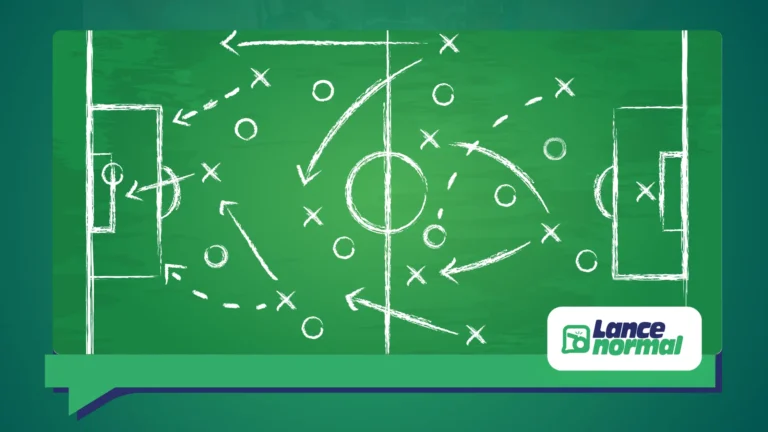
Through computer vision, systems can identify the exact positions of players, distances traveled, and spatial relationships, transforming images into actionable tactical data.
These technologies enable analyses that go beyond traditional statistics, revealing hidden structures of space occupation and collective synchronization during different phases of the game.
A practical example can be seen in research published by FIFA, which demonstrate the use of artificial intelligence to map tactical trends in international competitions.
Based on these models, coaches can anticipate opponent behaviors and adjust defensive or offensive schemes with greater scientific basis.
In this way, the interpretation of the game ceases to be merely reactive, becoming predictive, strategic, and aligned with specific objectives previously defined by the coaching staff.

Practical applications in professional training.
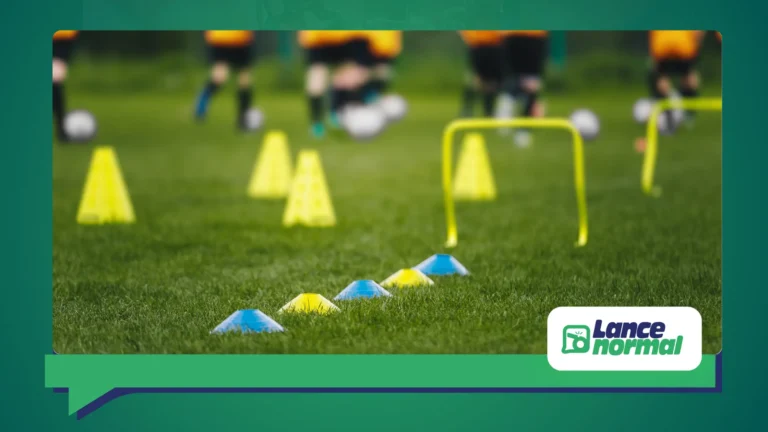
In training centers, artificial intelligence has begun to guide personalized tactical sessions, adjusting exercises according to the physical, technical, and cognitive profile of each athlete.
Monitoring systems collect GPS, acceleration, and muscle load data, allowing algorithms to suggest training variations aligned with planned tactical demands.
These analyses help to avoid physical overload, while maximizing the assimilation of specific tactical concepts, such as high pressure or defensive compactness.
Elite European clubs use these tools to simulate game scenarios, testing tactical alternatives even before applying them in official matches.
According to studies by MITThe use of artificial intelligence in sports environments significantly increases the efficiency of motor and team learning.
Thus, training ceases to be standardized and begins to reflect an integrated scientific approach between data, tactics, and human development.
++ Football and psychology: how athletes cope with defeat and pressure.
Artificial intelligence and decision-making during games.
During matches, artificial intelligence provides real-time support, supplying strategic information that assists coaching staff in making quick and informed decisions.
Instant analysis reveals positioning errors, repeated patterns of the opponent, and opportunities to exploit specific spaces on the field.
This data reaches the analysts on the sidelines, who filter relevant information for objective communication with coaches and players.
Although the final decision remains human, algorithmic support reduces the margin of error associated with emotional pressure and the fast pace of the game.
This hybrid model reinforces the coach's authority, allowing them to justify tactical changes based on concrete and measurable evidence.
Consequently, decisions cease to be merely intuitive, incorporating rational analyses aligned with previously defined sporting tactics.
Impacts on defensive and offensive strategies
Artificial intelligence has profoundly transformed the construction of defensive strategies, enabling the identification of structural weaknesses in adversary systems with high precision.
Predictive models analyze sequences of passes and movements to anticipate risk zones and adjust defensive lines more efficiently.
In terms of offense, algorithms evaluate the most effective combinations for ball progression, creating numerical superiority, and high-probability shots on goal.
The table below summarizes some tactical applications of artificial intelligence in modern football:
| Tactical Area | AI Application | Strategic Benefit |
|---|---|---|
| Defense | Compaction analysis | Reducing spaces |
| Attack | Finishing patterns | Greater efficiency |
| Transition | Reaction time | Tactical speed |
| Marking | Threat identification | Anticipation |
| Ball possession | Pass optimization | Game control |
These applications allow teams to adapt their strategies dynamically, reacting quickly to changes in the game.
The result is a more organized, efficient style of football, aligned with the competitive demands of contemporary high-performance levels.
++ The environmental impact of major motorsport events.
Ethical challenges and technological limitations
Despite the advancements, the use of artificial intelligence in football raises ethical debates related to the privacy of athletes' data and excessive dependence on technology.
The continuous collection of biometric information requires strict security and consent protocols to prevent unauthorized misuse or commercial purposes.
Furthermore, algorithms reflect the data they receive, and may reproduce biases or limited interpretations if the databases are incomplete.
There is also the risk of excessive standardization of sporting tactics, reducing the creativity and unpredictability that have historically characterized football.
Experienced coaches warn of the need for a balance between technology and human sensitivity in the emotional and contextual reading of the game.
Therefore, artificial intelligence should be seen as a support tool, not as a substitute for empirical knowledge and sports leadership.
The future of sports tactics in football.
The future of sports tactics points to even greater integration between artificial intelligence, data science, and strategic decision-making in professional soccer.
With advancements in deep learning, algorithms tend to offer increasingly realistic simulations of game scenarios and adversary behaviors.
This evolution can allow for customized tactical planning for each competition, opponent, and even specific weather conditions.
At the same time, the democratization of these technologies tends to reduce competitive inequalities between clubs with different budgets.
Developing countries are already investing in affordable automated analytics solutions, expanding the reach of tactical innovation globally.
Thus, football is moving towards a model where human creativity and artificial intelligence coexist, redefining the limits of athletic performance.
Conclusion
The incorporation of artificial intelligence in football represents a structural change in the way the game is analyzed, trained, and strategically planned.
Sports tactics are no longer just the result of accumulated experience, but are now being incorporated into empirical evidence generated by large volumes of data.
This process strengthens the professionalization of the sport, while also demanding ethical reflection and cultural adaptation on the part of athletes and coaches.
The balance between technology and human sensitivity will be crucial for football to preserve its competitive and emotional essence in the future.
FAQ
1. Is artificial intelligence replacing the coach in football?
No, artificial intelligence acts as a support tool, offering data and analyses that assist the coach, but the final decision remains human.
2. Can smaller clubs use tactical artificial intelligence?
Yes, more affordable solutions are emerging, allowing smaller clubs to use basic analytics to improve performance and tactical organization.
3. Does technology reduce the creativity of gamers?
When used effectively, technology guides decisions, but it does not prevent improvisation and individual creativity within the tactical model.
4. Do players need to authorize the use of their data?
Yes, the use of biometric and performance data requires consent and respect for current privacy regulations.
5. Does artificial intelligence directly influence results?
It doesn't guarantee victories, but it improves the quality of strategic decisions, reducing errors and increasing collective efficiency.