

The term "modern handball" represents a profound transformation in the game, combining sports science, data analysis, and high physical intensity, creating a scenario where emerging teams can challenge traditional powerhouses with smarter and more adaptable strategies.
Advertisements
In recent years, Brazil has shown clear signs of competitive rebuilding, investing in youth categories, tactical integration, and physical development—elements that support the concrete possibility of a return to international prominence.
The global context also favors this rise, as the balance between national teams has increased significantly, reducing the historical gap between dominant European teams and teams from other continents with consistent planning.
Furthermore, modern handball demands fast game reading and quick decision-making, characteristics that traditionally align with the Brazilian style, known for its creativity, improvisation, and ability to adapt under intense pressure.
Another relevant factor is the professionalization of sports management, which has begun to prioritize long-term planning, international exchange, and the use of technology to monitor individual and collective performance with greater precision.
Advertisements
Therefore, understanding how Brazil can return to the top involves analyzing not only talent, but also structure, methodology, and strategic alignment with the demands of contemporary handball.
The tactical evolution of contemporary handball.
Modern handball is distinguished primarily by the speed of its offensive and defensive transitions, where teams need to reorganize their structures in a matter of seconds, requiring extreme physical preparation and constant communication between players.
This dynamic has intensified the use of hybrid systems, such as adaptable 5-1 and 3-2-1 defenses, which pressure the opponent from the first line and create opportunities for quick and lethal counter-attacks.
Advertisements
The offense has also evolved significantly, with greater ball circulation, strategic use of the pivot player, and coordinated penetrations that exploit tight spaces, requiring technical precision and synchronization among all players on the court.
In Brazil, this tactical adaptation began to gain traction after recent Olympic cycles, when coaching staffs started incorporating European concepts without abandoning the country's characteristic offensive identity.
Brazilian coaches have been seeking a balance between tactical discipline and creative freedom, allowing players to make real-time decisions without compromising the collective structure and defensive organization.
This advancement puts Brazil in an interesting position, as it combines solid fundamentals with unpredictability, a factor that can tip the balance in matches against more tactically rigid teams.
++ The return of street sports: a global trend
The importance of grassroots development and talent training.
Strengthening grassroots categories has become one of the most important pillars for the growth of Brazilian handball, with projects that identify talent early and offer integrated technical and educational training.
Clubs and federations have begun investing in standardized methodologies, ensuring that athletes reach the senior national team already adapted to the modern style of play and the physical demands of the international competitive scene.
This process also includes participation in international youth tournaments, allowing young players to face different playing styles and gain experience before reaching the professional level.
According to guidelines from International Handball FederationThe sustainable development of sport depends directly on the quality of training programs and the continued investment in young athletes.
Brazil has made progress in this area by expanding training centers and partnerships with educational institutions, creating a more structured environment for the sporting and personal growth of developing players.
This consistent work tends to yield results in the medium term, forming a generation that is more technically and mentally prepared to compete at a high level against the world's top teams.
The role of physical conditioning in high-performance sports.
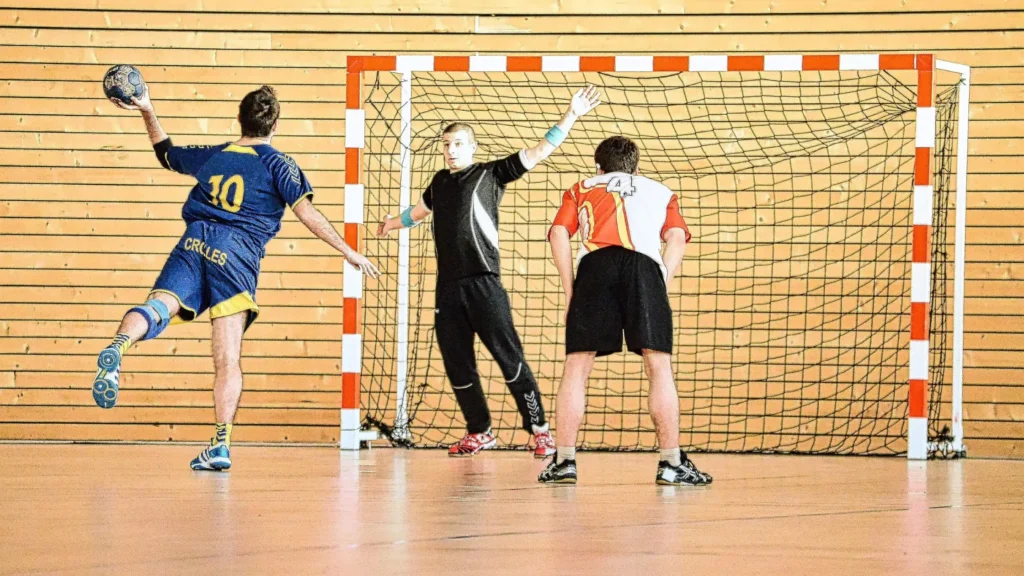
Modern handball demands high levels of power, endurance, and speed, making physical conditioning a crucial factor for teams seeking to consistently compete at a high international level.
Players need to endure intense matches, with rapid changes of direction, frequent jumps, and constant physical contact, which demands highly specialized and personalized training programs.
In Brazil, the evolution in this sector has been significant, with greater integration between physical trainers, physiologists, and coaching staff, creating routines based on data and continuous performance monitoring.
According to studies by International Olympic CommitteeThe use of technology for load management and injury prevention has been essential in increasing the longevity and efficiency of athletes.
Furthermore, post-game recovery has gained strategic importance, with protocols that include advanced physiotherapy, specific nutrition, and fatigue analysis, allowing athletes to maintain a high competitive level throughout long tournaments.
This evolution brings Brazil closer to the level of European powerhouses, reducing the physical gap that historically impacted performance in decisive and knockout matches.
++ How sports help combat anxiety and depression.
Comparison between generations and recent performance
A comparative analysis between different generations of Brazilian handball reveals important changes in the way the game is played, in the athletes' preparation, and in the consistency of results obtained in relevant international competitions.
While previous teams relied more on individual talent and improvisation, the current generation displays greater tactical organization, defensive discipline, and the ability to adapt to different game scenarios.
The table below illustrates some fundamental differences between distinct periods of Brazilian handball, highlighting evolution in technical and structural aspects that directly impact competitive performance.
| Aspect | Previous Generations | Current Generation |
|---|---|---|
| Tactical organization | Moderate | High |
| Physical preparation | Basic | Advanced |
| International experience | Limited | Wide |
| Use of technology | Almost non-existent | Intensive |
| Consistency of results | Irregular | Growing |
These data show that Brazil is building a more solid foundation to compete at a high level, reducing fluctuations and increasing the predictability of performance in important tournaments.
This process is still developing, but it already shows clear signs of maturity, especially when the team faces traditional rivals with greater technical and psychological balance.
++ The evolution of the hand-off in the modern NBA game.
The impact of European leagues on Brazilian players.
The growing presence of Brazilian athletes in European leagues has played a key role in the technical and tactical development of the national team, raising the level of individual and collective competitiveness.
These leagues offer a more intense pace of play, constant competition against high-level opponents, and access to advanced professional structures, factors that directly contribute to the players' development.
Upon returning to the national team, these athletes bring international experience, improved game reading skills, and greater decision-making ability under pressure—essential elements in modern competitive handball.
Furthermore, exposure to different playing styles broadens players' tactical repertoire, allowing for faster adaptations during matches against teams with varied characteristics and distinct strategies.
This exchange also positively influences the internal sporting culture, encouraging young athletes to seek opportunities abroad and raise their training and performance standards.
Consequently, Brazil now has a more experienced and prepared team, capable of competing on equal terms with traditionally dominant teams on the world handball stage.
Structural challenges and pathways to evolution
Despite the progress, Brazilian handball still faces structural challenges that limit its growth, including irregular funding, unequal infrastructure, and the need for greater media visibility.
The lack of consistent investment directly impacts the training of athletes, the maintenance of grassroots projects, and the ability to retain talent in the national competitive scene.
Another critical point lies in the organization of domestic competitions, which need to offer a more robust calendar and a high technical level to prepare athletes for demanding international challenges.
However, recent initiatives show that there are possible paths forward, such as public-private partnerships, sports incentive programs, and greater integration between federations and clubs in different regions of the country.
The professionalization of sports management also emerges as an essential element, guaranteeing strategic planning, transparency, and continuity of long-term sustainable development projects.
If these challenges are consistently addressed, Brazil can consolidate its progress and transform potential into concrete results in the competitive international landscape of modern handball.
Prospects for the future of the Brazilian national team.
The future of Brazilian handball depends on its ability to maintain a balance between innovation and identity, combining modern elements with historical characteristics that differentiate the national style of play.
The continuity of grassroots projects, combined with the international presence of athletes, tends to strengthen the national team and create a generation better prepared to compete for important titles in the coming sporting cycles.
Another decisive factor will be maintaining a coaching staff aligned with global trends, capable of adapting strategies and maximizing the potential of the players available in each call-up.
Technological advancements will also continue to play a significant role, offering tools for performance analysis, injury prevention, and training optimization at different competitive levels.
If there is continuity in planning and institutional stability, Brazil will be able not only to compete, but also to vie for prominent positions in world championships and future Olympic events.
In this way, returning to the top of the world ceases to be just a distant possibility and becomes a realistic goal, supported by solid technical, physical, and strategic foundations.
Conclusion
The current state of modern handball shows that Brazil has the potential to return to international prominence, provided it maintains consistency in its projects and continuous improvement in all strategic areas.
The combination of talent, advanced physical conditioning, and international experience creates a favorable environment for competitive growth and the consolidation of a modern and efficient playing identity.
The challenges that still exist do not negate the progress already achieved, but reinforce the need for structured planning and smart investments to sustain the development of sport in the country.
If these conditions are met, Brazil could once again be among the leading powers in world handball, transforming potential into significant achievements in the coming years.
FAQ
1. What characterizes modern handball?
Modern handball is characterized by high speed, rapid transitions, the use of technology, and the integration of physical preparation and advanced tactical strategy.
2. Has Brazil ever been a leader in world handball?
Yes, especially in the women's category, with important achievements such as the world title, in addition to competitive participation in the Olympic Games and international championships.
3. Why do Brazilian players go to Europe?
Because they find more competitive leagues, better infrastructure, and greater exposure, factors that directly contribute to their technical and tactical development.
4. What is the main challenge for handball in Brazil?
The main challenge lies in the structure, including funding, the competitive calendar, and the ongoing training of high-level athletes.
5. Can Brazil win another World Cup?
Yes, provided it maintains consistent progress, leverages emerging talent, and sustainably strengthens its sports infrastructure.