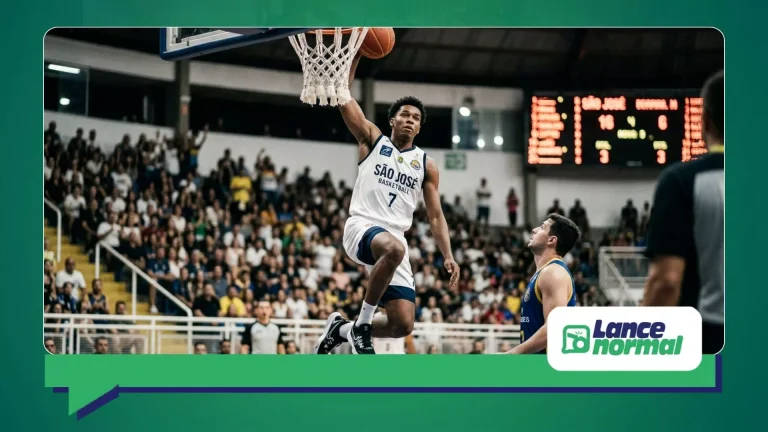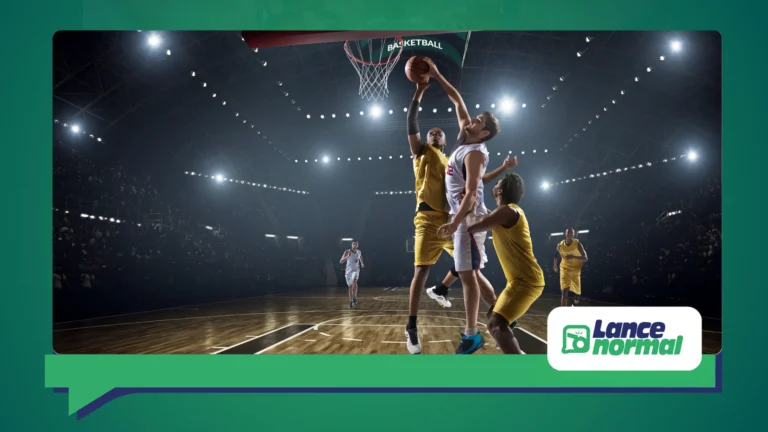

THE college basketball in the United States is a fundamental pillar in the training of players for the NBA. NCAA organizes competitions that attract millions of fans, generating billions in revenue and preparing student-athletes for the professional leagues.
Advertisements
The system of scholarships offered by American universities provides a professional structure for athletes. This allows young talents to develop their skills in college basketball, aiming for a future career in the NBA.
A striking example of this process occurred in 1984, when Michael Jordan and Hakeem Olajuwon were selected in the NBA draft after shining in the college basketballThis system continues to shape sports stars to this day.
In Brazil, interest in basketball has been growing. A 2022 Sponsorlink survey revealed that 521% of Brazilians over 18 declared themselves fans of the sport, an increase of 161% since 2013. This phenomenon reflects the global impact of college basketball and the NBA.
The structure of basketball in the United States
Basketball in the United States is a complex and well-organized structure. NCAA, founded in 1939, is the main university sports organization in the country. It divides the competitions at different levels and university conferences, creating a system that fuels talent development for the NBA.
Advertisements
Division I of the NCAA is the most prestigious, bringing together 68 elite college teams. The final tournament, known as "March Madness," attracts worldwide attention and culminates with the semifinals and finals in stadiums that hold over 40,000 spectators. The matches are broadcast on major TV networks such as CBS, TBS, TNT, and TruTV.
The UConn Huskies are the defending champions, winning their fifth title. However, the UCLA Bruins hold the all-time record with 11 titles. competitions College football is intense and steeped in tradition, with teams fighting not only for the title, but also for the chance for their players to be noticed by NBA scouts.
To join this system, student-athletes go through a rigorous process of recruitment. In addition to talent on the court, factors such as English proficiency and good TOEFL and SAT scores are considered, demonstrating the balance between sport and education valued by NCAA.
Advertisements
| Aspect | Detail |
|---|---|
| Teams in Division I | 68 |
| Current champion | UConn Huskies |
| Greatest champion | UCLA Bruins (11 titles) |
| Final Tournament Nickname | “March Madness” |
The recruitment and scholarship system
THE recruitment of college basketball talent in the United States is a complex and highly competitive process. College coaches seek talented players around the world, offering scholarships as an incentive to attract the best athletes.
The process of recruitment It starts early, often in the freshman year of high school. The NCAA (National Collegiate Athletic Association) divides recruiting into four phases: Contact Period, Evaluation Period, Quiet Period, and Dead Period.
To the scholarships are a crucial element in the recruiting system. Annual tuition at American universities can range from US$30,000 to US$60,000, but talented athletes can receive full or partial scholarships. This opens doors for international talents, such as the Portuguese Neemias Queta, who received a scholarship from Utah State University after standing out in the European Basketball Championship in 2018.
| Type of Scholarship | Coverage | Eligibility |
|---|---|---|
| Integral | 100% of costs | High-performance athletes |
| Partial | Part of the costs | Promising athletes |
| Annual | Annual renewal | Performance-based |
You student-athletes Students can make up to five official visits to universities starting in their third year of high school, with all expenses paid by the institutions. This process culminates in the "Verbal Commit," when the athlete verbally commits to a university without signing formal documents.
The routine of a student-athlete in college basketball
The life of a college basketball student-athlete is full of challenges and opportunities. Balancing training intense, trips frequent and studies demanding requires exceptional dedication and discipline. Universities offer sports facilities state-of-the-art facilities to support athlete development, including modern courts, equipped gyms and recovery centers.
You training take up a large part of the day, with morning and afternoon sessions focused on improving technical skills and physical conditioning. Among the training, athletes attend classes and participate in study groups to maintain academic performance. trips for away games are frequent, requiring student-athletes to be skilled at managing their time and priorities.

To illustrate the intense routine of a student-athlete, consider the following typical schedule:
| Time | Activity |
|---|---|
| 6:00 – 8:00 | Morning workout |
| 8:30 – 12:00 | Classes |
| 12:30 – 14:00 | Lunch and individual study |
| 14:30 – 17:00 | Afternoon training |
| 17:30 – 19:00 | Dinner and recovery |
| 19:30 – 22:00 | Session of studies |
Universities recognize the challenges faced by student-athletes and offer specialized academic support. Tutors and advisors help organize efficient study schedules, ensuring athletes maintain high performance both on the court and in the classroom.
College basketball in the development of players
College basketball is a breeding ground for skills development of future NBA stars. The competitive experience The knowledge acquired during this period is crucial for the athletes' growth. Statistics show that players who played college basketball are 30% more likely to make it to the NBA than those who didn't attend college.
THE media exposure during college games prepares athletes to deal with the pressure of professional leaguesThis experience is reflected in performance: on average, NBA players with a college career score 10 more points per game than those who went straight from high school to the league.
The impact of college basketball on player development is evident when we look at the makeup of NBA teams. Approximately 70% of the league's current players have college basketball experience, with NCAA Division I athletes accounting for approximately 80% of the rosters.
| Aspect | Players with college experience | Players without college experience |
|---|---|---|
| Chance to make it to the NBA | 30% larger | Minor |
| Points per game in the NBA | 10 points more on average | 10 points less on average |
| Length of professional career | Longer | Shorter |
| Average height | 6 feet 7 inches | Slightly smaller |
A college education not only increases your chances of success in the NBA, but also contributes to longer professional careers. This fact highlights the importance of skills development and the competitive experience acquired during college years.
The impact of media exposure on athlete development
THE television coverage College basketball plays a crucial role in the development of athletes. With games broadcast to millions of viewers, young players gain visibility from an early age. In 2010, the college championship final was televised in 178 countries, demonstrating the sport's global reach.
To the social media amplify this exposure, creating new opportunities for athletes to build their personal brands. This visibility Early training helps players get used to public attention, preparing them for future professional careers.
A case study of a 13-year-old basketball player revealed that the media can influence young players both positively and negatively. media exposure can quickly elevate an athlete to stardom or damage their image, directly impacting their career.
Advances in technology and new media have significantly increased the exposure of college athletes. This highlights the importance of the image conveyed by the media and the crucial role of the media in producing the sporting spectacle.
THE visibility Media exposure also attracts sponsors and commercial contracts, offering lucrative opportunities for college athletes. However, it's crucial that young players learn to manage this exposure and potential financial rewards responsibly.
Major college conferences and tournaments
College basketball in the United States is dominated by Power Five conferencesThese include the ACC, Big Ten, Big 12, Pac-12, and SEC. Each conference brings together the best teams in the country, creating intense rivalries and exciting games.
THE NCAA Tournament, popularly known as March Madness, is the pinnacle of college basketball. This tournament brings together 64 teams in a knockout competition that captivates the entire country. The intensity and unpredictability of the March Madness make it one of the most-watched sporting events in the US.

The NCAA, responsible for organizing the tournament, has 1,281 member institutions. Its broadcasts attract millions of viewers, with partners such as CBS, ABC, and ESPN. In 2021, new rules allowed college athletes to obtain sponsorships, further increasing interest in the sport.
| Conference | Number of teams | Recent NCAA Champions |
|---|---|---|
| ACC | 15 | Duke (2015), North Carolina (2017) |
| Big Ten | 14 | Michigan State (2000) |
| Big 12 | 10 | Kansas (2022) |
| Pac-12 | 12 | UCLA (1995) |
| SEC | 14 | Kentucky (2012) |
In Brazil, the university scene is also growing. Around 4,000 athletic teams participate in university games, with events like the Tusca attracting 45,000 people. Competitions like the Engenhariadas and the Jogos Jurídicos are gaining popularity, demonstrating the potential of university sports in the country.
The role of college coaches in developing talent
You college coaches are key players in developing talent for professional basketball. They play a crucial role in player development, applying strategies effective and offering mentoring valuable. Their influence extends beyond the court, shaping the future of athletes both in sport and in their personal lives.
The process of developing new athletes begins early, usually during the transition between childhood and adulthood. This period can last from 8 to 16 years, depending on the sport. During this time, college coaches work tirelessly to improve the players' technical, physical and tactical skills.
A 2000 study on the impact of college basketball on the development of NBA players highlights the importance of the interpersonal relationship between coach and athlete. This connection is crucial to promoting sports participation and improving athletes' quality of life. Coaches focus on each player's individual characteristics, contributing to their holistic development.
“Building good relationships between athletes and coaching staff, adapting training conditions, and coordinating a multidisciplinary team are essential for sports managers.” – Gallati et al. (2015)
In addition to technical skills, college coaches are responsible for creating environments conducive to athlete performance. This includes aspects such as motivation, discipline management, and strategies of communication. The mentoring offered by coaches extends beyond the courts, addressing personal issues and preparing athletes for future challenges.
The role of college coaches in developing talent is multifaceted and essential. Their dedicated work in player development, implementation of strategies effective and mentoring continuous training contributes significantly to the success of athletes in their professional careers.
The transition from college basketball to the NBA
The journey from college basketball to the NBA is a challenging and exciting process. NBA draft is the main pathway for this transition, where college talent is selected by professional teams. Before the draft, players participate in combine, a crucial event for evaluating physical and technical skills.
Node combine, athletes undergo rigorous testing, including anthropometric measurements, speed, agility, and strength tests. This step is crucial for NBA teams to assess players' potential beyond game statistics.
The current NBA draft consists of two rounds, with the teams that performed worst in the previous season receiving priority. This system aims to balance the league's competitiveness by giving weaker teams the chance to select the best talent available.
You sports agents Agents play a crucial role in this transition. They assist players with contract negotiations, personal marketing, and draft preparation. A good agent can make all the difference in an athlete's career, helping them stand out in the competitive NBA market.
Many successful college players in the NBA prioritized their studies. CJ McCollum, Victor Oladipo, Jimmy Butler, and Draymond Green are examples of athletes who graduated with communications degrees, demonstrating the importance of education in the comprehensive development of professional athletes.
Success Stories: NBA Players Trained in College Basketball
College basketball is a hotbed of talent for the NBA. Many of the sport's greatest players have come through this system before shining on the professional courts. Michael Jordan, for example, was drafted by the Chicago Bulls after excelling at the University of North Carolina.
Hakeem Olajuwon, who played for the University of Houston, was the first pick in the 1984 draft. Stephen Curry, who played at Davidson College, became one of the greatest shooters in NBA history. These stories illustrate how college basketball shapes the future of stars of.
Statistics reveal that 60% of the aforementioned players chose to complete their degrees before joining the NBA. On average, these athletes spent 3.5 years in college before being selected in the draft. An impressive 80% of them excelled academically, balancing academics and athletics.
| Player | University | Years at university | Team in the NBA |
|---|---|---|---|
| Michael Jordan | North Carolina | 3 | Chicago Bulls |
| Hakeem Olajuwon | Houston | 3 | Houston Rockets |
| Stephen Curry | Davidson College | 3 | Golden State Warriors |
| Kawhi Leonard | San Diego State | 2 | San Antonio Spurs |
The success of these players demonstrates that college basketball is crucial for developing elite athletes. It provides a solid foundation of skills and experience, preparing players for the challenges of the NBA.
The challenges faced by student-athletes
THE academic-sporting balance is one of the biggest challenges for student-athletes in college basketball. They have to juggle intense practices, games, and trips with the demands of studies, which can generate pressure significant.
To the injuries are another ongoing concern. A recent study identified barriers faced by wheelchair basketball athletes, such as inadequate facilities and insufficient transportation. These challenges also apply to conventional college players, who risk jeopardizing their careers due to injuries.
The poor physical infrastructure for basketball practice is a serious problem, according to the coaches interviewed. The lack of adequate public spaces limits the development of athletes from the youth ranks to the university level.
Brazilian college basketball faces criticism for contributing little to the development of athletes toward professionalism. This is due to the limited number of federated teams and official competitions at the youth level.
| Challenge | Impact |
|---|---|
| Academic-sporting balance | High pressure and stress |
| Risk of injuries | Career commitment |
| Inadequate infrastructure | Limitation of technical development |
| Few competitions | Reduction of competitive experience |
To overcome these obstacles, it is essential to invest in adequate infrastructure, qualified coaches, and financial resources. Furthermore, sports policies must democratize access to sports, promoting athlete development and increasing the number of participants.
The Evolution of College Basketball Rules and Policies
College basketball in the United States has undergone significant changes in recent years. In 2019, California passed a groundbreaking law that allowed student-athletes to monetize their image and name. This decision paved the way for athlete compensation, a topic that has long been debated in the university sports scene.
Prior to this change, student-athletes were prohibited from receiving sponsorships or exploiting their image rightsThe NCAA, which earned about R$2.1 billion in 2013, maintained strict restrictions. With the new rules, college athletes can now benefit from NIL (Name, Image, Likeness), capturing sponsorships and exploring their personal brands.
These changes have the potential to transform the dynamics of the billion-dollar college sports industry. The universities that generate the most revenue from sports totaled over $1 billion in 2018-19. With the possibility of monetization during college, athletes are expected to have more choice and brands are expected to develop new partnership strategies, directly impacting the future of college basketball and the development of players for the NBA.