


The most inspiring stories from the Olympics reveal how certain athletes transform pain, injustice, and great adversity into achievements that defy global expectations with courage, emotional intelligence, and extraordinary resilience.
Advertisements
These accounts deepen our understanding of individual leadership by showing how decisions made under extreme pressure shape historical outcomes that influence entire societies in lasting and inspiring ways.
The impact of these journeys transcends sporting boundaries by highlighting that Olympic performance involves precise psychological choices, rigorous mental control, and an enormous capacity to cope with structural and political tensions.
Great Olympic achievements are accompanied by complex contexts that reveal social disputes, historical inequalities, and personal battles, which strengthen the symbolic power of these figures.
Each narrative investigated allows us to see how inner strength, conviction, and discipline are capable of altering not only the course of competitions, but also relevant social discourses on a global scale.
Advertisements
These stories prove that the Olympic flame remains alive because it is directly linked to the human power to transform suffering into an expression of greatness and collective inspiration.
The triumph of Jesse Owens and the silent resistance against discrimination.
The story of Jesse Owens at the 1936 Berlin Olympics has become one of the most analyzed episodes in Olympic history because his performance took place in an environment marked by ideological propaganda that sought to exalt the false racial superiority promoted by the Nazi regime.
Owens won four gold medals — 100m, 200m, long jump and 4x100 relay — while facing boos, hostile stares and veiled sabotage, including reports of attempts to manipulate his concentration before the decisive events.
Advertisements
His triumph gained even more symbolic force because, upon returning to the United States, Owens was not greeted by President Franklin D. Roosevelt, who feared losing political support in the segregated South in the midst of an election campaign.
Owens reported that he had to enter through the service entrance of a hotel where he was to be honored, highlighting that racial discrimination was still present even after publicly defeating the Nazi ideology that fueled it.
His story remains a profound lesson in quiet courage, ethical resistance, and the ability to challenge discriminatory structures without losing skill, self-control, and moral greatness.
++ How science is extending athletes' careers.
Joan Benoit Samuelson and the unexpected victory after a devastating surgery.
The women's marathon debuted at the Olympics in 1984 and saw Joan Benoit Samuelson stage one of the greatest comebacks in history by winning the race just months after undergoing knee surgery that compromised much of her training.
Samuelson faced weeks without being able to run, replacing traditional training with controlled exercises that sought to preserve muscle strength while avoiding the risk of further damage to his recently operated knee.
During the race, he decided to attack early and build a lead in the first third of the race, contradicting technical analyses that considered his strategy risky and potentially unsustainable given the intense heat of Los Angeles.
His consistent leadership reflected profound emotional control, as he had to manage progressive pain while monitoring the approach of the favorites who maintained more conservative paces in the early stages.
After crossing the finish line, Samuelson not only consolidated an unprecedented sporting achievement, but also a social milestone that broadened debates about female autonomy in sports, strengthened by subsequent research published by [organization name]. UNESCO.
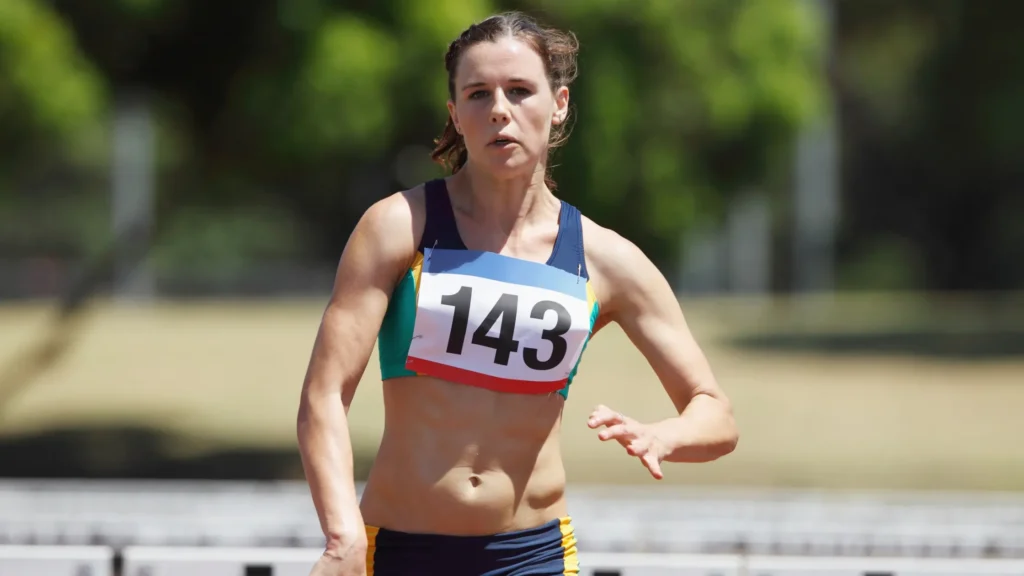
Anthony Ervin and the reinvention of a champion who faced inner abysses.
Anthony Ervin won his first Olympic gold medal in the 50m freestyle in 2000 and quickly became a symbol of technical explosion, but faced a profound personal crisis that led him to completely abandon the sport for more than a decade.
During his time away from the sport, Ervin struggled with depression, problematic substance use, and a complete loss of competitive identity, even selling his Olympic medal to donate the proceeds to victims of the 2004 tsunami.
When he decided to return, he needed to rebuild his technique, psychological strength, and lifestyle habits while facing constant skepticism about his ability to compete at a high level again after so many years away from the elite sporting environment.
His gold medal at Rio 2016, won at age 35, showed that emotional maturity and self-awareness can transform past weaknesses into tools of mental precision that are fundamental for high-impact technical decisions.
Ervin's case has become a benchmark in mental health studies analyzed in institutions such as... Harvard, which highlight how late reinventions can generate extraordinary performances when associated with consistent psychological practices.
++ How to create a workout routine inspired by professional athletes.
Cathy Freeman and the historical weight of representing an entire people.
Cathy Freeman carried the symbolic responsibility at the Sydney 2000 Olympics of representing Australian Indigenous communities that had faced decades of marginalization, violence, and cultural erasure promoted by state policies.
From the lighting of the Olympic flame to the 400-meter final, Freeman dealt with enormous expectations, political pressures, identity debates, and emotional tension rarely faced by athletes in individual competitions.
His race was technically flawless and marked by breath control, progressive acceleration, and surgical use of energy, factors that showed how Freeman transformed accumulated emotional weight into strategic strength during each phase of the race.
By winning convincingly, it opened the door for international discussions about historical reparations, indigenous protagonism, and the recognition of silenced identities that spent decades without representation in major sporting events.
Further analyses released by MIT They detail how their victory influenced cultural policies and reshaped the way sport can drive broad social debates.
++ The new era of interviews: transparency and image control.
Ibtihaj Muhammad and the decisive breakthrough in the fight for representation.
Ibtihaj Muhammad became the first athlete from the United States to compete wearing a hijab and faced not only high-level opponents, but also public attacks, prejudice, and questions about her legitimacy in representing the country.
Her Olympic journey was marked by the rigorous emotional control necessary to balance technical preparation with the external pressures generated by polarized discourses on identity, religious freedom, and inclusion policies.
Muhammad became an important symbol by demonstrating that cultural and religious practices are not obstacles to sporting excellence, but legitimate expressions of identity that can coexist with elite performance.
By winning bronze in the team sabre event, she reinforced discussions about equal opportunities and inspired young people from diverse backgrounds to see sport as a possible environment for belonging.
Her career remains central to contemporary discussions about inclusion, representation, and plurality in the modern Olympic Games.
Tegla Loroupe and the transformation of sport into a tool for peace.
Tegla Loroupe faced extreme poverty, community instability, and constant violence in her region of Kenya, transforming long-distance running into a means of survival and building personal autonomy.
His technical lightness, characterized by short strides and energy efficiency, allowed for extraordinary performances that opened doors to world records and international achievements in prestigious marathons.
Loroupe faced strong initial resistance within her own country, where many leaders believed that women should not compete in long-distance events, which makes her rise even more significant.
After consolidating global victories, he became an activist and founded humanitarian initiatives focused on conflict resolution and refugee support, converting his sporting credibility into an instrument of regional peacemaking.
Its history reaffirms that the Olympic impact can completely transcend the sporting environment and generate concrete social transformations that benefit entire communities.
Table – Iconic moments and their impact
| Athlete / Moment | Year | Modality | Historical Impact |
|---|---|---|---|
| Jesse Owens | 1936 | Athletics | He triumphed against racist ideologies and did not receive presidential support upon his return. |
| Joan B. Samuelson | 1984 | Marathon | She overcame her injury after surgery and strengthened discussions about female empowerment. |
| Cathy Freeman | 2000 | Athletics | It united sport, indigenous identity, and social demands. |
| Anthony Ervin | 2016 | Swimming | She returned after a deep crisis and reignited debates about mental health. |
Conclusion
These stories broaden our understanding of how athletes transform profound adversity into journeys of great emotional impact that resonate globally.
The journeys analyzed reveal that decisions made in fractions of a second are underpinned by years of pain, preparation, and overcoming social, political, and psychological barriers.
These figures demonstrate that the Olympic spirit goes beyond medals, embodying courage, dignity, and historical responsibility transformed into collective inspiration.
Each account confirms that Olympic values remain essential because they represent the human capacity to resist, reinvent oneself, and produce legacies that transcend generations.
FAQ
1. Why was Jesse Owens not received by President Roosevelt?
Roosevelt avoided greeting him so as not to lose support from segregationist states during his election campaign.
2. How did Joan Benoit recover after knee surgery?
She used alternative training methods, a bold strategy, and emotional control to maintain her lead from the very first kilometers.
3. What made Anthony Ervin's return so extraordinary?
Ervin overcame depression, abandoning the sport, and undergoing a technical overhaul to win gold at age 35.
4. What was the social impact of Cathy Freeman's victory?
Their achievement brought global visibility to Australian Indigenous claims and redefined debates about national identity.
5. Why has Tegla Loroupe become a humanitarian role model?
She turned her sports career into peace initiatives and programs supporting refugees, expanding her influence beyond the track.