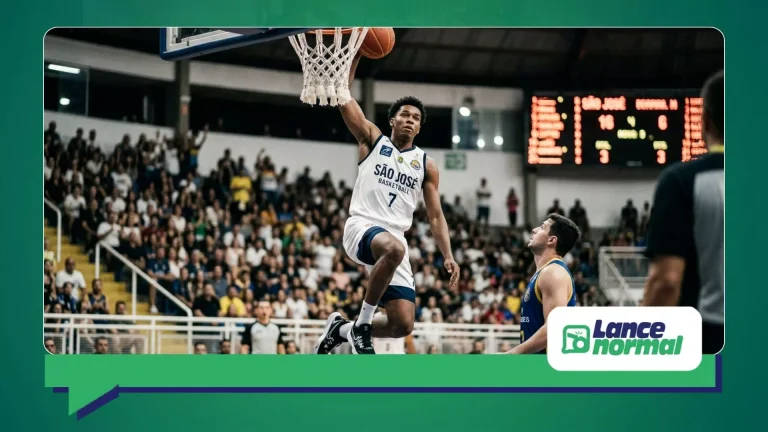


European basketball will experience a competitive turning point in 2026, with new sporting and financial projects emerging to challenge the traditional hegemony of the Euroleague.
Advertisements
In recent seasons, clubs outside the historical centers have begun investing heavily in squads, training centers, and performance analysis, creating a more unpredictable and competitive environment on the continent.
The consolidation of stronger national leagues and increased international visibility have raised the average technical level, reducing the gap between traditional giants and teams considered to be emerging.
This scenario reflects profound structural changes, involving broadcasting rights, the recruitment of young talent, and long-term strategies that are altering the balance of power in continental basketball.
By 2026, the discussion will no longer be about whether there will be new protagonists, but about which projects have enough consistency to support high-level campaigns against established powers.
Advertisements
Throughout this article, we analyze the teams, contexts, and trends that are redefining the competitive landscape of contemporary European basketball.
The recent legacy of the Euroleague and its current limitations.
The Euroleague built its recent dominance on robust budgets, technical continuity, and a great ability to attract American and European stars seeking competitive stability.
Clubs such as Real Madrid, Anadolu Efes, and Olympiacos have benefited from established professional structures, combining winning tradition, sports planning, and a strong presence in strategic international markets.
Advertisements
However, this model began to show signs of wear and tear, especially in the face of widespread increases in operating costs and greater competition for young talent trained in Europe.
The reliance on experienced players also began to generate physical and tactical challenges, especially against younger, more athletic, and defensively aggressive teams over extended seasons.
Furthermore, the closed format of the competition limited the renewal of participants, creating political and sporting tensions that opened space for more flexible alternative projects.
This context does not diminish the strength of the Euroleague, but it highlights vulnerabilities that have been exploited by ambitious and well-structured opponents.
++ Michael Jordan's legacy beyond the court.
The consistent progress of Basketball Champions League clubs
The Basketball Champions League has established itself as a competitive platform for clubs seeking sustainable growth, offering continental visibility and progressive sporting balance over the past few seasons.
Teams like Telekom Baskets Bonn and Unicaja Málaga have shown that it is possible to compete at a high level with smaller budgets, provided there is a clear tactical identity and continuity in the coaching staff.
The meritocratic model of the competition favored well-managed projects, allowing cohesive teams to overcome more expensive opponents through defensive intensity and disciplined team play.
According to institutional data published by FIBAThe Champions League has shown consistent growth in viewership and engagement, reinforcing its strategic relevance within the European ecosystem.
This strengthening attracted regional and international sponsors, increasing the financial capacity of participating clubs and reducing the structural gap with Euroleague teams.
As a result, several national champions began to prioritize the competition, viewing it not as an alternative, but as a legitimate path to continental recognition.
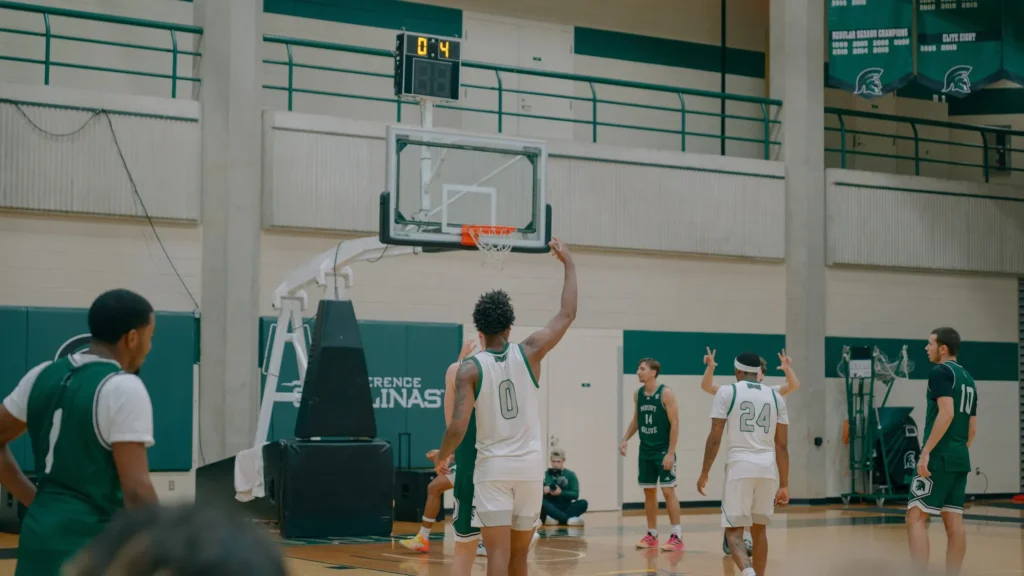
Strong national projects outside the traditional European axis.
The strengthening of domestic leagues in less traditional countries has significantly altered the competitive balance of European basketball in recent sporting cycles.
In Germany, the economic growth of the basketball Bundesliga has allowed for investments in infrastructure and training, creating a favorable environment for internationally competitive clubs.
France followed a similar trajectory, driven by efficient grassroots academies and increasing integration with the NBA market, producing well-rounded and versatile athletes.
In Italy, regional projects have resurfaced with a focus on financial sustainability, prioritizing young players and modern tactical systems, in contrast to the inflated models of the past.
These leagues have been able to retain talent for longer periods, reducing early departures and raising the average technical level of national competitions.
Consequently, their international representatives arrive better prepared to face historic giants in continental tournaments.
++ Historic basketball teams that marked generations.
Emerging clubs that are already challenging historic giants.
Some emerging clubs have ceased to be occasional surprises and have become real and recurring threats to the traditional European dominant forces.
Monaco Basket exemplifies this transformation, combining strong private investment, smart recruitment, and an experienced coaching staff to compete on equal footing against established powerhouses.
Another relevant case is Partizan Belgrade, which revitalized its historical identity with modern management, regaining continental prominence sustained by an engaged fan base and a clear sporting project.
These clubs have demonstrated the ability to win crucial away games, a key factor in their successful campaigns in top-level European competitions.
Official data from EuroLeague Basketball They show a significant increase in wins by emerging teams against traditional members in recent seasons.
This pattern reinforces the idea that historical dominance no longer guarantees predictability in the decisive matches of the European calendar.
++ Proprioceptive training: the secret weapon against injuries in team sports.
The role of coaches and tactical innovation
The rise of new stars in European basketball is directly linked to the growing influence of innovative and highly skilled coaches.
Young coaching staffs have adopted advanced data analysis, intense squad rotation, and hybrid defensive systems that hinder traditional offensive strategies.
These coaches exploit quick transitions, aggressive spacing, and positional versatility, reducing reliance on isolated stars to generate competitive advantages.
The ability to adapt game plans between matches has become a decisive factor in knockout series and head-to-head matches against favorites.
Furthermore, many of these coaches have had international experience, bringing a multicultural background and strategic flexibility uncommon in previous cycles.
This movement raised the intellectual level of the game and accelerated the erosion of more conservative tactical models.
Young talent, training, and short-term impact.
The emphasis on youth development has become a central element for clubs seeking to challenge the European elite without relying exclusively on large financial investments.
Modern academies have begun to integrate sports science, psychology, and biomechanical analysis, producing athletes who are better physically and mentally prepared for intense competitions.
Young players assumed important roles earlier, contributing directly to immediate results in continental tournaments.
This phenomenon has reduced the average age of competitive squads, increasing intensity and adaptability during long and physically demanding seasons.
Clubs that master this process gain a significant strategic advantage, combining sporting performance and potential for financial appreciation.
Effective training is no longer just a future investment, but a short-term competitive tool.
Comparison between models that threaten hegemony.
The diversity of strategies adopted by emerging clubs reveals multiple possible paths to challenge the traditional supremacy of the Euroleague.
While some prioritize direct investment in experienced players, others bet on young talent, tactical innovation, and rigorous financial sustainability.
The table below summarizes structural differences between dominant and emerging models in current European basketball.
| Key aspect | Traditional clubs | Emerging clubs |
|---|---|---|
| Financial structure | High and stable budgets | Progressive and controlled growth |
| Cast profile | Experienced players | A mix of young and versatile athletes. |
| Tactical approach | Consolidated systems | High innovation and adaptation |
| Basic training | Complementary | Strategic and central |
This comparison highlights that there is no single formula for success, but rather coherence between resources, sporting vision, and consistent execution.
By 2026, emerging models will demonstrate sufficient maturity to compete at a high level continuously.
Conclusion
European basketball in 2026 will undergo a period of profound redefinition, marked by the rise of solid projects that challenge the hierarchy established in recent decades.
The Euroleague's hegemony remains relevant, but it no longer exerts absolute control over the continental competitive landscape.
Emerging clubs have proven that intelligent management, tactical innovation, and quality youth development can compensate for historical differences in budget and tradition.
This new balance promises more unpredictable, intense, and technically rich seasons for the future of European basketball.
FAQ
1. What factors have most weakened the Euroleague's traditional dominance?
Rising costs, competition for young talent, and the tactical evolution of emerging clubs have reduced the Euroleague's historical structural advantage.
2. Does the Basketball Champions League really compete on a similar level?
Yes, the competition has evolved technically and financially, allowing well-organized clubs to face Euroleague teams with increasing consistency.
3. Can emerging clubs maintain performance over multiple seasons?
Projects with sustainable management and solid training demonstrate a greater ability to maintain continuous competitiveness over multiple seasons.
4. Does basic training impact immediate results?
Currently, well-prepared young people quickly assume important roles, contributing directly to competitive performance in European tournaments.
5. Does the future point towards greater balance between European competitions?
Trends indicate increasing balance, with multiple centers of sporting power coexisting in European basketball.