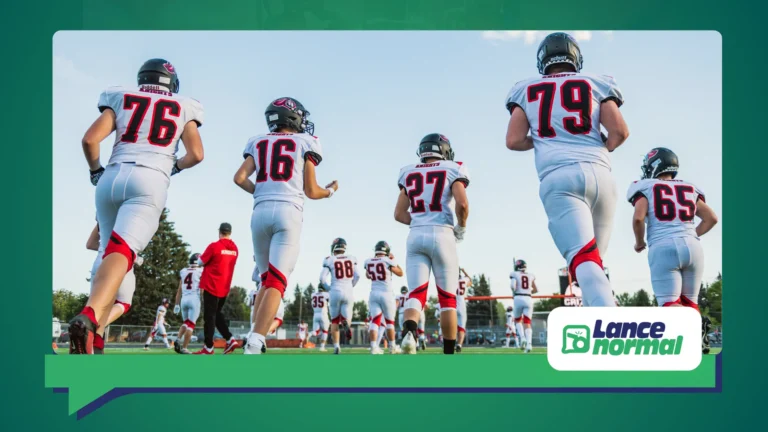


Extreme heat in the US is having a devastating impact on sports, turning arenas and stadiums into cauldrons.
Advertisements
With the summer of 2025 expected to break temperature records, events such as the FIFA Club World Cup and local competitions face disruptions, adaptations and health risks for athletes and fans.
This article delves into the impacts of global warming on sports, exploring how climate change challenges performance, logistics, and even the passion for the game.
Get ready to understand why the heat is not just an adversary, but a protagonist on the American courts, fields and tracks.
The Thermometer as an Invisible Adversary
Imagine a soccer player running under 38°C heat, with the wind chill approaching 45°C.
Advertisements
The body struggles to maintain its internal temperature, sweat evaporates before cooling down, and the mind oscillates between game strategy and physical survival.
This is the reality in the US, where extreme heat affects sports, especially outdoor events.
At the 2025 Club World Cup, played in cities like Orlando and Miami, matches like Ulsan vs. Mamelodi were paused due to storms and high temperatures, highlighting the sport's vulnerability to the weather.
Advertisements
Science explains: temperatures above 30°C impose metabolic stress, reducing resistance and increasing the risk of heat stroke.
Flávia Magalhães, a sports physician, warns that “the body faces extreme adaptive changes to maintain thermal homeostasis, compromising performance and safety.”
Athletes like Alex Telles of Atlético de Madrid have already expressed the impact: “Playing at noon in this heat is exhausting; the spectacle loses quality.”
Why do we insist on ignoring the thermometer when it screams louder than the crowd?
+ The New Generation of Brazilian Technicians: Training, Style and Barriers
Impacts on Performance and Health
Extreme heat in the US affects sports not just the intensity, but the very essence of competition.
In football, dehydration accelerates muscle fatigue, reducing speed and accuracy.
In athletics, long-distance events become true tests of survival.
A study published in Nature Medicine in 2022 revealed that extreme temperatures are associated with 6% of deaths in Latin American cities, a figure that echoes in the US, where the heat has already killed 2,300 people in the summer of 2024, according to the portal The Football.
Athletes, although young and healthy, are not immune.
Practical example: during a fictional MLS game in Phoenix, Arizona, striker João Silva, a Brazilian accustomed to the tropical heat, felt dizzy in the second half.
The technical break for hydration, mandatory in games under intense heat, saved him from heatstroke.
This scenario is increasingly common, with medical protocols being reinforced.
The table below illustrates the health risks at different temperatures:
| Temperature (°C) | Health Risk | Impact on Sports |
|---|---|---|
| 30-35 | Moderate | Early fatigue, lower resistance |
| 35-40 | High | Severe dehydration, risk of heat stroke |
| Over 40 | Extreme | Thermal collapse, suspension of events |
Furthermore, raising awareness of the importance of hydration and implementing safety protocols are becoming essential to ensuring the health of athletes during competitions in extreme climates.

Logistics and Infrastructure Under Pressure
In addition to the athletes, the organization of sporting events faces logistical chaos.
Extreme heat in the US is affecting sports by forcing schedule changes, postponements and infrastructure investments.
At the Club World Cup, European clubs like Atlético de Madrid complained about games being played at noon, times adjusted to suit the European time zone, but which coincide with peak heat.
FIFA, under pressure, denies prioritizing commercial interests, but criticism persists.
Stadiums without roofs or inadequate air conditioning expose fans to risks.
In Miami, a fictional fan, Mariana Costa, fainted during an Inter Miami match due to a lack of ventilation in the public sector.
Incidents like this put pressure on organizers to invest in cooling systems and shaded areas, increasing costs.
The following table compares the logistical impacts across different sports:
| Sport | Impact of Heat | Solutions Adopted |
|---|---|---|
| Soccer | Postponed games, technical breaks | Nighttime hours, increased hydration |
| Athletics | Tests canceled during heat peaks | Tracks with reflective materials |
| Tennis | Slower matches, medical breaks | Retractable roofs, partial air conditioning |
The need for adaptive infrastructure is increasingly evident, and many organizers are seeking partnerships with companies specializing in air conditioning to ensure the safety and comfort of fans.
The Role of Climate Change
Extreme heat in the US affects sports as a symptom of a larger problem: global warming.
The US National Weather Service reported that in July 2024, cities like Washington and Baltimore recorded temperatures 6°C above the historical average.
This “heat dome” intensifies heat waves, making summers longer and more severe.
The analogy is inescapable: the planet is like an overworked athlete, unable to recover without intervention.
Brazilian clubs, such as Palmeiras and Botafogo, participating in the World Cup, are adapting to the American heat, but are warning about the future.
Abel Ferreira, Palmeiras coach, highlighted: “The heat makes the game slower, but Brazilian teams, accustomed to hot climates, can have an advantage.”
However, tactical advantage does not eliminate risk.
Climate science predicts that without drastic cuts in emissions, extreme events will be the “new normal” by 2050, challenging global sport.
For more information about climate change and its impacts, you can visit the website of NASA.

Solutions and Adaptations on the Horizon
Against this backdrop, extreme heat in the US is affecting sports, but it is also inspiring innovation.
Leagues like MLS implement night schedules and mandatory technical breaks.
In tennis, tournaments like the US Open invest in retractable roofs and misting systems.
Technology is also entering the field: uniforms with thermoregulating fabrics and health monitoring devices, such as wristbands that measure body temperature, are gaining ground.
For fans, the experience requires extra care.
Hydration, sunscreen and light clothing are essential.
Clubs and organizers are beginning to offer free water stations and air-conditioned rest areas.
In Brazil, where heat waves also break records, these lessons are valuable.
Ricardo Calçado, from Terra FC, suggests: “Sport needs to align itself with sustainability, reducing its carbon footprint and adapting to the climate.”
See also: Football and Mourning: How Teams Deal with Tragedies in Sports
The Future of Sports on a Warmer Planet
Extreme heat in the US affects sports, but the challenge goes beyond American borders.
Brazil, which faced temperatures of 70°C in 2025, according to the BBC, is already feeling the impacts in events such as the Campeonato Carioca, with games rescheduled for cooler times.
FERJ and SAFERJ discuss permanent changes, such as climate-adjusted seasons.
Globally, FIFA and the IOC are evaluating formats that minimize risks, such as competitions in cooler months.
Sport, as a mirror of society, reflects the urgency of tackling climate change.
Athletes, fans and organizers need to join forces to protect the passion that drives them.
The heat can be an adversary, but with intelligence and innovation, it is possible to overcome it.
After all, the game only ends when the final whistle blows – and until then, there is a lot to be done.
Conclusion: A Game Against the Climate
Extreme heat in the US is affecting sports, turning the weather into a rival as feared as the opponent on the field.
From exhausted athletes to at-risk fans, the impact is undeniable.
With 2,300 deaths from excessive heat in the US in 2024, the warning is clear: the sport must adapt or perish.
Solutions like flexible schedules, modern infrastructure, and technology are the first step, but true victory depends on global action against global warming.
Finally, the planet is warming, and sport, like us, needs to hurry to keep up.