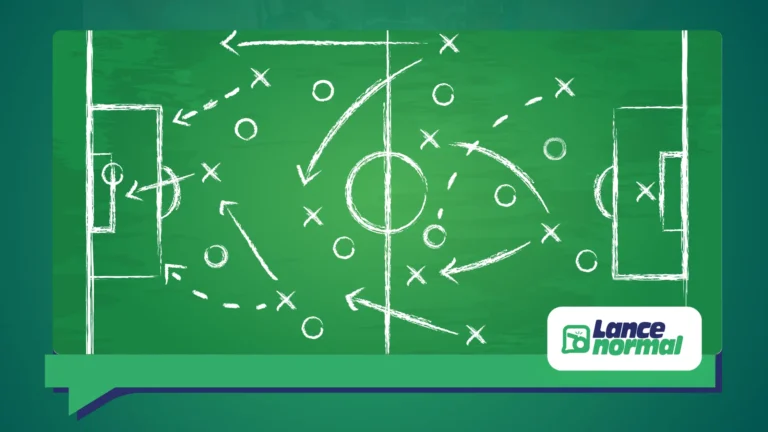

THE Blast training It has become a decisive differentiator for modern attackers, directly influencing short accelerations, quick changes of direction, and lethal actions within the final third of the field.
Advertisements

In contemporary football, the ability to make decisions within a few meters separates ordinary players from decisive athletes, especially in contexts of high defensive pressure and little space for technical execution.
This article analyzes how explosive physicality impacts finishing, off-the-ball movement, and offensive duels, connecting sports science, practical methodology, and real-world examples observed at a high competitive level.
Throughout the text, we explore specific exercises, biomechanical principles, common mistakes, and progression strategies, always considering the reality of professional and amateur attackers.
The goal is not to promise immediate results, but to explain how consistent training processes can transform offensive performance over weeks and months.
Advertisements
With an editorial and analytical approach, the content offers a complete overview of how to develop explosions in a smart, sustainable way that is integrated into the real game.
What defines explosiveness in attacking football?
In attacking football, explosiveness refers to the ability to generate maximum force in a short period of time, allowing for quick bursts of speed, aggressive jumps, and decisive actions in tight spaces.
For attackers, this quality is not limited to top speed, but also includes initial acceleration, the first step, and biomechanical efficiency in short, repeated movements.
Advertisements
Performance studies show that most decisive actions occur at distances of less than ten meters, requiring very specific neuromuscular power.
Players like Kylian Mbappé and Erling Haaland exemplify how well-trained explosiveness creates an advantage even against well-positioned defenses.
This characteristic is trainable when the program respects the principles of load, recovery, and specificity of the sporting movement.
Ignoring these variables turns explosive training into a risk of injury or an ineffective stimulus for the real context of the game.
++ Football and psychology: how athletes cope with defeat and pressure.
Physiological basis of explosive training.
Explosive training depends directly on the activation of type II muscle fibers, responsible for rapid and powerful contractions during short-duration efforts.
These fibers respond better to high-intensity, low-volume stimuli with adequate rest periods, unlike traditional aerobic training.
The coordination between the central nervous system and peripheral musculature defines the efficiency of motor firing during decisive offensive actions.
Research compiled by FIFA They emphasize that specific power training programs reduce reaction time and improve efficiency in short sprints.
Another essential factor is tendon stiffness, which influences the ability to store and release elastic energy during sprints.
When neglected, this physiological basis limits the impact of exercise, even if the training volume seems adequate.
Essential exercises for attackers
Short sprint drills, between five and fifteen meters, simulate most offensive actions performed within the penalty area and during quick transitions.
Horizontal plyometric jumps develop specific power for sprints and changes of direction, bringing the stimulus closer to the actual sporting movement.
Explosive lunges with moderate overload help transfer power from the hips to forward movement, which is essential for mobile attackers.
Elastic resistance training increases initial acceleration without compromising running mechanics when properly guided.
A common mistake is to overdo the external load, reducing speed and distorting the purpose of the exercise.
The correct selection of exercises ensures neuromuscular adaptation without compromising coordination and offensive decision-making.
++ What makes a football coach a true champion?
Integration of the explosion with the ball
Isolated training loses its value when it is not integrated with technical skills performed under real game pressure.
Attackers need to apply explosiveness to actions such as attacks on the near post, interceptions, and finishes while moving.
Drills that combine short bursts of speed, controlled ball control, and shooting simulate recurring situations in the final third of the field.
European clubs report greater transfer of performance when explosiveness is trained alongside decision-making.
According to analyses by UEFAIntegrated sessions reduce the gap between physical ability and technical effectiveness.
This approach avoids the mistake of developing strong athletes outside the real context of competitive play.
++ The balance between entertainment and competition in modern sports.
Weekly planning and recovery
Explosive training demands high neuromuscular stress, making weekly planning a crucial factor for consistent progress.
Intense sessions should be scheduled away from games or strenuous tactical training to preserve the quality of the stimulus.
Active recovery, with mobility and light stimuli, maintains performance without compromising physiological adaptation.
Adequate sleep and nutritional control directly influence the ability to exert power in subsequent workouts.
Ignoring these factors leads to accumulated fatigue and a decline in offensive performance throughout the season.
Intelligent planning transforms explosive training into an ally for competitive consistency.
Common mistakes in attacker training
Many programs fail by treating explosiveness as synonymous with heavy weightlifting, disconnecting strength from functional speed.
Another common mistake is repeating identical stimuli for long periods, reducing the adaptive response of the neuromuscular system.
Young strikers suffer especially when loads are applied without technical assessment of movement.
Lack of progression and absence of biomechanical feedback compromise training efficiency over time.
Training explosively under extreme fatigue reduces quality and increases the risk of muscle injury.
Correcting these errors improves offensive performance without needing to increase training volume.
Evaluation and progress metrics
Assessing explosiveness requires specific metrics that go beyond total sprint time or load lifted.
Short acceleration tests and horizontal jumps provide reliable data on functional progress.
The table below summarizes indicators used by physical trainers in professional soccer.
| Metric evaluated | Distance or time | Main objective |
|---|---|---|
| Short sprint | 5–10 meters | Initial acceleration |
| Horizontal jump | Maximum distance | Lower limb power |
| Change of direction | 180 degrees | Neuromuscular reactivity |
| Kick-off with the ball | 8 meters | Transfer to game |
Continuous monitoring allows for fine-tuning of the training program throughout the season.
Without evaluation, real progress becomes confused with subjective perception of performance.
Conclusion
Explosive training redefines the impact of the modern striker, allowing them to create an advantage in minimal spaces and decide balanced matches.
When well-planned, it connects science, practice, and real-world game context, sustainably increasing offensive efficiency.
Integration with the ball, proper recovery, and continuous evaluation ensure a direct transfer to competitive performance.
More than brute force, well-trained explosiveness represents intelligence applied to the decisive move.
FAQ
1. Is burst training only for fast attackers?
Explosive training benefits attackers of different profiles, as it improves acceleration, reaction time, and efficiency in short, decisive actions.
2. How many times a week should I train explosive power?
Typically, two well-spaced weekly sessions are sufficient to stimulate power without compromising neuromuscular recovery.
3. Can amateur players apply these exercises?
Yes, as long as they adjust the volume and intensity, respecting proper technique and gradual progression of stimuli.
4. Does an explosion increase the risk of injury?
Poor planning increases risks, but structured programs reduce injuries by improving neuromuscular control.
5. Is it possible to train explosive power during the season?
Yes, with controlled loads, training maintains power even during intense competitive periods.