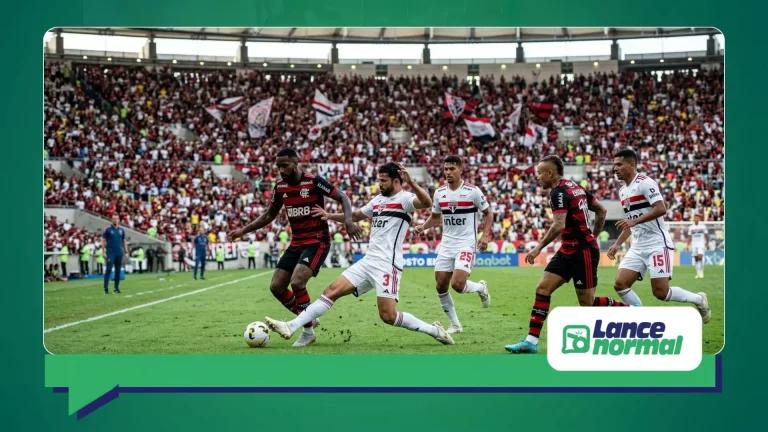


THE The power of the fans It transforms stadiums into vibrant environments where collective emotion influences decisions, physical performance, and the psychological balance of athletes throughout crucial matches.
Advertisements
Far beyond the noise, the presence of the fans creates a symbolic context that alters the perception of risk, courage, and responsibility felt by the players on the field.
Throughout the history of sports, countless accounts show that matches have changed course when the stands have become silent protagonists, pushing teams beyond their technical limits.
Sports science has begun to study this phenomenon, analyzing how auditory stimuli, emotional support, and social pressure affect focus, fatigue, and decision-making.
Experienced coaches recognize that playing at home is not just about knowing the pitch, but about feeling a collective energy that shapes the team's emotional rhythm.
Advertisements
This article analyzes how the power of the crowd acts psychologically, physically, and strategically, establishing itself as a true "12th player" in sports competitions.
The origin of the "12th player" concept
The term "12th player" emerged to explain the invisible advantage that teams gain when playing in front of their home crowd, especially in team sports characterized by constant emotional intensity.
Historically, clubs have recognized that home wins are statistically more frequent, even when their squads were technically equivalent to their visiting opponents.
Advertisements
This pattern has led analysts to investigate external factors, such as noise, symbolic intimidation, and emotional support, that interfere with human behavior under competitive pressure.
Over time, the concept expanded beyond soccer and began to be applied to basketball, rugby, and American football, where the impact of the audience also proved decisive.
Thus, the "12th player" ceased to be a folkloric metaphor and came to represent a strategic element recognized by athletes, coaches, and managers.
++ Why football remains the most watched sport on the planet.
Collective psychology and sports performance
Sports psychology demonstrates that positive stimuli raise dopamine and adrenaline levels, improving reaction time, mental stamina, and the ability to maintain prolonged focus.
When thousands of voices offer encouragement simultaneously, the athlete feels a sense of belonging and a broader sense of purpose, reducing the fear of making mistakes in critical moments.
Studies of group behavior show that the human brain responds intensely to rhythmic patterns, such as synchronized singing and clapping, increasing physiological arousal.
Research published by American Psychological Association Indications suggest that direct social support improves performance on complex tasks under high stress.
On the other hand, the hostile pressure from the opposing fans can generate anxiety, affecting the motor skills and decision-making of less experienced players.

The influence of fans on referees and opponents.
The impact of the crowd is not limited to the athletes, but also extends to the performance of the referees, who are frequently subjected to intense noise and emotional pressure.
Statistical analyses indicate a higher incidence of decisions favoring the home team in matches with full stadiums, especially in cases requiring interpretation of the plays.
The noisy environment hinders communication between referees and players, speeding up decisions and reducing reflection time in ambiguous situations.
According to reports from FIFAThe home advantage influences not only results, but also discipline, added time, and the awarding of fouls.
For opposing teams, facing hostile crowds requires specific psychological preparation, as the mental strain begins even before the opening whistle.
++ The new era of interviews: transparency and image control.
Stadiums, cultural identity and symbolic intimidation
Some stadiums have become cultural symbols, where architecture, proximity of the stands, and traditions amplify the emotional impact on visitors.
The visual identity, dominant colors, and historical chants create an atmosphere that communicates symbolic superiority before the ball even starts rolling.
Players report feeling emotionally claustrophobic in arenas where the sound reverberates intensely, making it difficult to concentrate and communicate on the field.
This effect is amplified when the fans know the exact moments to put pressure on, boo, or remain silent, manipulating the psychological rhythm of the match.
Thus, the stadium ceases to be merely sports infrastructure and begins to act as a strategic instrument of competitive intimidation.
++ Basketball and technology: how data analytics changed the game.
Comparative data on the home factor
Statistical analysis helps to understand how the power of fan support translates into concrete numbers over the course of sports seasons.
The table below summarizes trends observed in national football leagues when comparing home and away performance.
| Indicator | Home games | Away games |
|---|---|---|
| Average win percentage | 56% | 28% |
| Goals scored per game | 1,6 | 1,1 |
| Cards suffered | Lowest rate | Highest index |
| Precision in finishing | Tallest | Lowest |
These data reinforce the idea that the environment influences not only emotion, but also technical efficiency and disciplinary behavior.
Even technically inferior teams can balance matches when they have massive support from their fans.
The silence of the stands and its lessons.
During periods of empty stadiums, athletes and coaches reported a noticeable drop in emotional intensity during matches.
Without fans, games became more predictable, with less of an advantage for the home team and greater psychological balance between teams.
Players stated they found it difficult to maintain maximum concentration because they lacked the external stimulus that drives additional effort.
These scenarios functioned as natural experiments, demonstrating how much the power of the crowd influences actual athletic performance.
With the return of the public, it became clear that football, and other sports, lose part of their essence without this collective energy.
Conclusion
The power of the crowd is not mystical, but a direct result of psychological, social, and physiological interactions that shape human behavior under extreme competition.
By acting as an emotional catalyst, the audience expands individual boundaries and transforms ordinary games into memorable events.
Recognizing the fans as the "12th player" means understanding that sport is a collective phenomenon, where shared emotion influences concrete results.
Thus, grandstands remain an inseparable part of the strategy, identity, and soul of modern sport.
FAQ
1. Why does the crowd have such a strong influence on the players' performance?
The support of the crowd provides intense emotional stimuli that increase motivation, reduce fear of failure, and enhance physiological responses related to physical and mental performance.
2. Does playing at home really offer a statistical advantage?
Yes, historical data shows a higher win rate, more goals scored, and a lower disciplinary record for teams playing in front of their home crowd.
3. Can crowd pressure interfere with referees?
This is because intense noise and collective reactions can affect perception and decision-making speed in interpretive plays.
4. Do all athletes react the same way to crowd support?
No, experienced players tend to use energy positively, while young athletes may experience excessive anxiety.
5. Would sport be the same without fans?
No, the absence of an audience reduces emotional intensity, unpredictability, and psychological impact, profoundly altering the competitive dynamics.