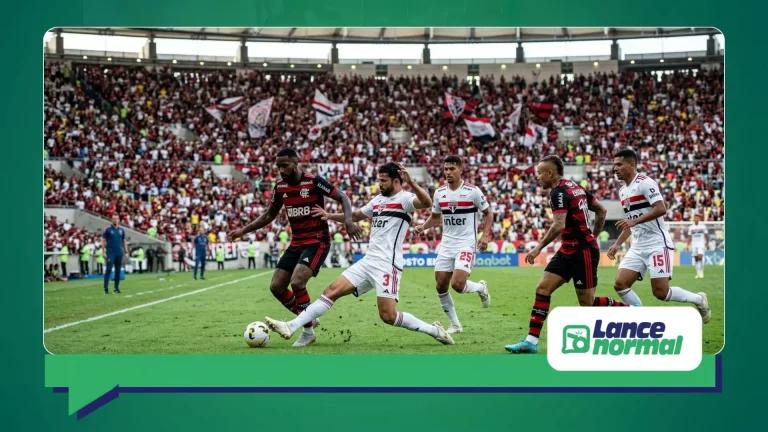


No other cultural phenomenon manages to unite so many countries, languages, and emotions as football.
Advertisements
From Cairo to Buenos Aires, from London to Seoul, the simple act of kicking a ball transcends geographical, economic, and religious barriers.
That is why, even after more than a century of modern history, football continues to be the most watched sport on the planet.
More than a game, it's a universal language. Each goal awakens a shared emotion among billions of people—a collective experience that few human events can replicate.
The simplicity that conquered the world.
The secret to football's popularity lies, in large part, in its simplicity. There is no need for expensive equipment, complex rules, or sophisticated structures.
Advertisements
All you need is a ball and an open space. This accessibility has allowed the sport to flourish in every corner of the world, from the favelas of Rio de Janeiro to the African deserts.
According to data from FIFAmore than 265 million people They regularly practice soccer in clubs, schools, and amateur competitions. This number represents almost 41% of the world's population directly involved with the sport.
The ease of playing also creates a sense of belonging. Any child can dream of being the next Messi or Mbappé, and this universal possibility keeps the passion alive from generation to generation.
Advertisements
The influence of media and globalization
The growth of sports media was crucial in consolidating football as the most watched sport on the planet.
From the first radio broadcasts in the 1930s to today's global streaming, football has always adapted to new communication technologies.
According to FIFA estimates, the 2022 World Cup reached a cumulative audience of more than... 5 billion viewers, including TV and digital platforms. No other sporting event comes close to this scale.
Furthermore, social media has transformed fans into active participants. Goal clips, statistics, and behind-the-scenes footage circulate in seconds, expanding the reach of football and making it a constant part of the global digital routine.
++ What is the daily life of a reserve player in professional football like?
Idols who transcend sports.
If football is the most watched sport on the planetMuch of the credit belongs to its protagonists.
Legends like Pelé, Diego Maradona, Cristiano Ronaldo, and Lionel Messi have transcended their status as athletes to become cultural icons.
These players influence fashion, music, politics, and behavior. They are living brands that inspire admiration and a sense of identity.
The journey of each of them is followed as a narrative of overcoming adversity — human stories that transform into universal symbols.
Today, a star player's reach extends far beyond the pitch. Stars like Kylian Mbappé, Erling Haaland, and Vinícius Júnior mobilize millions of followers and inspire social causes, showing that football is also a tool for voice and transformation.

Economic power and global leagues
Another factor that keeps football as the most watched sport on the planet It is its economic structure.
The industry generates billions of dollars annually, employs millions of people, and drives sectors such as tourism, advertising, and technology.
Clubs like Real Madrid, Manchester United, and Bayern Munich have become global entertainment conglomerates. Their brands are recognized even by those who have never watched an entire match.
The English Premier League, for example, reaches broadcasts in more than 200 countries and generates annual revenues exceeding US$ 6 billion, according to data from Deloitte Football Money LeagueThis massive reach ensures that football continues to dominate the global collective imagination.
| Economic Element | Direct Impact | Global Example |
|---|---|---|
| Broadcast rights | Increased revenue and visibility | Premier League and Champions League |
| Sponsorships and marketing | Consolidation of sports brands | Nike, Adidas, Emirates |
| Sports tourism | Growth in travel and events | World Cup, European finals |
| Athlete training | Job creation and talent development | Academies in Africa and Latin America |
In this sense, football is more than just a spectacle—it's an economic engine that connects continents and fuels dreams.
++ What Happens to a Player When the Club Is Relegated?
The emotion that no statistic can explain.
Although the numbers are impressive, the true power of football lies in the emotion. The sport touches dimensions that go beyond the rational: national pride, team spirit, the catharsis of victory, and the pain of defeat.
When a national team wins the World Cup, an entire country unites. When a club wins a historic title, millions of fans feel represented. Football creates belonging and memory — two of humanity's most powerful social forces.
Research Oxford University Studies indicate that team sporting events increase endorphin levels and strengthen community ties.
In other words, cheering is good for the mind and body, an emotional effect that helps explain why football never loses its relevance.
The future of global football
The future of most watched sport on the planet It seems as vibrant as its past. The expansion of women's leagues, the use of artificial intelligence in athlete performance, and the growth of streaming platforms are further broadening the audience and diversity of those who follow the game.
Furthermore, the integration of augmented reality, real-time statistics, and immersive broadcasts promises to transform the fan experience.
Football will continue to evolve — but without losing the essence that made it universal: the simple passion for a goal.
++ The rise of new NBA talent: the generation that is changing the game.
Conclusion: the game that belongs to everyone
Football remains as the most watched sport on the planet Because it belongs to everyone. It unites different cultures, awakens authentic emotions, and remains one of the few truly global experiences.
In an increasingly fragmented world, football continues to remind us that, for 90 minutes, billions of people can cheer together — not as rivals, but as part of the same shared history.
FAQs
1. Why is football the most watched sport in the world?
Because it's simple, accessible, and has a global reach, with leagues, national teams, and events that engage billions of people.
2. What is the role of digital media in the popularity of football?
Social media and streaming services have expanded interaction, making football a constant part of contemporary digital culture.
3. Do idols still influence public interest?
Yes. Charismatic players continue to be cultural and emotional references, connecting generations of fans.
4. Does women's football also contribute to this growth?
More and more. The increased visibility and professionalization of women's football has expanded its global audience and inspired new female fans.