
THE Post-game recovery It has become one of the central themes of modern sport, as consistent performance depends directly on the body's ability to regenerate between intense and successive efforts.
Advertisements
In increasingly compressed schedules, professional and amateur athletes face constant physiological challenges, requiring scientific strategies to reduce fatigue, minimize injuries, and maintain performance throughout the season.
The evolution of sports science has brought methods previously restricted to Olympic centers to clubs, gyms, and even homes, broadening the debate about effectiveness, cost, and practical application.
Between traditional practices and cutting-edge technologies, legitimate questions arise about what really works, for whom it works, and in what competitive contexts these methods make sense.
This article critically analyzes key recovery strategies, exploring scientific evidence, real-world examples from high-performance sports, and often-overlooked limitations.
Advertisements
Throughout the text, the aim is to offer a balanced, informative, and applied perspective, enabling informed decisions based on science, practical experience, and the realities of contemporary training.
The physiology of recovery after competitive exertion.
After an intense match, the body enters a complex state of metabolic, inflammatory, and neuromuscular stress, requiring coordinated processes to restore tissues, hormonal balance, and full functional capacity.
Muscle micro-tears, glycogen depletion, and alterations in the central nervous system make up a physiological scenario that explains the drop in performance observed when recovery is neglected.
Advertisements
Acute inflammation, while necessary for adaptation, can become harmful when excessive, prolonging delayed onset muscle soreness and increasing the risk of overuse injuries.
Athletes who play frequently, such as professional soccer players, report greater difficulty with neuromuscular recovery than athletes with longer cycles between competitions.
Observational studies in European leagues show a direct correlation between structured recovery strategies and a lower incidence of muscle injuries throughout the season.
Understanding these mechanisms is essential for critically evaluating popular methods and distinguishing between interventions that accelerate real recovery and those that only alleviate momentary symptoms.
++ Sports psychology: how players deal with the pressure of the playoffs.
Ice baths: tradition, science, and controversies
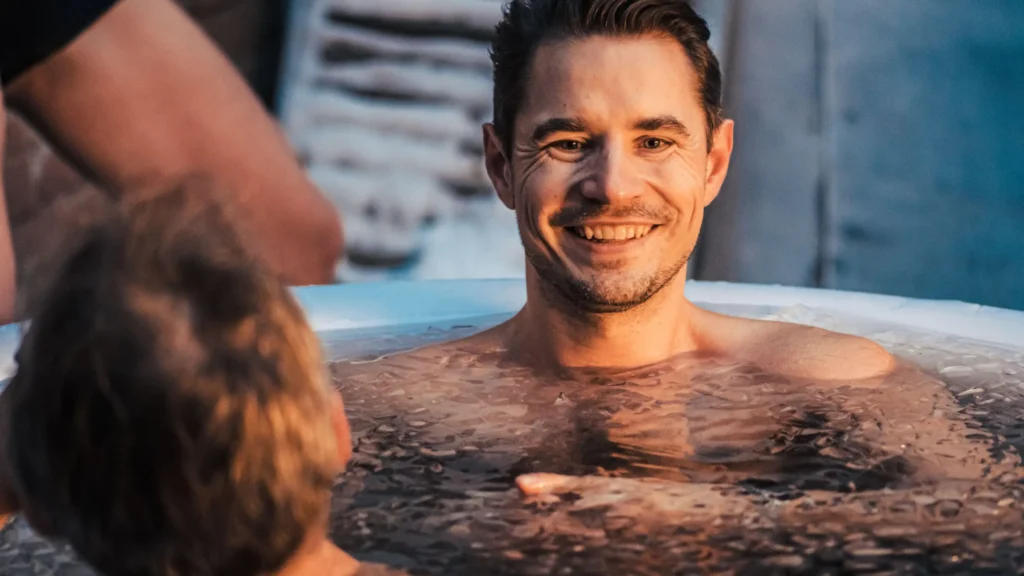
Ice baths gained popularity by promising rapid reduction of muscle soreness and a subjective feeling of recovery, especially after matches with high eccentric load.
Immersion in cold water causes peripheral vasoconstriction, temporarily reducing blood flow and the perception of inflammation, which explains the immediate relief reported by athletes.
Recent research published by National Institutes of Health Indications suggest that chronic use may attenuate muscle adaptations, raising questions about continuous application.
In elite clubs, such as Premier League teams, ice has become a strategic tool, used only during congested periods of the competitive calendar.
Former players report that, during crucial stages of tournaments, cold showers helped them "get back on their feet" the next day, even without clear gains in strength.
| Method | Main effect | Recommended use |
|---|---|---|
| Ice bath | Reduction of perceived pain | Consecutive games |
| Cryotherapy | Inflammatory modulation | High competitive load |
| Active recovery | Increased blood flow | Regular workouts |
The current controversy does not invalidate the method, but reinforces the need for individualization, avoiding automatic and indiscriminate use after any session.
Whole-body cryotherapy in modern sports
Whole-body cryotherapy emerged as a technological advancement, exposing the body to extremely low temperatures for short, controlled periods.
Cryotherapy chambers have become integrated into training centers for Olympic teams and NBA franchises, attracted by the promise of accelerated recovery.
According to analyses by Mayo ClinicHowever, the effects still lack robust scientific consensus, especially when compared to traditional methods.
Reports from athletes indicate improved sleep quality and reduced joint stiffness after regular training sessions during intense competitive weeks.
However, the high cost and the need for specialized supervision limit its application outside of high-performance professional settings.
Cryotherapy proves most effective when integrated into comprehensive protocols, not as an isolated solution or a substitute for basic recovery principles.
++ The power of sports documentaries in popular culture.
Thermal alternatives and mechanical compression
The alternation between heat and cold, known as thermal contrast, aims to stimulate blood flow through successive vasodilation and vasoconstriction.
Athletes in team sports use this method in the days following a game to reduce stiffness without compromising adaptive muscle processes.
Mechanical compression, popularized by pneumatic boots, works by facilitating venous return and reducing peripheral edema.
Basketball players report feeling lighter in their legs after compression sessions, especially on long trips between games.
Although the physiological effect is still debated, subjective comfort contributes to consistent adherence to the protocol.
These alternatives highlight the importance of considering the athlete's perception as a relevant component of overall recovery.
++ Training young athletes: how to balance intensity and development.
Sleep, nutrition, and inflammation control
No technological method can compensate for sleepless nights after intense competitions, as deep sleep regulates hormones that are fundamental for tissue regeneration.
Studies with endurance athletes show a significant increase in performance when total sleep time is prioritized after competitive events.
Post-game nutrition, especially adequate carbohydrate and protein intake, accelerates glycogen replenishment and muscle synthesis.
Foods with natural anti-inflammatory properties, such as fish rich in omega-3, have been incorporated into the diets of professional clubs.
Neglecting these pillars undermines any advanced recovery strategy, no matter how sophisticated it may seem.
The basis for recovery remains simple, although it is often underestimated in the pursuit of immediate solutions.
Technology, data, and personalized recovery
The use of GPS, heart rate variability, and subjective questionnaires has transformed recovery into a measurable and adjustable process.
Performance departments use this data to decide when to apply ice, active rest, or specific regenerative sessions.
Athletes with higher neuromuscular loads receive differentiated protocols, avoiding standardizations that ignore individual responses.
In South American clubs, the gradual adoption of these tools has reduced prolonged absences due to recurring muscle injuries.
Technology does not replace experience, but it enhances the ability to make evidence-based decisions.
Personalizing recovery has become a silent competitive advantage in high-level sports.
Recovery applied to real competitive calendars
In seasons with games every three days, recovery ceases to be ideal and becomes strategic, prioritizing immediate physical availability.
Technical committees need to choose between optimizing long-term adaptation or ensuring acceptable performance in the next crucial match.
Veteran athletes often receive more conservative protocols, while younger athletes tolerate higher workloads with less recovery time.
Cases like that of players who participated in consecutive World Cups illustrate the importance of regenerative planning throughout the year.
Effective recovery doesn't eliminate fatigue, but it controls its effects within safe and productive limits.
In modern sports, recovery is as trainable as running, kicking, or throwing.
Conclusion
Post-game recovery has evolved from empirical practice into a complex scientific field, influenced by evidence, technology, and accumulated experience in high-performance sports.
Methods such as ice baths and cryotherapy have contextual value, provided they are applied judiciously and aligned with the competitive environment.
Without adequate sleep, strategic nutrition, and intelligent monitoring, any advanced technique loses its real impact on performance.
The future of rehabilitation lies in the balanced integration of science, individuality, and the practical realities of contemporary sport.
FAQ
1. Does an ice bath really speed up muscle recovery?
Ice baths reduce perceived pain and can help with congested schedules, but they do not accelerate muscle adaptations when used continuously.
2. Is cryotherapy safe for all athletes?
Cryotherapy requires prior evaluation, as cardiovascular conditions, extreme sensitivity to cold, and high costs limit its universal application.
3. Does compression replace rest?
Compression helps with comfort and circulation, but it does not replace adequate sleep or nutritional replenishment after intense matches.
4. How many hours of sleep are ideal after a game?
Athletes show better recovery indicators with seven to nine hours of sleep, especially when complete cycles of deep sleep occur.
5. Is active recovery better than complete rest?
In many cases, light activities stimulate circulation and reduce stiffness, proving more effective than prolonged absolute rest.