
THE The science of fandom It transformed what was once the collective intuition of players and fans into a field of study with data, methodologies, and conclusions that surprise even the most skeptical.
Advertisements
For decades, the idea that crowd support influences the outcome of games has been treated as sporting romanticism — something athletes say in interviews, not something researchers can accurately measure.
The Covid-19 pandemic changed this radically and unintentionally: by emptying stadiums, football created the greatest natural experiment in the history of the sport, allowing for a direct comparison of team performance with and without spectators.
Researchers at the National Library of Medicine analyzed more than 6,000 matches across 17 different leagues and found an average drop of 81 points per game (TP3T) in home team win percentage in games played without fans—a number that, in terms of points over a season, represents the difference between competing for the title and fighting against relegation.
In Brazil, the UFMG Sports Lab documented that the success rate of clubs at home in the Brasileirão fell from 611 points per game (TP3T) in 2019, with an audience, to 521 points per game (TP3T) in 2020, without an audience, while away wins increased by 201 points per game (TP3T) in the same period.
Advertisements
These numbers are not perception — they are scientific evidence that crowd support acts as a real performance factor, with identifiable mechanisms operating simultaneously on players, opponents, and referees.
The Hormonal Effect: What Happens in Athletes' Bodies
The influence of the fans on the players is not merely psychological in the vague sense of the term—it is physiological, measurable, and operates through hormonal mechanisms documented in the laboratory and on the field.
Studies published in sports science journals have identified that playing at home in front of an intense crowd raises testosterone levels in home players even before the opening whistle, while visiting players exhibit hormonal patterns typical of situations involving threat and social stress.
Advertisements
The presence of fans also raises cortisol and dopamine levels in athletes, with an ambivalent effect: in controlled amounts, these substances improve focus and physical stamina; in excess, they produce the opposite effect, which is why hostile crowds can harm both the visiting team and the psychologically unprepared home team.
Research on territorial hormones in athletes suggests that the crowd acts as a territorial signal — the collective perception that the space “belongs” to the home team activates neurochemical responses of confidence and positive aggression that do not appear in empty stadiums.
The noise from the stands also directly impacts communication on the field, hindering the coach's instructions, defensive calls between players, and the perception of verbal feedback—a disadvantage that affects the visiting team more, as they rely on less automated tactical schemes in the opposing environment.
These combined mechanisms explain why the effect of crowd support is not uniform: teams that have played longer in their stadium, with a more loyal and noisy fan base, reap proportionally greater physiological benefits than teams that change stadiums or play in low-occupancy environments.
++ The Fastest Defenders in Elite Football
The Referee as an Unwitting Channel for the Power of the Fans
One of the most counterintuitive and robust findings of scientific research on the effect of crowds is that a significant portion of their influence on outcomes operates not directly on the players, but through the decisions of the referees.
An article published in Frontiers in Behavioral Economics in 2024 demonstrated that, without crowd pressure, referees awarded 171 fewer penalties to home teams and handed out fewer red cards to visiting teams—a distortion that, in close matches, can be decisive for the final score.
The mechanism is unconscious and well-documented: referees exposed to the noise of a crowd supporting the home team tend to interpret ambiguous plays—those that could be a foul or not, a penalty or not—in a way that is more favorable to the home team, without realizing they are doing so.
Research from Liverpool John Moores University confirmed this trend through experiments where referees evaluated the same plays with and without crowd noise, producing significantly different decisions depending on the sound environment to which they were exposed.
| Variable | With fans | No fans (pandemic) |
|---|---|---|
| Home advantage (Brazil) | 61% | 52% |
| Home team performance (global average) | ~57% | ~49% |
| Penalties awarded to the home team. | Baseline | -17% |
| Away wins (Brazil) | Baseline | +20% |
The Psychology of the Visitor: When Hostility Works
Scientific research on crowd noise isn't limited to studying the benefits for the home team—it also documents the mechanisms by which hostility in the stands actively harms the performance of visiting teams.
Studies published in sports psychology journals have identified that booing directed at the visiting team leads to an increase in technical errors, especially in high-pressure situations such as penalty kicks, precise passes, and shots under intense marking.
Hostile noise acts as a cognitive stressor that competes with the athlete's attentional resources during the execution of complex technical tasks—the more automated a sporting gesture is, the less vulnerable it is to noise; the more it depends on conscious decision-making in real time, the more sound pressure impairs it.
This finding has direct tactical implications: teams that visit large, high-occupancy stadiums face not only the disadvantage of an unfamiliar environment, but also measurable cognitive pressure that affects the quality of decisions during the most critical moments of the game.
THE FIFA It formally recognizes the public factor in the regulations of international competitions, establishing norms on the behavior of fans precisely because science confirms that the sound environment has real consequences on the spectacle and on competitive fairness.
++ The Power of the Fans: The 12th Player on the Field
How Clubs Try to Maximize the Fan Effect
The scientific recognition of the impact of fans on results has led the most structured clubs to develop deliberate strategies to maximize this effect, treating the stands as an extension of the performance department.
The architecture of modern stadiums is specifically designed to amplify and direct sound — stadiums with roofs, sections close to the field, and reflective walls create acoustically hostile environments for visitors and stimulating ones for home fans, in a way that goes beyond romanticism and enters the realm of sports performance engineering.
Fan loyalty programs, player entrance rituals onto the field, specific songs for high-pressure moments, and warm-up protocols synchronized with the fans are all part of a systemic approach that some European clubs explicitly adopt as part of their competitive strategy.
In Brazil, Flamengo is the most documented example of this effect: playing at a packed Maracanã stadium statistically represents a measurable advantage in points per game—a difference that the club and coaching staff explicitly incorporate into their competitive planning for each season.
The advantage of playing at home is not uniform among clubs: teams with large, noisy, and organized fan bases reap disproportionately greater benefits, creating a form of sporting capital that accumulates with the fan culture over decades.
++ Football and Psychology: How Athletes Deal with Defeat and Pressure
Conclusion
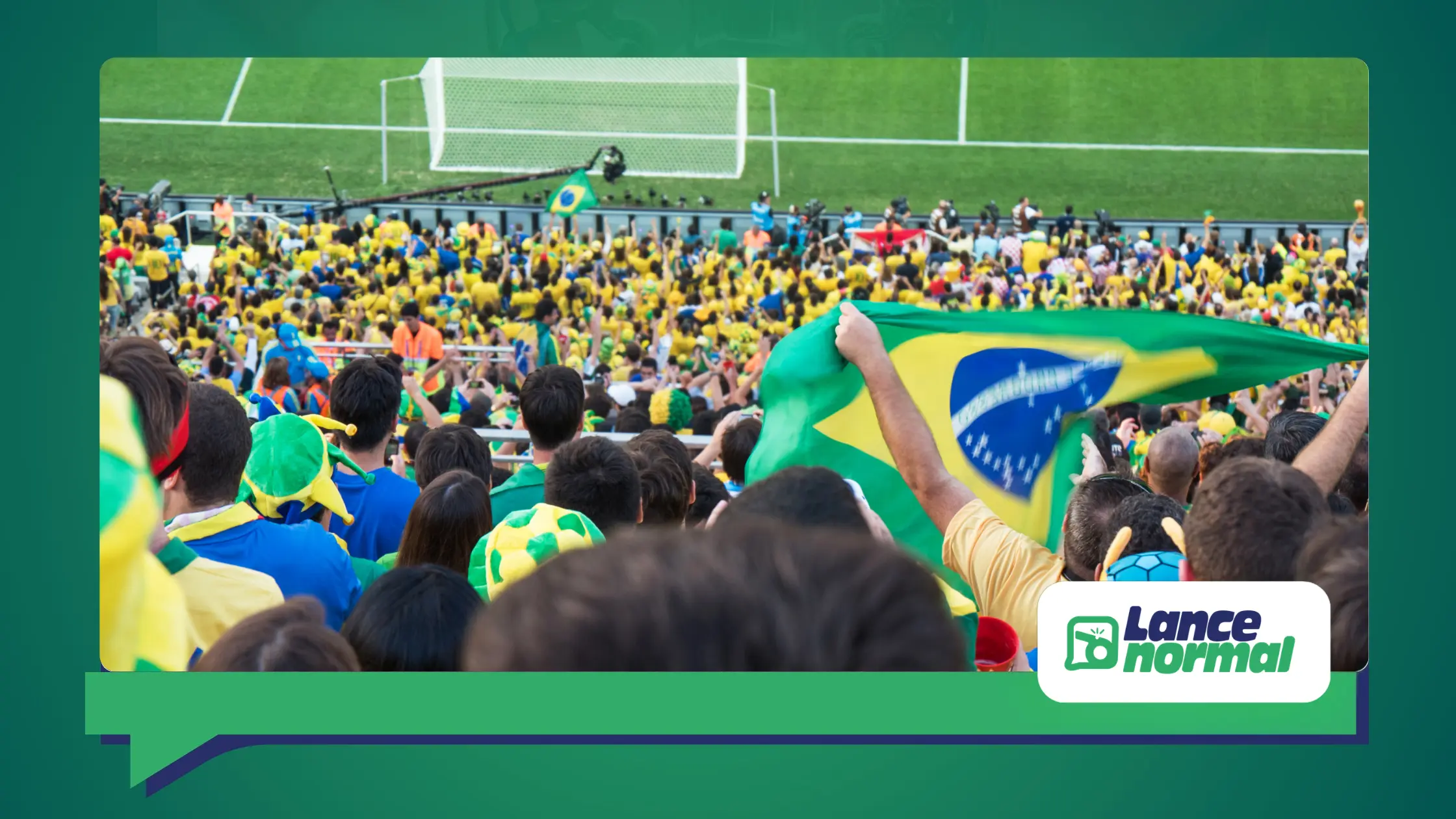
The science of fandom has ended the debate about whether the 12th player is a metaphor or a reality—it is a reality, documented in thousands of matches, confirmed by an unprecedented natural experiment during the pandemic, and explained by precise physiological, psychological, and cognitive mechanisms.
The 81% drop in home win percentage in games without spectators, the 171% fewer penalties awarded without crowd pressure, and the 201% increase in away wins during closed stadiums are figures that describe a real force operating within football.
Players, coaches, and managers who treat the fans as a strategic variable—and not just as an emotional element of the spectacle—are recognizing what science has already confirmed: a full stadium not only accompanies the victory, it actively contributes to producing it.
Football is a team sport with eleven players on the field, but data shows that the twelfth player, invisible in lineups and absent from traditional tactical analyses, is present in the results with a regularity that science can no longer ignore.
FAQ
1. Does the crowd really influence the outcome of the games? Yes, with robust scientific evidence. Research analyzing over 6,000 matches has documented an average drop of 81% in home team performance in games without spectators, confirming that fans have a real and measurable impact on results.
2. How does the crowd affect the players physiologically? The presence of fans alters testosterone, cortisol, and dopamine levels in athletes, improving focus and physical stamina in home teams and creating stress responses in visiting teams, through hormonal mechanisms documented in sports science studies.
3. Do fans influence referees' decisions? Yes. Research shows that without crowd pressure, referees awarded 171 fewer penalties in favor of the home team. The noise from the stands creates an unconscious bias that affects the interpretation of ambiguous plays.
4. Is the effect of crowd support the same for all clubs? No. Teams with large, organized, and noisy fan bases reap disproportionately greater benefits. Stadium capacity, occupancy levels, and fan culture determine the intensity of the effect.
5. What did the pandemic teach us about the impact of fans on football? The period without spectators served as the greatest natural experiment in the history of sports. In Brazil, the home team's win rate dropped from 611 points per game to 521 points per game, while away wins increased by 201 points per game, unequivocally proving the real impact of the fans on the results.