


Cross-training has become a strategic pillar of modern sport, as it enhances complementary physical capabilities, reduces the risk of injury, and sustains the competitive longevity of elite athletes.
Advertisements
In increasingly demanding professional environments, athletes need to cope with intense schedules, frequent travel, and constant psychological pressures, requiring physical preparation approaches that go beyond traditional specialization.
The practice involves combining different modalities, exploring varied stimuli for muscles, energy systems, and motor patterns, creating a more adaptable, resilient, and efficient body.
Major international teams have adopted this approach to keep star athletes performing at a high level for longer, integrating swimming, cycling, Pilates, yoga, climbing, and functional training.
More than a trend, cross-training has become a scientific tool, supported by exercise physiology, biomechanics, and sports psychology, offering objective answers to the contemporary challenges of high performance.
Advertisements
This article analyzes why this approach redefines athletic preparation, showing real impacts on performance, injury prevention, and building lasting sports careers.
What defines cross-training in high-performance sports?
Cross-training is characterized by the planned integration of different disciplines, strategically chosen to develop abilities that the primary sport does not fully stimulate during the competitive routine.
Elite athletes use this approach to improve cardiorespiratory endurance, stabilizing strength, neuromuscular coordination, and joint mobility, creating a more complete and functional physical profile.
Advertisements
Unlike recreational activities, each complementary sport has a clear objective, aligned with the competitive calendar, specific biomechanical demands, and the athlete's injury history.
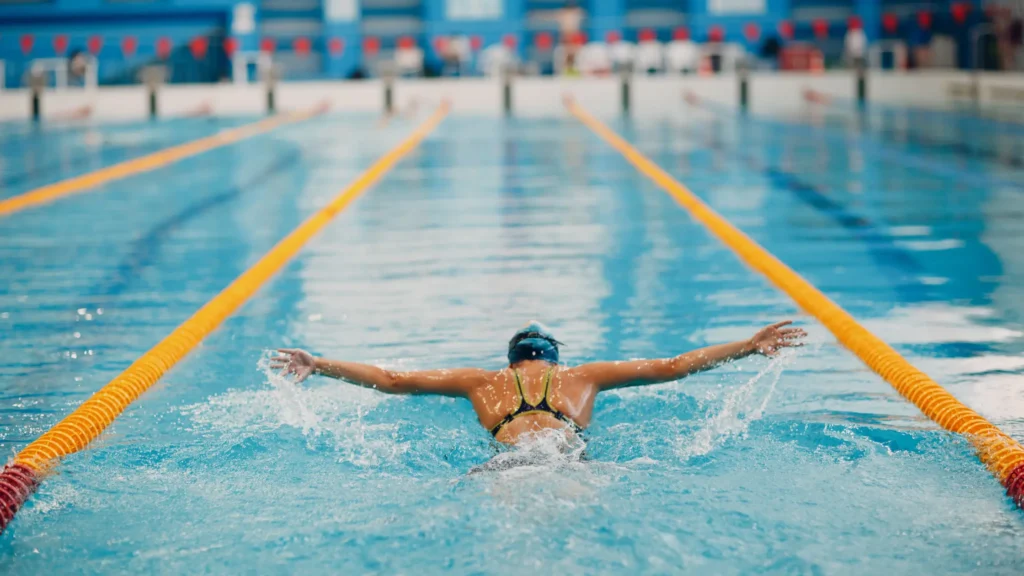
Professional runners turn to swimming to reduce joint impact, while basketball players adopt Pilates to improve body control and prevent frequent muscle imbalances.
Modern coaches understand that early specialization limits physiological adaptations, making the body vulnerable to repetitive overload that compromises promising careers.
Cross-training therefore emerges as a systemic response to the complexity of professional sport, replacing linear approaches with integrated models of sustainable athletic development.
++ What makes athletics the purest sport of human competition?
Injury prevention as a competitive advantage
Injuries represent the greatest financial and sporting risk for clubs, national teams, and sponsors, making prevention a strategic differentiator in the global high-performance landscape.
Alternating stimuli reduces repetitive microtrauma, allowing tendons, ligaments, and joints to recover while other physical abilities continue to be worked on.
Studies on sports biomechanics demonstrate that variations in movement strengthen neglected muscle chains, balancing internal forces responsible for a large proportion of chronic injuries.
Modern programs utilize evidence published by National Institutes of Health to structure protocols that reduce the incidence of sprains, stress fractures, and recurrent joint inflammation.
Cases like that of Rafael Nadal, who incorporated cycling and aquatic exercises after repeated knee injuries, illustrate how smart adjustments can prolong careers in extremely competitive environments.
Prevention is no longer just medical care; it's transformed into a performance strategy, preserving human assets and ensuring technical continuity throughout extended seasons.
Direct impact on athletic performance.
Cross-training improves metabolic efficiency by stimulating different energy systems, increasing the body's ability to adapt to variations in intensity during real competitions.
Athletes subjected to varied stimuli develop greater body awareness, resulting in more economical movements, better motor decision-making, and quick responses under fatigue.
In team sports, this approach enhances agility, balance, and mental toughness, attributes that are crucial in long matches, hostile environments, and situations of extreme pressure.
NBA teams have incorporated martial arts and contemporary dance to refine spatial coordination, reducing falls, unnecessary collisions, and technical errors at critical moments.
The practical effect is evident in game statistics, where athletes maintain high levels of performance even in congested schedules, something unthinkable in traditional training models.
This evolution demonstrates that performance depends not only on training more, but on training better, integrating bodily experiences that expand the physical repertoire of the professional athlete.
| Complementary modality | Main benefit | Most impacted sport |
|---|---|---|
| Swimming | Impact reduction | Running and football |
| Pilates | Central stability | Basketball and volleyball |
| Cycling | Aerobic endurance | Tennis and athletics |
| Yoga | Joint mobility | Martial arts |
Scientific evidence and institutional validation
The growth of cross-training accompanies scientific advances that demonstrate how varied stimuli enhance neuromuscular plasticity and reduce structural wear and tear in high-repetition sports.
Longitudinal studies indicate that athletes who participate in diversified training programs experience less time off due to injury and greater statistical consistency in performance across seasons.
Institutions such as International Olympic Committee They began recommending multidisciplinary approaches in the preparation of national teams, recognizing the direct impact on competitive longevity.
Sports science has abandoned isolated paradigms, adopting integrative models that consider sleep, nutrition, mental health, and cross-stimulation as inseparable components of performance.
Centers of excellence use biometric sensors to adjust workloads between modalities, ensuring a balance between stimulus, recovery, and individualized physiological adaptation.
This institutional validation has transformed cross-training into a global standard, definitively dispelling the idea that diversification compromises technical specialization.
++ How sport influences global politics
Psychological adaptation and prevention of mental burnout.
The exhaustive repetition of technical routines causes emotional burnout, reduces intrinsic motivation, and increases the risk of early dropout in athletes subjected to constant pressure.
Cross-training introduces controlled novelty, offering different bodily experiences that renew engagement, stimulate curiosity, and restore pleasure in movement.
Athletes report a feeling of freedom during supplementary sessions, temporarily distancing themselves from the competitive pressures associated with their main sport.
This psychological relief strengthens emotional resilience, making the athlete more prepared to face defeats, public criticism, and long periods away from family.
Elite programs utilize creative methods to promote active relaxation, integrating music, conscious breathing, and fluid movements in less hierarchical environments.
The result is greater emotional stability, better competitive focus, and a lower incidence of burnout, a phenomenon that is becoming increasingly common in contemporary professional sports.
++ The biggest record-breaking moments in history.
Strategic planning and individualization of the method
The effectiveness of cross-training depends on rigorous planning, aligned with the competitive calendar, the phase of the season, and the specific physiological needs of each athlete.
High-level coaches use biomechanical analysis to identify overload patterns, selecting modalities that compensate for structural deficits detected in periodic assessments.
Individualization avoids conflicts between stimuli, ensuring that complementary modalities enhance, rather than hinder, core technical performance.
In explosive sports, such as high jump, aquatic activities preserve power without compromising joints already overloaded by repeated impacts.
Communication between physical trainers, physiotherapists, and technical coaches becomes essential for integrating workloads, respecting recovery cycles, and avoiding overlapping efforts.
This systemic model replaces improvisation with applied science, transforming the athlete's body into a long-term project that is strategically monitored, adjusted, and protected.
The future of high-performance sports
Sports are moving towards increasingly hybrid models, where boundaries between disciplines are dissolving in favor of complete, adaptable, and sustainable athletic profiles.
New generations grow up in multidisciplinary environments, practicing different sports from an early age, developing broad coordination before definitive specialization.
Youth development clubs incorporate principles of cross-training in youth categories, preventing early injuries and expanding motor skills during critical developmental phases.
Wearable technologies will allow for real-time adjustments between stimuli, creating dynamic programs that respond instantly to signs of fatigue or physiological overload.
The athlete of the future will not only be a specialist, but also a manager of their own body, aware of limits, possibilities, and strategies to prolong competitive performance.
In this scenario, cross-training is consolidating itself as the cornerstone of high performance, redefining standards of sporting excellence on a global scale.
Conclusion
Cross-training has gone from being a peripheral alternative to becoming a central axis of modern training, combining science, prevention, performance, and mental health into a single integrated system.
By diversifying stimuli, athletes build more resilient bodies, capable of enduring grueling schedules without sacrificing technical efficiency or emotional stability.
Stories of athletic longevity prove that sustainable success depends less on repetitive volume and more on intelligence in choosing physical stimuli.
In a sport that is increasingly fast-paced, intense, and unpredictable, those who master their own bodies in multiple dimensions maintain a lasting competitive advantage.
FAQ
1. Does cross-training replace sport-specific training?
It doesn't replace, but complements, strengthening abilities that specific training doesn't fully develop.
2. What is the ideal frequency for including complementary modalities?
It depends on the competitive calendar, generally varying between one and three sessions per week.
3. Can beginners apply cross-training?
Yes, provided they are properly guided, as it reduces injuries and accelerates initial physical adaptation.
4. Which sports benefit most from this approach?
Everyone benefits, especially those involved in running, soccer, basketball, tennis, and martial arts.
5. Does cross-training improve competitive results?
Yes, by improving endurance, coordination, and physical stability, it directly impacts performance.