


Basketball at the Olympics represents much more than medals, as it brings together stories of overcoming challenges, global rivalry, and individual moments that have redefined the sport on a global scale.
Advertisements
Since its Olympic debut, basketball has transformed into a stage where extraordinary talents face unique pressures, playing not only for clubs, but for entire national identities.
Olympic courts have witnessed performances that have spanned generations, creating sporting legends capable of inspiring children, influencing coaches, and permanently altering how the game is understood.
Unlike regular leagues, the Olympic tournament condenses everything into a few games, demanding immediate excellence, emotional leadership, and the ability to make decisions under the symbolic weight of a flag.
Each edition offers its own narrative, where established stars confirm their legacies and promising young talents emerge in performances that would never be forgotten by fans attentive to the history.
Advertisements
This article explores the greatest individual and team performances in Olympic basketball, analyzing the contexts, impacts, and legacies that transformed specific matches into enduring landmarks of the sport.
The birth of a global spectacle
Olympic basketball began as an amateur competition, but quickly became a laboratory of styles, allowing European, American, and Latin American schools to confront distinct philosophies in decisive matches.
For decades, college athletes dominated the men's tournament, creating an environment where raw talent clashed with rigid systems, producing unpredictable matches that shaped the international character of the sport.
Advertisements
The historic turning point occurred when professionals were allowed to compete, transforming the tournament into an absolute showcase, where world stars began to compete under the same Olympic emblem that previously seemed inaccessible.
This change raised the technical and emotional level of the matches, as each game began to carry global media expectations comparable only to the NBA Finals or major continental championships.
At the same time, traditional national teams had to reinvent their strategies to compete against rosters packed with superstars, promoting tactical evolution that benefited basketball worldwide.
The Olympic tournament then came to symbolize not only sporting competition, but a cultural encounter where styles, histories and dreams collide before global audiences attentive to every dribble.
++ The NBA's tactical revolution: fewer centers, more speed.
The lasting impact of the 1992 Dream Team.
In Barcelona, the American Dream Team redefined the notion of historic performance, delivering such an overwhelming collective spectacle that each match felt like a practical lesson in technical excellence and psychological dominance.
Players like Michael Jordan, Magic Johnson, and Larry Bird acted with unprecedented creative freedom, transforming games into global cultural events that attracted new audiences around the world.
More than just victories, the team delivered symbolic performances, showing that basketball could be art in motion, combining individual charisma and collective discipline in a way never before seen.
The effect was immediate, inspiring young people on every continent to take up the sport, while federations revamped grassroots programs to replicate the standards seen in that historic tournament.
According to the official website of the OlympicsThe 1992 Barcelona Olympics marked the definitive explosion of basketball as a global product, permanently altering the relationship between the sport and its international audience.
The Dream Team's performance remains the ultimate benchmark of collective mastery, setting a nearly unattainable standard for future generations who inevitably bear the weight of that eternal comparison.
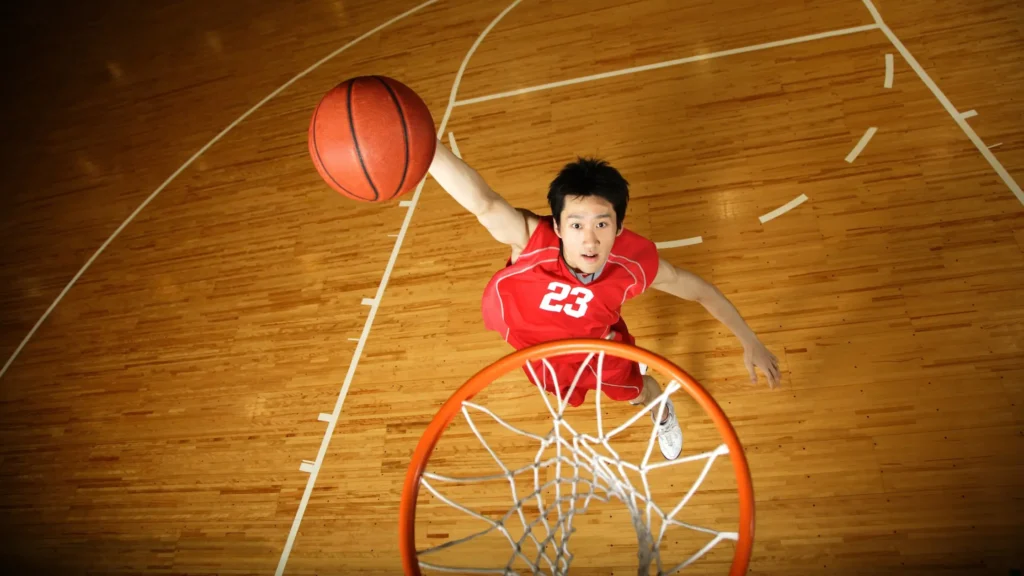
Oscar Schmidt and greatness without a medal.
Oscar Schmidt delivered one of the greatest individual performances in Olympic history at Seoul 1988, scoring forty-six points against the United States, demonstrating that genius transcends final results.
Even without a medal, his performance resonated worldwide, revealing that Olympic basketball also produces lone heroes, capable of challenging established powers with pure talent and unwavering courage.
Oscar performed without the media fanfare of American stars, but he transformed each throw into an affirmation of identity, proving that Brazil had its own voice on the international stage.
His ability to decide games almost single-handedly has raised respect for national teams outside the traditional circuit, encouraging emerging federations to invest in athletes capable of changing destinies.
The Brazilian performance in Seoul became a symbol of sporting resilience, a reminder that the Olympic spirit also celebrates those who dare to face giants without any guarantee of victory.
Oscar remains an example that Olympic greatness doesn't depend exclusively on podium finishes, but on the ability to create moments that transcend decades and continue to inspire new generations.
++ Basketball and technology: how data analytics changed the game.
Manu Ginóbili and the breaking of hegemony
At Athens 2004, Manu Ginóbili led Argentina in a historic campaign, combining tactical intelligence, offensive creativity, and emotional leadership to defeat theoretically invincible teams.
His performance against the United States in the semifinals became a masterclass in modern basketball, blending unpredictable drives, precise shots, and refined defensive reading under extreme pressure.
Ginóbili not only scored crucial points, but also controlled the tempo, calmed his teammates, and transformed a talented team into a collective machine capable of challenging any opponent.
Argentina's gold medal symbolized the definitive end of American hegemony, proving that organization, chemistry, and courage can overcome more star-studded rosters.
The campaign redefined international respect for Latin American basketball, inspiring neighboring countries to believe in sustainable projects and realistic Olympic ambitions.
Ginóbili emerged as the archetype of the modern leader, showing that historical performance involves both statistics and the ability to uplift everyone around him in decisive moments.
++ How nutrition has evolved in high-performance sports.
Female dominance and the age of legends
Olympic women's basketball has built its own gallery of memorable performances, with athletes like Lisa Leslie, Diana Taurasi, and Sue Bird setting technical and emotional standards that have redefined the game.
Lisa Leslie made history by performing the first women's dunk in the Olympic Games, transforming a technical move into a cultural symbol of global sporting empowerment.
The continued American gold medal streak revealed impressive consistency, sustained by athletes capable of combining offensive efficiency, defensive discipline, and collective reading rarely seen in international competitions.
The evolution of the women's tournament has mirrored social transformations, becoming a platform for visibility, equality, and recognition of historically underestimated talents.
According to the FIBAThe technical growth of women's Olympic basketball has boosted professional leagues in several countries, creating virtuous cycles of training and investment.
These performances have solidified the tournament as a space of absolute excellence, where legends emerge not only through titles, but through their ability to redefine athletic and symbolic boundaries.
Immortal departures that shaped legacies.
Some specific games have become timeless benchmarks, concentrating drama, technical excellence, and historical significance into forty minutes capable of defining entire careers in the eyes of the world.
Improbable finishes, epic comebacks, and monumental individual performances transformed matches into complete narratives, where each possession seemed to carry existential weight for athletes and fans alike.
These immortal encounters serve as fundamental chapters in sports history, revisited in documentaries, tactical analyses, and conversations between generations passionate about basketball.
Below is a summary of emblematic matches that helped build the Olympic image of sport.
| Year | Player or Team | Match | Emphasis |
|---|---|---|---|
| 1988 | Oscar Schmidt | Brazil vs. USA | 46 points |
| 1992 | Dream Team | USA vs Croatia | Collective domain |
| 2004 | Manu Ginóbili | Argentina vs. USA | Decisive leadership |
| 2008 | Kobe Bryant | USA vs. Spain | Historical final sequence |
| 2021 | Kevin Durant | USA vs. France | Absolute control |
Each line represents more than just statistics; it carries collective emotions, redefining expectations about what it means to perform under the maximum pressure of an Olympics.
These matches demonstrate that historic performances are born from a combination of dramatic context, exceptional talent, and the ability to transform moments into lasting symbols.
The unique pressure of the Olympic stage.
The Olympic environment imposes pressures distinct from those in professional leagues, as every mistake takes on national significance, while every success resonates as a cultural affirmation before global audiences.
Athletes need to adapt their routines, time zones, diet, and intense social interaction, maintaining absolute focus on a few games that define years of physical and emotional preparation.
This time compression transforms ordinary matches into defining events, demanding psychological maturity rarely tested in extended regular seasons.
Many great players have failed in this context, while others have flourished, revealing that historic performance depends as much on mental preparation as on refined technical skill.
Olympic basketball functions as an extreme laboratory of sporting character, separating brilliant talents from those capable of converting pressure into creative fuel.
Therefore, the greatest performances carry an almost mythical aura, as they represent internal victories over fear, expectation, and collective responsibility.
A legacy for future generations.
Each historic performance at the Olympics creates ripples that span decades, influencing young athletes, redefining training curricula, and broadening cultural horizons in previously marginalized regions.
Images of dunks, game-winning shots, and national celebrations become permanent visual references, shaping the dreams of children who don't even yet understand the complexity of the game.
Coaches use these moments as teaching material, instructing on tactical concepts, sports ethics, and emotional resilience through widely recognized concrete examples.
The legacy is not limited to sports, as these narratives strengthen national identities, stimulate public policies of encouragement, and reinforce the symbolic value of sports investment.
Thus, each great Olympic performance transcends the court, influencing education, culture, and sports diplomacy on scales that are difficult to measure.
Basketball at the Olympics remains fertile ground for new chapters, where future legends will write stories capable of engaging with these giants of the past.
Conclusion
Olympic basketball reveals that sporting greatness is born from the encounter between individual talent, historical context, and maximum pressure, creating moments that transcend statistics and remain alive in the collective memory.
Each performance analyzed demonstrates that the tournament not only awards medals, but also constructs narratives capable of redefining careers, influencing sporting cultures, and inspiring entire generations.
From the Dream Team to Oscar Schmidt, from Ginóbili to female legends, the Olympic stage consecrates those who manage to transform fleeting moments into lasting symbols of human excellence.
As new editions emerge, the legacy of these performances remains a beacon, reminding us that true Olympic triumph lies in marking time with meaning.
FAQ
1. Why is Olympic basketball so different from professional leagues?
The tournament concentrates decisive matches into a few days, amplifying emotional pressure, national impact, and psychological demands, transforming each game into a defining event for athletes and fans alike.
2. Who is considered the greatest player in Olympic history?
There is no absolute consensus, but Michael Jordan, Manu Ginóbili, Kevin Durant, and Lisa Leslie frequently emerge as top references due to their combination of impact, titles, and decisive performances.
3. Does the Dream Team still influence basketball today?
Yes, their campaign redefined technical standards, popularized the sport globally, and inspired training programs in various countries, shaping generations that grew up watching that collective excellence.
4. Can athletes without medals be considered Olympic legends?
Certainly, performances like Oscar Schmidt's show that extraordinary individual moments create a legacy independent of podium finishes, influencing sports culture and collective memory.
5. Does women's basketball have the same historical significance in the Olympic context?
Absolutely, because their performances shaped technical standards, propelled professional leagues forward, and represented significant social advancements, becoming essential pillars of the Olympic history of the sport.