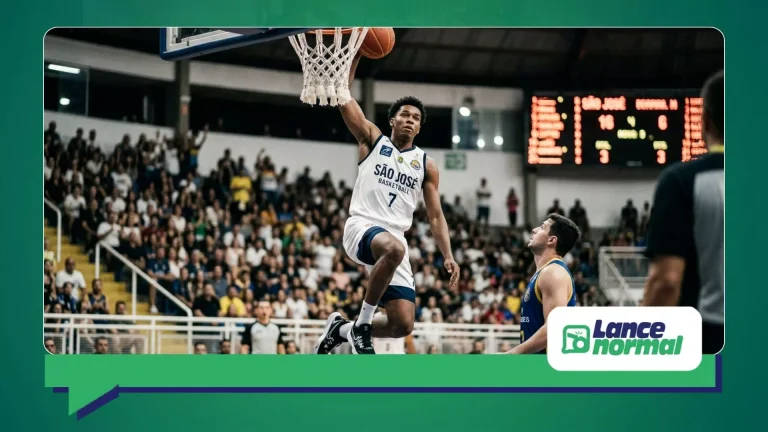


The tactical revolution has profoundly transformed the NBA by replacing traditional formations with faster systems that prioritize spacing, mobility, and straightforward efficiency on the court.
Advertisements
This structural change redefined collective roles, expanded the creative responsibility of the wings, and opened up space for more fluid attacks that punish slow defenses in transition.
Teams have realized that versatile formations produce consistent advantages, allowing players to interact with greater decision-making freedom and impose a fast pace from the very first possessions.
Statistical evolution has reinforced this conceptual shift, demonstrating that light defensive switches, three-point shots, and combined drives generate superior offensive patterns compared to older structures centered on heavy centers.
The new game emphasizes intelligent reading of the game, continuous movement, and quick decisions, completely changing how coaches build systems and distribute tactical roles in competitive teams.
Advertisements
With this transformation now established, modern analysis investigates how fast-paced styles have reshaped professional basketball and increased the technical complexity that defines the current league.
The rise of small-ball and the decline of the traditional center.
Small-ball emerged as a direct response to the limitations imposed by static centers, allowing teams to accelerate offensive actions with wide spacing that favors efficient penetrations and increases the effectiveness of lateral passes.
This configuration gained traction when coaches realized that shorter, but faster and more skillful players created numerical superiority in transitions and made it difficult for opposing defensive teams to adjust their systems, which relied on rigid structures.
Advertisements
The trend became evident in crucial moments when teams with lightweight lineups dominated entire series, demonstrating that agility and versatility outweighed isolated physical presence inside the paint.
Several coaches began to prioritize strong wing players capable of defending multiple positions, reducing the space previously allocated to the typical center who operated almost exclusively near the basket with predictable functions.
This new paradigm has altered both offensive and defensive dynamics, encouraging systems that utilize constant switching, accelerated pace, and quick decisions to exploit structural weaknesses in opponents.
++ How basketball became the most globalized sport in the world.
The importance of spacing and the mathematics of throws.
The development of modern spacing relied on in-depth analyses that showed how intelligently distributing players around the perimeter increases penetration opportunities and creates highly efficient shots.
Teams that applied these principles in a disciplined manner observed significant statistical leaps, boosting the popularity of systems based on the mathematics of shooting that prioritize three-pointers and finishes close to the basket.
Detailed studies reinforce this approach, which is widely discussed in specialized reports such as those published by MIT Sloan Sports Analytics ConferenceThese materials helped solidify the dominant offensive logic in the current NBA.
Based on this analytical foundation, coaches began demanding that centers develop offensive versatility, including mid-range and long-range shots, completely transforming tasks that were previously strictly physical.
This structural revision produced fluid attacks that utilize continuous movements and synchronized cuts, allowing even tall players to act as central facilitators in dynamic and deeply organized schemes.

How defense has evolved to keep up with the new speed.
The increasing pace of matches has forced defenses to abandon heavy systems and adopt models based on quick switching, intelligent positioning, and continuous coverage of vulnerable spaces.
This conceptual reconstruction gained traction when teams realized that only collective mobility could contain attacks that utilized extreme spacing and accelerated infiltrations from the start of possession.
Defensive modernization has demanded multi-functional wing players capable of contesting shots, containing explosive dribbles, and quickly recovering space, replacing traditional roles that fragmented responsibilities.
The complexity has increased even further with the popularization of strategies that include hybrid marking, temporary collapses, and synchronized rotations, requiring constant communication and instant reading of offensive trends.
Research on sports biomechanics, published by NBA ScienceThey broadened the understanding of modern physical demands, influencing training focused on agility, endurance, and continuous acceleration in defensive movements.
++ The rise of new NBA talent: the generation that is changing the game.
The impact of modern stars: creative wings and mobile pivots.
Contemporary players have redefined roles by combining strength, court vision, and consistent shooting, allowing creative wings to assume responsibilities previously reserved exclusively for traditional point guards.
Athletes like LeBron James exemplify this transition by controlling the pace, orchestrating plays, and exerting influence in multiple areas of the court, demonstrating how versatility has broadened the strategic role of offensive leaders.
Meanwhile, mobile pivots like Nikola Jokić transformed the position by acting as primary distributors, using refined reading of the game to trigger precise cuts and exploit imbalances created by constantly rotating defenses.
The influence of these stars accelerated the adoption of tactical systems based on continuous adaptation, encouraging teams to develop players who contribute in all phases of the game with high efficiency.
This change solidified a more well-rounded type of athlete, eliminating rigid boundaries between positions and creating formations in which almost all players can initiate plays, finish attacks, and defend against multiple opponents.
++ Women's basketball: achievements, challenges, and the future of the sport.
How franchises have adapted player development.
Development departments have begun investing in specialized programs that combine modern physical training, biomechanical analysis, and tactical simulations that reflect the fast pace dominated by today's NBA.
These programs utilize a large volume of footage to correct technical micro-details, allowing young wing players to quickly learn how to create offensive advantages and make immediate decisions under pressure.
The preparation also includes spacing drills, reading blocks, and intelligent off-the-ball movement, creating players who understand the collective flow of contemporary attacks and adapt to constant dynamism.
Competitive franchises are also investing in parallel work with sports psychology, seeking to strengthen decision-making and emotional control to cope with environments that demand quick and consistent responses.
This systemic adaptation has made development more strategic, allowing teams to train athletes aligned with the modern logic that prioritizes speed, versatility, and a deep tactical understanding.
The NBA of the future: pace, hybrid position, and game intelligence.
The NBA is moving towards structures in which rigid distinctions between positions disappear completely, creating reactive formations that adapt to the pace, opponent, and dynamic needs of each possession.
Coaches are increasingly using advanced statistical models to predict trends, optimizing rotations and adjusting tactical behaviors in real time to maximize efficiency and exploit imbalances.
This approach fosters the emergence of hybrid players who combine explosive physique, consistent shooting, and refined reading of the game, further reducing the space for fixed roles based on isolated specializations.
The game tends to accelerate even further, with constant transitions, quick infiltrations, and attacks based on immediate advantage, reinforcing the need for collective intelligence and synchronized movement.
Future generations must consolidate systems in which versatility, adaptability, and intellectual precision will define the competitive ceiling for franchises, definitively ending the era dominated by traditional centers.
Table: Statistical evolution of the modern game (averages per team)
| Season | 3 attempts | Game pace | Use of traditional pivots |
|---|---|---|---|
| 2000–01 | Low | Moderate | High |
| 2010–11 | Average | Average | Moderate |
| 2020–21 | High | High | Low |
| 2023–24 | Very high | Very high | Very low |
Conclusion
The revolution that reshaped the NBA highlighted how the combination of speed, spacing, and versatility redefined technical standards that guide modern basketball in all its strategic dimensions.
This transformation revealed that efficiency trumps tradition, demonstrating that intelligent systems produce more lasting advantages than structures centered on physical power and immutable functions.
The new era has valued well-rounded players who contribute in multiple roles, making the sport more dynamic, unpredictable, and intellectually demanding for both athletes and coaches.
Observing this process, it becomes evident that evolution will continue at an accelerated pace, and basketball will become even more complex as new generations emerge with hybrid skills and a deep tactical awareness.
FAQ
1. Why has the traditional center lost ground in the modern NBA?
Offensive speed has increased significantly, reducing the usefulness of static pivots and favoring versatile players capable of defending multiple positions and contributing offensively with mobility.
2. Will small-ball betting continue to dominate in the coming years?
This trend is expected to continue strongly, as teams prioritize a fast pace, efficient spacing, and hybrid players who adapt quickly to contemporary offensive and defensive demands.
3. How have statistics influenced the tactical revolution in the NBA?
Analytical models have shown that three-point shots and finishes close to the basket offer greater offensive return, boosting attacks based on quick decisions and extreme spacing.
4. Do tall players still have a place in today's NBA?
Yes, provided they demonstrate mobility, good game reading skills, and the ability to operate away from the basket, contributing as facilitators or consistent shooters in modern systems.
5. Is modern defense more complex than in the past?
The defense evolved to keep up with fast attacks, requiring constant exchanges, precise communication, and synchronized movements that made the defensive system much more sophisticated.