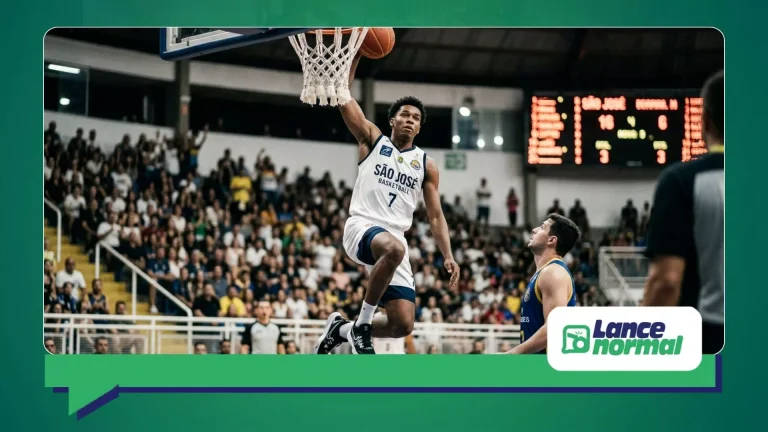


You players who improved the defense the most In the 2025-2026 NBA season, they are at the center of a debate that goes beyond individual statistics: defense has regained prominence in a league that spent years being dominated by offensive spectacle.
Advertisements
The Oklahoma City Thunder led the league with the best record of the season — 23 wins in 24 games at the start — and built that dominance on a defensive identity described by analysts as one of the best in league history, with Chet Holmgren as the main defensive architect in a roster full of collective commitment.
At the same time, players from smaller franchises and rookies had defensive seasons that garnered as much attention as more celebrated offensive performances — a sign that defensive talent is being developed and recognized more and more systematically in professional basketball.
The race for the Defensive Player of the Year award in the 2025-2026 season involved at least five candidates with solid arguments, with Evan Mobley looking to repeat his feat from the previous season and Holmgren emerging as a consistent favorite throughout much of the year.
To understand what constitutes genuine defensive improvement—and not just a stat boost favored by team context—it's necessary to look at who has developed real skills in reading the game, positioning, and impacting opponents' possessions throughout this season.
Advertisements
This article analyzes the players who made the most significant defensive leaps in 2025-2026, based on advanced metrics, expert assessments, and the real impact on their franchises' performance.
Chet Holmgren: The Best Defender on the League's Best Defense
Chet Holmgren isn't just the Oklahoma City Thunder's best defender in 2025-2026—he's, for most analysts, the leading candidate for Defensive Player of the Year in a season where his team built what's being called one of the best collective defenses in recent NBA history.
What makes Holmgren special defensively is the combination of characteristics that rarely coexist in a single player: wingspan and arm length to alter shots in the paint, enough mobility to keep up with modern centers on the perimeter, and the timing to block shots that allows him to contest two-point attempts without committing fouls.
Advertisements
According to data from NBA.com, opponents shoot 7.11 times worse from three-point range when Holmgren is the primary defender — a number that reflects real impact on individual possessions, not just intimidating presence on the court.
The Thunder led the league in forced steals last season, limited opponents to the lowest field goal percentage, and ranked among the best in blocked shots — and Holmgren is the organizing axis of this entire defensive structure.
Holmgren's DPOY candidacy faces an unusually favorable context: being the best defender on the league's best defensive team is an argument that few candidates for the award can combine so clearly.
His evolution compared to the previous season is especially visible in his ability to influence possessions without needing to leave his position — he learned to use his length and positioning to force changes in decision before the shot, reducing his reliance on spectacular blocks as an indicator of impact.
++ Aerobic Endurance Training Without Having to Run 10 km Every Day
Evan Mobley: Defending a Champion Without the Context of a Champion
Evan Mobley entered the 2025-2026 season as the reigning Defensive Player of the Year, carrying the difficult task of repeating the feat in an environment that has become more competitive and with the Cavaliers experiencing a collective defensive decline compared to the previous year.
Mobley's paradox this season is accurate: individually, he maintained the same level of defensive excellence — with slightly higher block statistics and consistent defensive rebounds — but the Cleveland Cavaliers fell from eighth to fourteenth place in collective defensive efficiency, hindering the perception of the center's impact.
NBA.com's expert analysis highlights that Mobley remains one of the league's top three individual defenders in 2025-2026, with length, movement, and timing that make him one of the most versatile centers for defending both in the paint and on the perimeter.
What Mobley has significantly developed this season compared to previous ones is his ability to switch into pick-and-roll situations without losing efficiency — he can cover point guards on the perimeter for short periods without the action becoming an advantage exploited by the opposing offense.
| Player | Team | Defensive tendency 25-26 | Main evolution |
|---|---|---|---|
| Chet Holmgren | OKC Thunder | Elite — DPOY Favorite | Impact without leaving position. |
| Evan Mobley | Cleveland | Elite — worse context | Switch to pick-and-roll |
| Cooper Flagg | Dallas | Rookie with immediate impact. | Advanced tactical reading |
| Amen Thompson | Houston | Irregular but explosive | Elite 1-1 score |
| Dyson Daniels | Milwaukee | Most Improved — 3 steals/game | Historical volume of robberies |
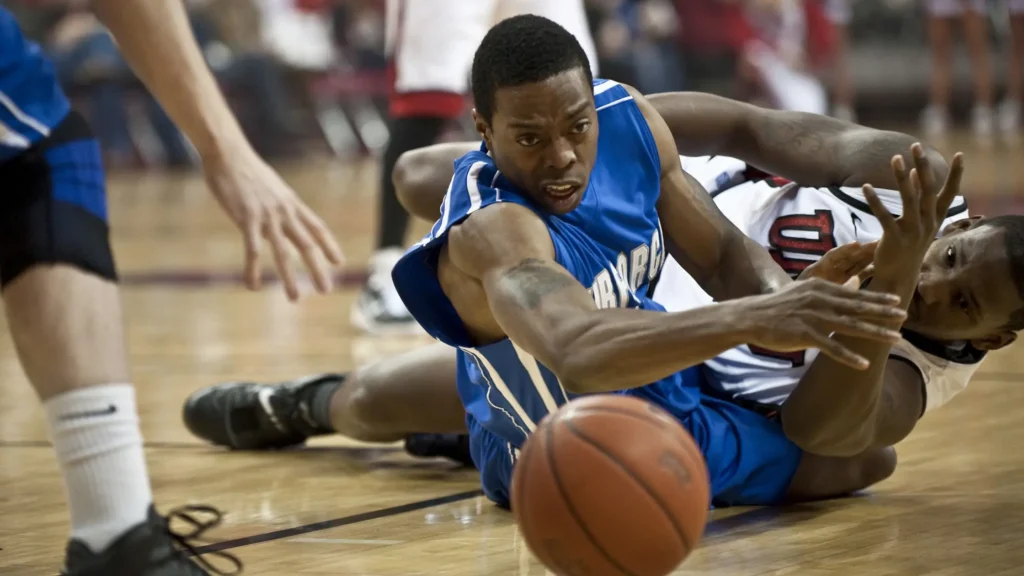
Cooper Flagg: The Rookie Who Came to Defend
Cooper Flagg, the number 1 pick in the 2025 draft selected by the Dallas Mavericks, became widely known even before his league debut for his defensive skills, described by recruiters as rare for an 18-year-old player.
What was surprising in the 2025-2026 season wasn't that Flagg defended well—that was expected—but the speed with which he adapted his college defensive skills to the intensity, speed, and complexity of professional basketball.
His defensive tactical awareness is particularly noteworthy: Flagg rarely makes help defense decisions based on impulse or showmanship, preferring the correct positioning that ensures recovery when help isn't needed—a trait of experienced defenders that takes seasons to develop.
++ How to Structure Power Training Blocks for Soccer and Basketball
The context of the Mavericks in 2025-2026 made Flagg's task even more complex: with Kyrie Irving injured and the franchise rebuilding after Luka Dončić's departure, the offensive responsibility fell on his shoulders in an unusual way for a rookie, which made his defensive consistency on nights when he carried the team on both ends even more impressive.
Flagg is among the candidates for Rookie of the Year with arguments that go beyond offensive numbers — his defensive contribution sets him apart from other rookies who arrived with an impact mainly on offense, representing a more complete and rarer profile than the other candidates for the award.
Dyson Daniels: The Great Barrier and the Three Steals per Game
Dyson Daniels entered the 2025-2026 season with the Milwaukee Bucks with something few modern NBA players possess: a documented ability to steal the ball in a volume unseen in the league for decades.
In the previous season, Daniels averaged close to three steals per game — a number that, according to the Basketball Index, hadn't been seen consistently in the NBA since the days of players like Alvin Robertson in the 1980s — earning him the nickname "The Great Barrier Thief" from Australian fans.
In 2025-2026, Daniels made the first All-Defense team and was a leading candidate for the Most Improved Player award, combining his exceptional defensive ability with gradual and consistent improvements in his offensive game.
What makes Daniels particularly valuable is that his steals aren't the product of speculative gambles that compromise defensive positioning—they come from superior pass anticipation and reading of offensive intentions, a talent that is genuinely rare and difficult to coach.
++ Proprioception Training: The Secret Weapon Against Injuries in Team Sports
The Bucks' defense around Daniels also benefited from his ability to pressure the ball handler without compromising pass lane coverage — a technical skill that allowed Giannis Antetokounmpo's system to function more aggressively on the perimeter than in previous seasons.
Amen Thompson and the Potential of an Elite Defender
Amen Thompson of the Houston Rockets represented in the 2025-2026 season the most fascinating case of defensive potential awaiting consistent realization — someone whose best defensive nights are discussed on par with any defender in the league, but whose consistency has not yet matched his talent.
When fully engaged defensively, Thompson achieves rare feats: in a game against the Cavaliers, he limited Donovan Mitchell to just two points in three quarters — a display of 1-on-1 ability that few alleros in the league can exhibit against one of the best scorers in the Eastern Conference.
The Houston Rockets ranked among the top five in defensive efficiency for much of the season, and Thompson is the franchise's best individual defender—someone whose physical presence, wingspan, and aggressiveness change the offensive behavior of opponents even when he's not making a steal or a block.
The evolution that analysts expect from Thompson in the following season is less technical than mental: his defensive inconsistency seems linked to engagement and concentration throughout a long season, not to a lack of the necessary tools to be a regular elite defender.
Conclusion
The 2025-2026 professional basketball season confirmed a trend that had been emerging in previous years: defense returned to the center of the debate about the quality of play and, more importantly, about building winning teams.
Chet Holmgren, Evan Mobley, Cooper Flagg, Dyson Daniels, and Amen Thompson represent completely different defensive profiles—the team playmaker, the versatile center, the complete rookie, the stealing specialist, and the athlete with elite potential—but all contributed to a season in which the defense regained the recognition it deserved.
The Oklahoma City Thunder won the league not just because they have Shai Gilgeous-Alexander, but because they built around him a defensive identity that turns every possession into a battle — and Holmgren is the most complete expression of that identity.
The future of NBA defense depends on all these players, and the generation emerging now seems more committed to the less glamorous side of basketball than any other since the 2000s.
FAQ
1. Who was the best defender in the NBA in 2025-2026? Chet Holmgren of the Oklahoma City Thunder was the most consistent favorite for the Defensive Player of the Year award, with opponents shooting 7.1% worse when he was the primary defender, on a Thunder team that built one of the best collective defenses in recent league history.
2. Did Evan Mobley manage to repeat his Defensive Player of the Year title win? Individually, Mobley maintained the level of excellence from the previous season, but the Cavaliers fell from eighth to fourteenth place in collective defensive efficiency, complicating their bid to repeat the award in a year with more intense competition.
3. Did Cooper Flagg really make an impact defensively in his first year? Yes. Flagg demonstrated an unusual defensive tactical awareness for an 18-year-old rookie, with positioning and help defense decisions that typically take seasons to develop—a differentiating factor that placed him among the Rookie of the Year candidates with arguments beyond just offense.
4. Does Dyson Daniels really average three steals per game? Daniels had achieved this historic volume in the previous season, and in 2025-2026 he consolidated his reputation as one of the league's greatest defensive specialists, earning a spot on the All-Defense first team and being among the candidates for Most Improved Player.
5. Why has defense become valued again in the NBA in 2025-2026? The success of the Oklahoma City Thunder, which combined the best record in the league with the best defense, demonstrated in practice that a suffocating defense can be the foundation of a championship team even in the era of three-point shots — reinforcing an argument that experienced coaches have never abandoned.