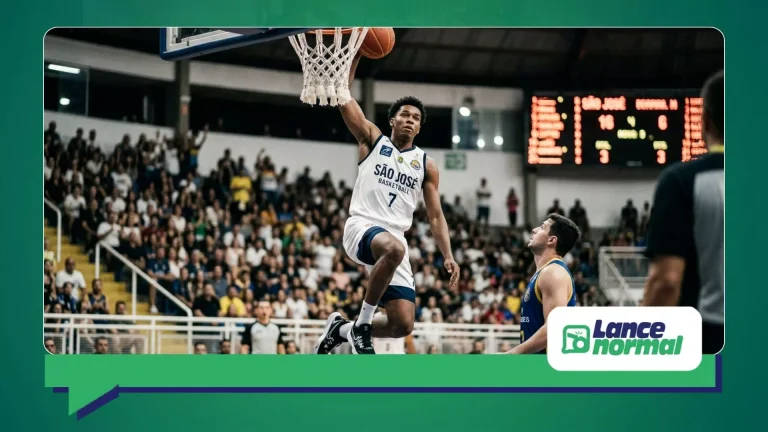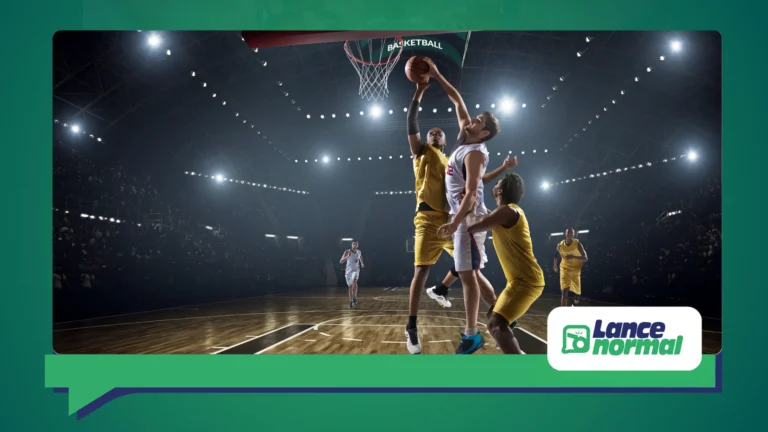


You traditional pivots They have returned to the center of discussions because several teams have once again realized the strategic value of physical strength, rim protection, and play close to the basket.
Advertisements
For years, the preference for long-range shots significantly reduced the space occupied by tall men who built their performances inside the paint.
Even with the expansion of perimeter play, coaches began to identify defensive imbalances caused by the lack of consistent physical presence in the areas near the rim.
This change does not represent a complete return to the past, but rather a modern adaptation that combines classic principles with contemporary demands for speed and efficiency.
Many athletes have developed broader repertoires without abandoning traditional characteristics, creating profiles capable of impacting matches in different and complementary ways.
Advertisements
The result is a competitive landscape where the paint regains strategic relevance, influencing signings, tactical systems, and the development of new generations.
The transformation of modern basketball.
The analytical revolution has profoundly altered offensive priorities, favoring three-point shots and drives to the basket, which have been considered statistically more efficient for much of the last decade.
In this context, many traditional centers lost ground because their core skills seemed incompatible with the fast pace adopted by several teams.
Advertisements
The constant search for defensive versatility has also encouraged shorter formations, capable of making frequent substitutions without excessively compromising perimeter coverage.
However, the homogenization of styles produced specific weaknesses that began to be exploited by dominant players operating near the rim.
When all teams follow similar patterns, rare characteristics become valuable again and offer relevant competitive advantages.
Therefore, the current discussion is not about nostalgia, but about finding efficient solutions to the new strategic demands of the game.
++ Unilateral strength training: correcting imbalances that no one notices.
The impact of giants on defense.
The presence of a dominant center remains one of the most effective resources for altering offensive decisions and reducing the efficiency of opponents near the basket.
Blocked shots represent only part of this influence, as many offenses modify trajectories and choices even before the shot is completed.
Studies published by NBA Studies show that rim protection remains among the most important factors in building consistent defenses.
In addition to intimidation, tall players secure crucial defensive rebounds to disrupt second chances and accelerate organized offensive transitions.
Teams that regained physical size in the paint saw significant improvements in containing drives and controlling the game's territory.
This set of factors explains why several franchises have begun to reassess the strategic importance of defensive specialists near the rim.

The technical evolution of contemporary pivots.
The return of these players does not signify an exact repetition of the models observed in previous decades, which were marked by highly specialized roles.
Modern centers need to understand complex reads of the game, participate in offensive circulation, and make quick decisions against increasingly aggressive defenses.
Many have developed the ability to lead counter-attacks, provide assists, and mark in wider areas at certain times.
This combination of classic fundamentals and modern skills has significantly increased the market value of the most well-rounded athletes.
A center capable of dominating rebounds and contributing to the offensive build-up offers tactical flexibility that is difficult to find in other positions.
The direct consequence is the emergence of hybrid profiles that preserve the essence of the inner game without ignoring contemporary demands.
++ The best pick-and-roll systems in the NBA in 2026
Players who symbolize this comeback.
Some athletes have become role models because they have demonstrated that playing close to the basket is still capable of deciding important matchups.
Names like Nikola Jokić and Joel Embiid helped redefine perceptions about the impact of tall men.
Although they possess distinct characteristics, both utilize physical presence, advanced reading skills, and territorial dominance to control entire matches.
Other players follow similar paths, exploiting size advantages without abandoning skills traditionally associated with point guards and forwards.
The influence of these stars also affects youth categories, encouraging tall young athletes to develop more diverse technical repertoires.
As a result, the position is undergoing a process of renewal that combines tradition, creativity, and constant adaptation.
++ European basketball 2026: which teams are threatening the Euroleague's dominance?
Comparison between eras of the paintball bottle
Historical analysis reveals important differences between the dominant pivots of different eras and their respective competitive contexts.
| Aspect | It was traditional | Current era |
|---|---|---|
| Spacing | Minor | Bigger |
| Three-point shots | Limited | Frequent |
| Mobility required | Moderate | High |
| Offensive functions | Specialized | Diverse |
In previous decades, the greater concentration of players near the basket favored constant physical confrontations and more predictable offensive systems.
Currently, the increased spacing creates different opportunities for athletes capable of establishing a deep position inside the paint.
This change requires refined reading of the game to take advantage of specific moments without compromising the team's collective offensive flow.
Despite obvious structural differences, fundamentals such as positioning, rebounding, and rim protection remain extremely relevant.
For this reason, many qualities valued in the past remain useful when adapted to the contemporary context of sport.
The role of advanced analytics
Modern metrics have contributed to the rise of perimeter play, but have also helped to identify often-overlooked benefits of inside play.
Indicators related to rim protection, rebounding efficiency, and defensive impact have broadened the understanding of the value of centers.
Data provided by FIBA They reinforce the importance of a balance between outside play and physical presence near the basket.
Analysts began to observe that certain small formations suffered significant losses in aspects that were difficult to perceive superficially.
The more sophisticated use of statistics has made it possible to assess contributions that do not always appear directly in the individual scores of athletes.
Thus, the very evolution of data analysis has helped to put the bottle back at the center of strategic decisions.
The future of traditional pivots
The most likely trend points to a coexistence between different styles, without one model completely eliminating the other.
Teams will continue to value shooters and versatile players, but will also seek athletes capable of controlling spaces near the rim.
The market is showing increasing interest in players who combine physical strength, tactical intelligence, and defensive adaptability.
Coaches see these profiles as a valuable alternative to face opponents who rely excessively on small-sided formations.
Furthermore, extensive schedules and decisive matchups often require varied resources to respond to specific scenarios.
In this competitive environment, traditional centers seem destined to once again occupy a relevant and lasting role.
The return of the big men reveals that sporting trends rarely disappear completely when they continue to offer concrete competitive advantages.
Modern basketball has demonstrated that innovation and tradition can coexist, producing more balanced solutions to increasingly complex challenges.
The recent rise in value of these athletes stems from both individual technical development and the strategic needs observed by the teams.
Given this scenario, traditional centers are once again decisively influencing the game and will likely remain relevant in the coming years.
FAQ
1. Are traditional centers definitely making a comeback in basketball?
They have regained strategic importance, although they coexist with modern and versatile styles.
2. What characteristic made these players valuable again?
The combination of rim protection, rebounds, and dominant physical presence.
3. Has the three-point game lost its importance?
No, but now it shares the spotlight with other efficient tactical solutions.
4. Who are some current examples of this movement?
Nikola Jokić and Joel Embiid are among the leading representatives.
5. Do youth categories also follow this trend?
Yes, many tall young people develop inner strengths and modern skills.