
Unilateral strength training has gained popularity among professionals attentive to the details of human movement, especially because it reveals functional differences that are often masked during exercises performed with both sides simultaneously.
Advertisements
Many people believe they have balanced strength between their upper and lower limbs, but practical assessments show subtle compensations that influence daily performance, posture, and mechanical efficiency.
These imbalances rarely appear in common activities, as the body develops automatic strategies to distribute effort and protect less capable regions during repetitive tasks.
When ignored for extended periods, seemingly small differences can contribute to inadequate movement patterns, increasing technical limitations and promoting overload in specific joints.
Unilateral training offers a precise approach to identifying hidden weaknesses, allowing for targeted interventions that promote more harmonious muscle development and better body control.
Advertisements
Throughout this article, we will analyze the mechanisms involved, the observed benefits, and the practical applications of this strategy in different sports and recreational contexts.
Why do imbalances go unnoticed?
Bilateral movements allow the dominant side to take on some of the work, reducing the perception of significant differences in strength, stability, and coordination during exercise execution.
In a traditional squat, for example, one leg may generate more force while the other contributes less, without the practitioner clearly identifying this trade-off.
Advertisements
This phenomenon occurs because the nervous system prioritizes the efficient completion of the task, adapting motor patterns to maintain acceptable performance even in the face of significant asymmetries.
Experienced athletes also deal with subtle imbalances, especially after old injuries, periods of partial inactivity, or prolonged changes in training demands.
The absence of pain does not necessarily represent functional balance, since many compensations remain silent for months before producing noticeable impacts on performance.
For this reason, one-sided assessments often reveal valuable information that conventional exercises frequently conceal beneath a deceptive appearance of body symmetry.
++ How to create a personalized workout plan without spending money on a personal trainer.
Benefits that go beyond muscle gain.
The main benefit of unilateral exercises involves the objective identification of differences between sides, creating conditions for specific adjustments within structured training programs.
Research published by American College of Sports Medicine They highlight the importance of individualized strategies to improve physical performance and reduce functional limitations associated with movement.
In addition to strength, this methodology develops stability, intermuscular coordination, and body awareness, factors that are often crucial for the technical quality of complex movements.
By working one limb at a time, the practitioner receives clearer feedback on motor control, proper range of motion, and the ability to safely support loads.
Many coaches observe significant improvements in athletic efficiency when persistent imbalances cease to interfere with the transfer of force between body segments.
This refinement produces results that go beyond muscle aesthetics, directly influencing athletic performance, movement economy, and confidence during various physical challenges.
How to identify differences between the sides
Careful observation of unilateral execution often provides important clues about limitations that remain hidden during movements performed with simultaneous support from both sides.
Differences in speed of execution often indicate distinct capacities for force production, especially when the load used remains exactly the same.
Another relevant sign appears in joint stability, as excessive tremors or loss of alignment suggest specific deficits related to neuromuscular control.
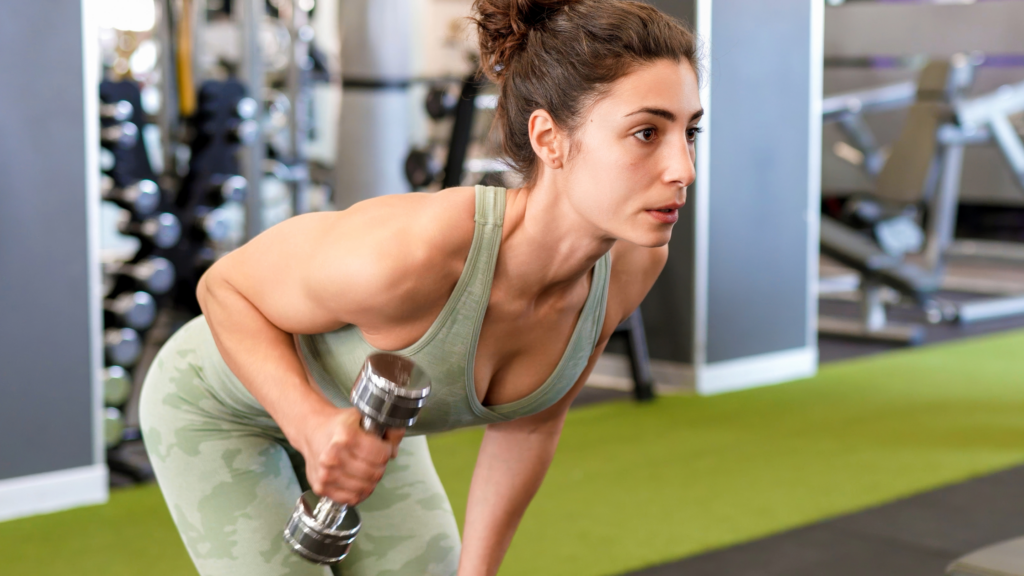
Simple tests, such as lunges, one-arm rows, and pull-ups performed separately, allow for performance comparison without the immediate need for sophisticated equipment.
In professional sports settings, periodic assessments help monitor adaptations and detect changes before they compromise important performance indicators.
Interpreting the results requires proper context, considering training history, individual characteristics, and the specific demands of the sport practiced by the athlete.
++ Undulating periodization: how to alternate loads for continuous gains.
Practical applications for athletes and recreational practitioners.
Athletes use unilateral exercises to improve actions that occur predominantly in single support, a common condition in running, rapid changes of direction, and jumping.
Recreational practitioners also benefit from this approach, especially when they spend long periods sitting or perform repetitive activities predominantly on one side.
Guidelines published by National Strength and Conditioning Association They reinforce the importance of targeted training for the balanced development of fundamental physical capabilities.
An amateur runner, for example, might discover important differences between their legs that influence mechanical efficiency and impact distribution during long runs.
In upper limb training, exercises performed separately help prevent the dominant arm from compensating for limitations present in the less developed side.
This practical application transforms training into a tool for continuous diagnosis, allowing for gradual corrections without interrupting the overall progress of conditioning.
++ Mexican soccer: why is Liga MX growing so much?
More efficient unilateral exercises
The choice of exercises should consider specific goals, the practitioner's skill level, and the ability to maintain consistent form throughout all repetitions.
| Exercise | Main benefit | Emphasized region |
|---|---|---|
| I lunge | Stability and strength | Lower limbs |
| Bulgarian squat | Unilateral control | Quadriceps and glutes |
| One-arm rowing | Correction of asymmetries | Back |
| Unilateral development | Shoulder stability | Shoulders |
| Unilateral land raising | Balance and coordination | Posterior chain |
The lunge remains among the most widely used options because it combines the need for balance, power output, and coordination in patterns that are highly transferable.
The Bulgarian squat challenges stability and postural control, highlighting differences that often go unnoticed in traditional bilateral variations.
For the upper body, rowing and unilateral presses allow for the analysis of movement quality while strengthening muscle groups that are important for overall performance.
The careful combination of these exercises creates complementary stimuli capable of promoting consistent adaptations without the need for excessive training volumes.
Common mistakes during implementation
One of the most frequent mistakes is using heavy loads before consolidating adequate motor patterns and sufficient stability to sustain the execution.
When technique deteriorates, old compensations may reappear, reducing some of the expected benefits of adopting this training strategy.
Another common misconception involves completely abandoning bilateral exercises, ignoring the fact that both methods can coexist in a complementary and efficient way.
It is also common to interpret any difference between sides as a serious problem, when some subtle variations are actually part of normal biological individuality.
The rush to match results immediately often leads to frustration, as neuromuscular adaptations require time and consistent exposure to appropriate stimuli.
Balanced programs respect gradual progression, constant monitoring, and adjustments based on objective observations, not just the practitioner's momentary perceptions.
Building a balanced and sustainable program
The inclusion of unilateral exercises should occur within a coherent plan, aligned with specific objectives and the current stage of physical development.
In many cases, starting the session with unilateral movements promotes technical focus and allows for the identification of limitations before accumulated fatigue sets in.
The weaker side should generally serve as a reference point for determining repetitions and volume, avoiding unintentional amplification of existing differences.
Experienced coaches monitor performance indicators over the weeks to verify if the adaptations are occurring as expected.
When well-structured, the program promotes gradual progress without compromising recovery, consistency, and the ability to improve other important physical qualities.
The sustainability of results depends less on quick fixes and more on the disciplined application of sound principles over extended periods of training.
Conclusion
Unilateral training offers a detailed perspective on physical capabilities that often remain hidden when the focus is solely on traditional bilateral movements.
By identifying specific differences between the sides, it becomes possible to direct efforts toward corrections that contribute to better mechanical efficiency and balanced development.
This approach benefits both athletes and recreational practitioners, as it combines muscle strengthening, technical improvement, and greater awareness of movement patterns.
When integrated into a consistent schedule, the strategy helps reduce silent trade-offs and build a more stable physical foundation for future challenges.
FAQ
1. Can unilateral training replace bilateral exercises?
No, both have important functions and tend to produce better results when used in a complementary way within a structured plan.
2. Which unilateral exercise is most suitable for beginners?
The lunge is generally an excellent beginner's exercise because it develops stability, coordination, and strength without requiring excessive complexity.
3. How long does it take to correct imbalances?
The timeframe varies depending on the existing difference, the frequency of training, and the consistency applied throughout the process.
4. Can people without sporting goals use this strategy?
Yes, the methodology benefits anyone interested in improving movement, body balance, and functional efficiency.
5. Do imbalances always cause injuries?
Not necessarily, but significant asymmetries can increase risks and limit performance when ignored for extended periods.