


Plyometric jumps have gained popularity in modern fitness programs because they increase muscle power, reaction speed, and motor coordination, without requiring sophisticated equipment or extremely complex professional environments.
Advertisements
Recreational athletes, amateur runners, and weightlifters often add explosive exercises to their training without assessing mobility, joint stability, and impact absorption capacity before the first intense sessions.
This behavior explains the increase in patellar pain, ankle discomfort, and tendon inflammation observed in gyms, sports centers, and physiotherapy clinics during inadequate plyometric training programs.
Despite the risks, jumping exercises can offer significant benefits for athletic performance, cardiovascular conditioning, and neuromuscular strengthening when planned with careful technical progression and precise control of the weekly workload.
Many coaches have begun to prioritize efficient landings, body balance, and preventative strengthening because they have realized that power without stability often significantly increases the likelihood of recurring lower limb injuries.
Advertisements
Understanding how to integrate explosive movements without overloading the knees and ankles allows you to take advantage of the benefits of plyometrics while preserving physical longevity, especially in people who train regularly for many years.
The importance of joint adaptation before explosive exercises.
Many practitioners begin intense jumping after watching videos on social media, ignoring individual limitations related to sports history, body composition, reduced mobility, and insufficient strength of the lower joint structures.
The knee withstands high forces during rapid landings, especially when there is body misalignment, muscle weakness, or excessive accumulated weekly volume from running, heavy weight training, and repetitive plyometric exercises.
Advertisements
Ankles also suffer considerable impacts because they function as dynamic stabilizers during rapid changes of direction, absorbing a significant portion of the loads produced in explosive movements and poorly executed landings.
Fitness experts generally recommend a few weeks of preventative strength training before introducing the first jumps, especially for sedentary beginners or people returning to training after long periods away.
Basic unilateral balance movements, controlled squats, and mobility exercises help joints respond better to plyometric stimuli, reducing dangerous body compensations during rapid and repetitive landings.
Experienced coaches observe that athletes with good body stability are able to produce high power using less joint effort, while unprepared practitioners often overload passive structures due to evident mechanical deficiencies.
++ Proprioceptive training: the secret weapon against injuries in team sports.
How to choose suitable surfaces to reduce impacts.
The surface used during plyometric exercises directly influences the amount of impact absorbed by the joints, making this detail as important as intensity, weekly volume, and the technical quality of the movements performed.
Extremely rigid surfaces increase repetitive stress on the knees because they partially reduce the natural dissipation of forces produced during successive jumps, especially in heavier athletes or people with little practical experience.
On the other hand, excessively unstable surfaces hinder efficient landings, increasing unexpected twists and inadequate muscle compensations that can compromise ankles, hips, and even lower backs during more intense sessions.
Several sports centers follow biomechanical recommendations published by American College of Sports Medicine to organize safer training environments adapted to different fitness levels.
Well-leveled natural grass, rubberized flooring, and platforms specifically designed for functional training often offer an interesting balance between stability, moderate cushioning, and safety during progressive and supervised plyometric exercises.
The table below shows how different surfaces can influence stability, impact absorption, and joint risk during programs involving frequent plyometric jumps.
| Surface | Impact absorption | Stability | Joint risk |
|---|---|---|---|
| Rubber flooring | High | High | Low |
| Sports wood | Average | High | Moderate |
| Concrete | Low | High | High |
| Natural grass | Average | Average | Moderate |
| Sand | High | Low | Moderate |
Proper landing technique protects joints.
Many problems related to plyometrics appear during landing, the moment when muscles, tendons, and joints need to quickly absorb forces produced by body weight and the acceleration of movement.
When the knees collapse inward during the descent, there is a significant increase in joint stress, especially in people with weak glutes and poor body awareness during more intense explosive exercises.
Professional athletes often train specific landing patterns before increasing the height, speed, or complexity of their jumps because they understand that mechanical efficiency reduces risks and improves athletic performance simultaneously.
Maintaining alignment between hips, knees, and feet promotes balanced load distribution, allowing muscles to absorb impacts without transferring excessive pressure to ligaments and articular cartilage that are vulnerable to progressive wear and tear.
Biomechanical studies published by National Strength and Conditioning Association Studies show that silent landings generally indicate better impact absorption and body control during supervised plyometric exercises.
Coaches of college teams often use slow-motion recordings to correct technical errors because small positioning flaws can lead to cumulative overload after hundreds of weekly repetitions performed incorrectly.
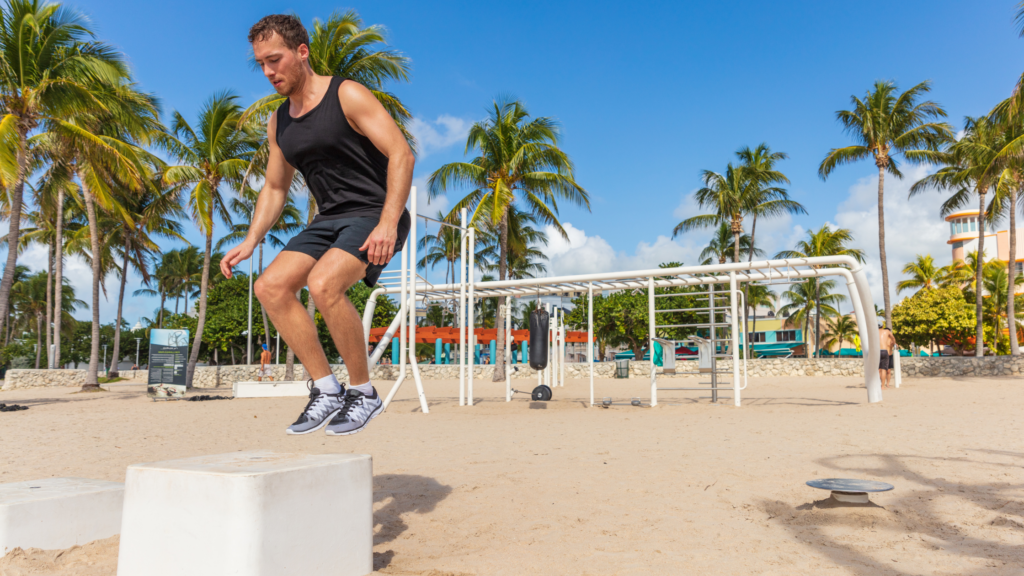
The role of muscle strengthening in injury prevention.
Effective plyometric programs rarely begin with the most intense jumps because adequate muscle preparation is a decisive factor for body stability and the safe absorption of forces produced during frequent explosive movements.
Strong glutes help control knee alignment during quick landings, while resilient calves contribute to efficient deceleration and dynamic protection of the lower joints in repetitive and demanding exercises.
Many physical therapists report increased patellar pain in practitioners who prioritize only explosive exercises, neglecting complementary strengthening of the hips, hamstrings, and ankle stabilizing muscles for consecutive weeks.
Controlled squats, calf raises, and unilateral exercises often appear in preventative programs because they increase muscle endurance without producing excessive impact on joint structures that are more sensitive to cumulative wear and tear.
Recreational runners often show significant improvement in jump tolerance when they strengthen previously neglected stabilizing regions, especially after prolonged periods dedicated exclusively to traditional cardiovascular training.
Modern physical trainers have begun integrating functional weight training with plyometrics precisely because the balance between power and stability reduces sports absences caused by recurring inflammation in vulnerable knees and ankles.
++ Undulating periodization: how to alternate loads for continuous gains.
How to control volume and frequency without overdoing it.
Many injuries related to plyometric jumps do not arise from isolated technical errors, but from excessive repetitions accumulated without adequate recovery between consecutive sessions of intense and strenuous training.
The body needs sufficient time to repair muscle micro-tears, restore connective tissues, and reorganize neuromuscular adaptations produced during explosive exercises performed with high intensity and considerable speed.
Beginner athletes often make a common mistake by combining intense running, heavy weight training, and extensive plyometric sessions in the same week, rapidly increasing the level of accumulated joint and muscle fatigue.
Experts recommend starting with a few weekly contacts using basic exercises, progressively increasing intensity only when body stability, physical recovery, and technical quality remain consistent over several consecutive sessions.
Professional coaches also monitor signs such as persistent pain, reduced performance, and excessive joint stiffness because these indicators often precede more serious inflammatory processes related to overuse.
In high-performance sports teams, preventative adjustments to weekly volume often avoid prolonged absences, demonstrating that intelligent progression generally produces more sustainable results than rapid and impulsive increases in intensity.
++ The biggest goal differences in World Cup history.
The influence of mobility and warming on the results
Superficial warm-ups are one of the most common mistakes in plyometric programs, mainly because explosive exercises require rapid muscle responses and efficient coordination between different lower joint groups.
Proper mobility in the hips and ankles facilitates more balanced landings, reducing dangerous compensations that often transfer excessive load to the knees during movements performed at high speed and continuous repetition.
Many physical trainers use dynamic exercises before training sessions because progressive movements increase blood circulation, activate stabilizing muscles, and improve neuromuscular response capacity during subsequent explosive efforts.
Professional athletes often dedicate more time to warming up than recreational athletes precisely because they understand the preventive importance of this process in reducing muscle injuries and repetitive joint overload.
Effective routines often include lateral movements, ankle mobility exercises, glute activation, and small preparatory jumps that can raise body temperature without causing premature fatigue before the main workout.
When warm-up and mobility are neglected, the body tends to react with less efficient compensatory movements, increasing progressive joint wear and reducing the biomechanical quality of landings performed during intense sessions.
Strategies for adapting plyometrics to different body types
People above their ideal body weight generally need to start plyometric programs using smaller ranges of motion and lower weekly frequency, allowing for gradual adaptation of the joints before more demanding and advanced exercises.
Older practitioners can also safely perform jumps, provided they prioritize stability, complementary strengthening, and slow progressions that respect individual limitations related to natural musculoskeletal aging.
Young athletes tend to tolerate a higher volume of ground contact, but often exhibit overconfidence in their technique, which leads to hasty movements and unnecessarily increases the risk of repetitive joint injuries.
Amateur runners generally benefit from moderate plyometric exercises because improved muscle power can increase mechanical efficiency and reduce foot contact time during faster, more economical strides.
People undergoing physical rehabilitation should follow individualized guidance before incorporating jumping exercises into their training, especially after ligament injuries, orthopedic surgeries, or prolonged periods of significant joint and muscle immobilization.
Personalizing training is a crucial element for joint safety because different bodies respond differently to the same loads, intensities, and frequencies used during progressive plyometric exercises.
Conclusion
Plyometric jumps can transform physical performance, muscle power, and motor coordination when incorporated with careful planning, intelligent progression, and constant attention to signals emitted by the lower joints.
A large proportion of injuries associated with plyometrics arise from a combination of excessive volume, inadequate technique, and a lack of preventative strengthening—factors frequently neglected in contemporary recreational physical training programs.
The combination of mobility, body stability, load control, and efficient landings creates a safer environment for sustainable athletic development, significantly reducing stress on the knees and ankles during explosive exercises.
Practitioners who respect individual limits, prioritize adequate recovery, and progress gradually tend to obtain lasting benefits from plyometrics without compromising joint health over months or years of continuous training.
FAQ
1. Are plyometric jumps bad for your knees?
When performed correctly and with proper progression, plyometric exercises typically do not harm healthy knees and can strengthen muscle structures important for joint stability.
2. How many times a week can I do plyometrics?
Most beginners tend to respond best to two moderate weekly sessions, allowing for sufficient recovery between intense workouts and reducing the risk of accumulated joint overload.
3. Can sedentary people start with plyometric exercises?
Sedentary individuals should begin with basic strengthening, mobility, and body stability exercises before introducing more demanding explosive movements for the knees and ankles.
4. Which surface is safest for jumping?
Rubberized flooring and level grass generally offer a better balance between impact absorption, body stability, and joint safety during progressive plyometric exercises.
5. Does pain after training mean injury?
Not all pain indicates a serious injury, but persistent discomfort, swelling, or limitations in movement require professional evaluation to prevent worsening of the joint condition.