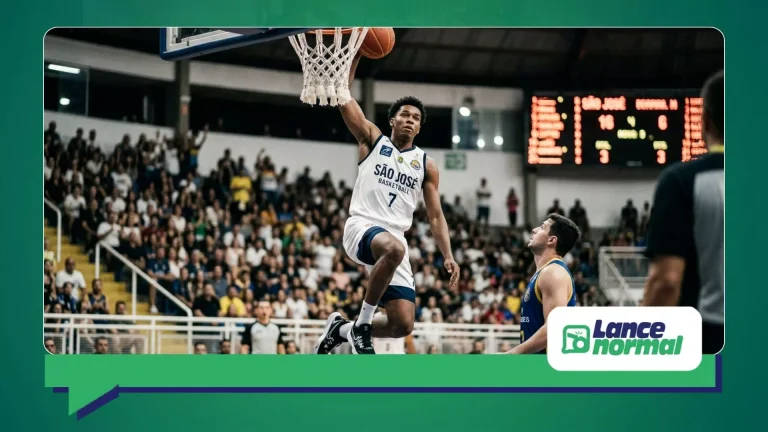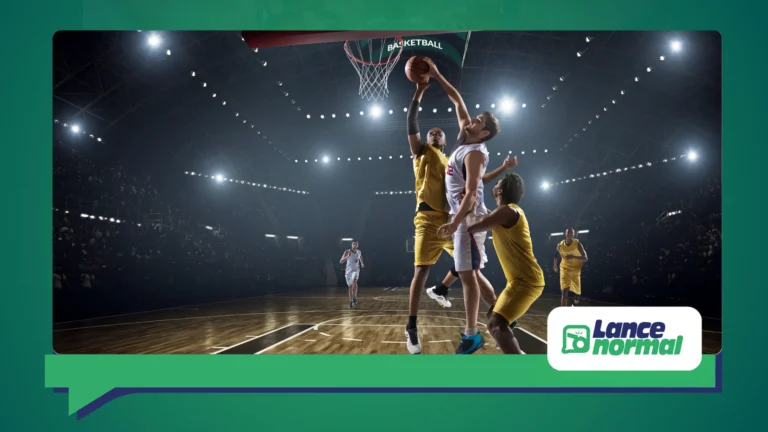

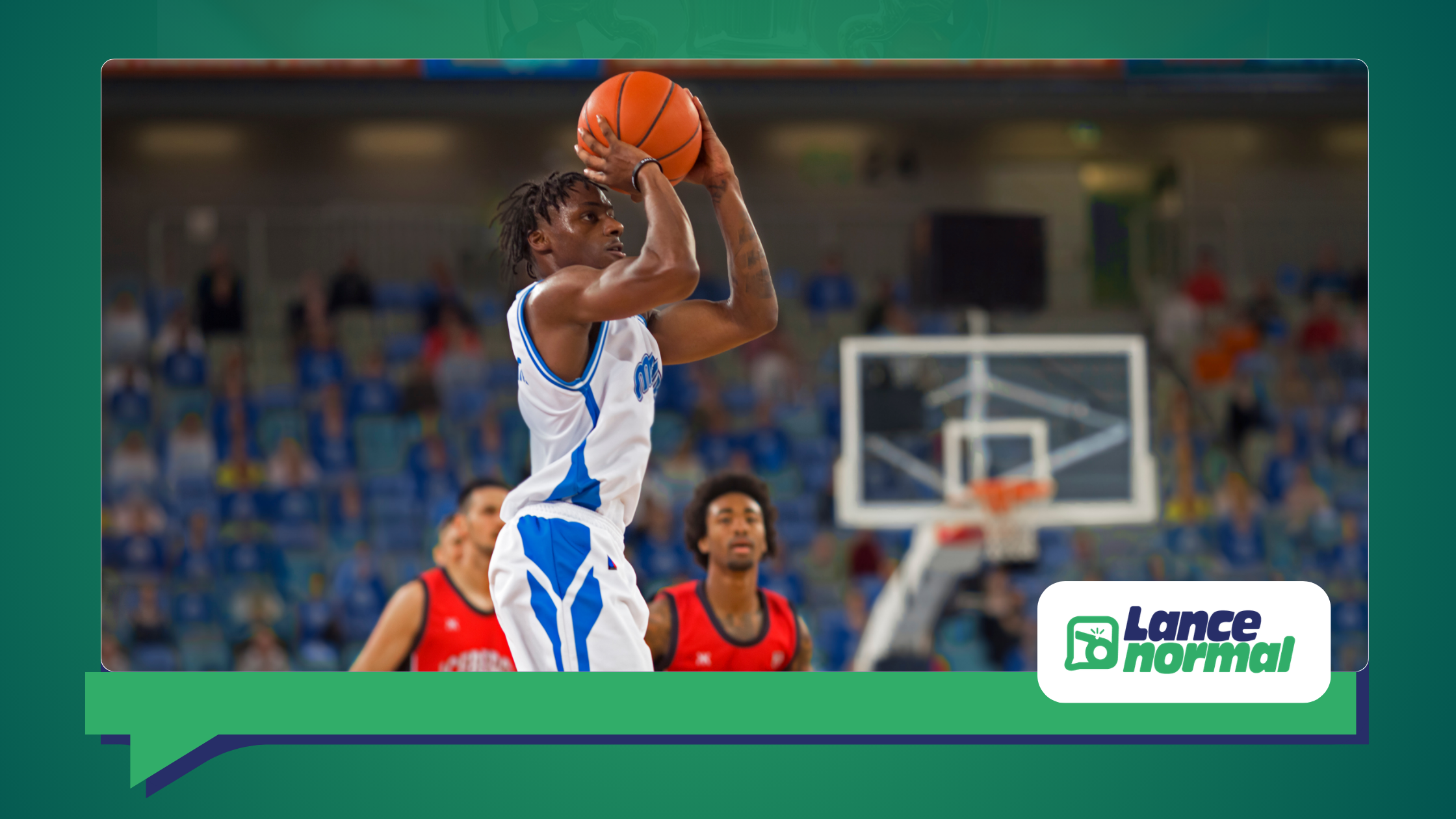
The mid-range shot remains one of the most effective skills in modern basketball, especially for players who want to expand their offensive repertoire and create space in close games.
Advertisements
Many athletes focus their training solely on three-point shots or quick drives to the basket, forgetting that smart decisions in the midfield still define important professional games.
Legendary players like Michael Jordan, Kobe Bryant, and Dirk Nowitzki transformed their technical mastery of this area of the court into a virtually impossible defensive advantage during crucial moments.
Training specific fundamentals improves body balance, defensive awareness, motor coordination, and emotional control—fundamental factors for executing precise movements even under intense physical pressure and constant marking from the opposition.
Consistent development depends less on natural talent and much more on organized repetition, detailed mechanical correction, and a strategic understanding of when to use that offensive resource.
Advertisements
Throughout this article, you will understand techniques, exercises, biomechanical adjustments, and practical methods capable of significantly increasing the efficiency of your throwing performance during training and competitions.
The technical importance of the intermediate throw.
Contemporary football has accelerated the volume of long-range shots, but the mid-range shot remains crucial because it exploits spaces left by defenses that prioritize protecting the paint and covering the three-point line.
Professional teams constantly use indirect screens to create favorable situations in the mid-range, especially when opponents have physical defenders close to the rim or pressure marking on the outer perimeter.
Advertisements
Athletes who master this fundamental skill are better able to control the offensive pace, interrupt fast defensive runs, and reduce turnovers in balanced and emotionally demanding matches.
American college coaches often point out that players who are efficient in this area of the court exhibit greater tactical versatility, as they are able to score even when long-range shots cease to be effective as a team.
According to educational materials from NBA Basketball SchoolConsistent technical development requires structured repetition, proper body balance, and spatial awareness during each offensive execution performed at competitive speed.
When an athlete fully understands how the intermediate shot works, they begin to use the technique strategically, transforming simple decisions into extremely efficient offensive opportunities within the team context.
++ The best pick-and-roll systems in the NBA in 2026
Building a solid mechanical foundation from the ground up.
Proper mechanics begin with the feet, because inadequate stability compromises shoulder alignment, power transfer, and directional control of the ball during rapid movements under constant marking.
Beginner players often jump excessively to compensate for technical flaws in their arms, even though most of the power needed should come from the legs and body balance.
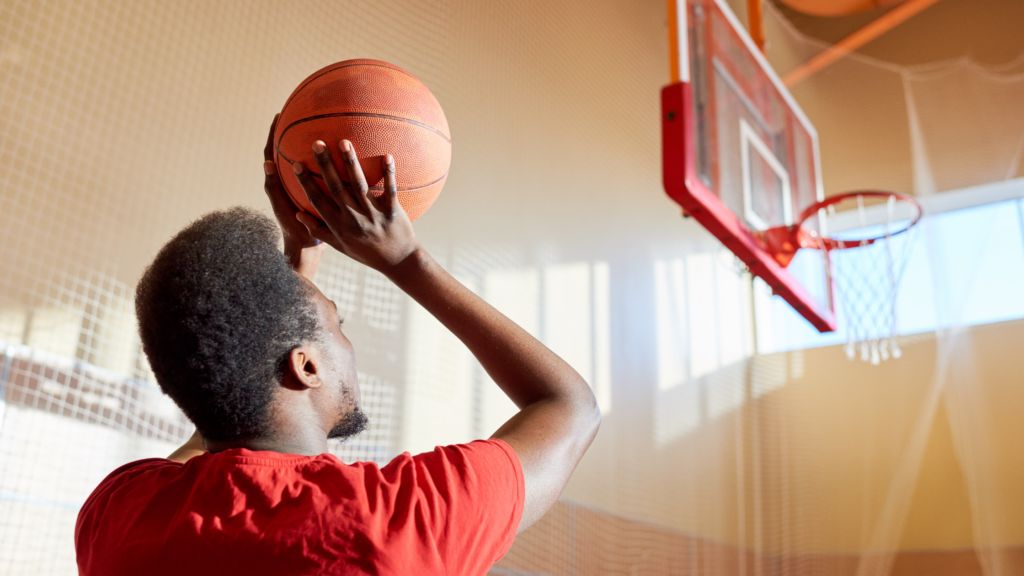
The dominant elbow needs to remain aligned with the rim throughout the entire shot, avoiding lateral deviations that alter the ball's trajectory and drastically reduce consistency in shots repeated daily.
Professional coaches use slow-motion recordings to correct details imperceptible at normal speed, allowing for specific adjustments related to wrist movement, finger positioning, and complete synchronization between legs and torso.
Several studies published by FIBA Studies show that efficient players maintain extremely repetitive biomechanical patterns, regardless of the physical intensity or psychological pressure exerted during official competitions.
Athletes who develop compact mechanics reduce unnecessary physical strain and significantly increase their ability to maintain offensive precision even after long periods on the court.
Practical exercises to gain consistency.
Training only free throws doesn't fully develop the necessary mastery for real-life situations, because games demand constant movement, quick decision-making, and continuous adaptation to defenders.
An extremely effective exercise consists of performing alternating sequences after short lateral dribbles, simulating quick changes of direction before immediately executing the offensive shot.
Another important practice involves receiving passes at different angles on the court, quickly adjusting body positioning to execute balanced finishes even without long or comfortable preparation.
Experienced coaches recommend shorter, high-intensity sets, as long, repetitive periods can compromise technical quality and create mechanical habits that are difficult to correct later.
The table below presents practical examples used in university training and professional categories to develop accuracy and emotional control during mid-range throws.
| Exercise | Main objective | Recommended time |
|---|---|---|
| Shot after a dribble | Adjust body balance | 10 minutes |
| Reception and immediate kick | Improve offensive reaction | 12 minutes |
| Sequence in five positions | Develop regularity | 15 minutes |
| Simulation with marker | Working on defensive pressure | 10 minutes |
| Throw after fatigue | Increase technical resistance | 8 minutes |
The organized repetition of these exercises gradually improves competitive confidence, allowing players to execute automatic movements even in intense and emotionally pressured environments during crucial matches.
++ The evolution of the hand-off in the modern NBA game.
How to use your body correctly during movement.
The efficiency of the throw depends directly on the integration between the lower limbs, torso, and arms, because any imbalance reduces body control and rapidly alters the planned trajectory of the ball.
Experienced players use slightly bent knees to absorb initial impact and generate controlled power, avoiding exaggerated movements that hinder stability during offensive finishing.
The torso should remain relatively upright throughout the movement, allowing for natural energy transfer without compromising the visual alignment necessary to correctly calculate direction and depth.
Many young athletes excessively tilt their shoulders forward when facing aggressive defenders, creating detrimental technical compensations that affect accuracy and progressively increase muscle fatigue.
The position of the supporting hand also directly influences the stability of the ball, especially in quick executions after abrupt changes of direction or receptions performed in continuous motion.
When the body works in a synchronized manner, the athlete is able to reduce unnecessary effort and maintain consistent offensive efficiency even after long periods facing extremely intense physical marking.
++ How to incorporate plyometric jumps without overloading knees and ankles
The psychological impact on shooting efficiency.
The mental component directly influences the technical quality of the throw, because competitive anxiety alters breathing rate, spatial perception, and the speed of offensive decisions made under constant pressure.
Insecure players often hesitate before shooting, allowing for a more aggressive defensive approach and completely compromising the mechanics built up during training sessions held over the previous weeks.
Kobe Bryant frequently commented in interviews about obsessive repetition in training, arguing that true confidence is only born when movements become virtually automatic in any competitive setting.
Modern sports coaches use drills with timers, external noises, and simulated pressure to emotionally prepare athletes for situations similar to those encountered during crucial official matches.
Another important factor involves the ability to quickly forget past mistakes, preventing wasted attempts from contaminating future offensive decisions and reducing the necessary aggressiveness within the team's play.
Mentally prepared athletes are able to maintain intelligent shot selection, executing movements with emotional clarity even when facing hostile environments, intense opposing crowds, and technically balanced matches.
How to adapt training for different positions
Point guards often use the intermediate shot after quick screens, exploiting small spaces created momentarily while defenders reorganize their positions within collective defensive rotations.
Shooting guards often rely on this fundamental skill to create individual scoring opportunities, especially when facing physical defenses that can limit drives near the rim during intense games.
Taller players also utilize specific spin and fadeaway movements, taking advantage of their physical advantage to execute shots that are virtually impossible to contest defensively with consistent efficiency.
Training needs to respect individual physical characteristics, because fast athletes require different exercises than those used by strong players who primarily operate near the offensive paint.
Many professionals develop customized routines considering available time, physical history, team tactical style, and the most common defensive patterns found in specific major competitions.
When training respects the athlete's technical identity, development happens naturally, strengthening competitive confidence and creating more efficient offensive solutions for different strategic contexts within matches.
Common mistakes that compromise technical progress.
One of the most frequent mistakes involves excessively speeding up basic movements, sacrificing technical precision in pursuit of speed that is incompatible with the athlete's current stage of development.
Many players only train in comfortable situations, ignoring drills under realistic defensive pressure and hindering the adaptation necessary for intense and emotionally unpredictable competitions during long seasons.
Another recurring problem arises when athletes copy professional mechanics that are incompatible with their own physical characteristics, creating artificial movements that reduce stability and gradually increase offensive inconsistency.
Excessive training without adequate recovery periods also hinders technical development, because muscle fatigue alters fine motor coordination, which is responsible for precise ball control during finishing.
Some players focus exclusively on their hands, forgetting that their legs and body balance are essential for generating stable power and maintaining the correct direction of the throw.
True progress happens when an athlete honestly identifies specific flaws, accepts necessary technical adjustments, and maintains enough discipline to correctly repeat fundamentals over long, consecutive periods.
Conclusion
Mastering the mid-range shot remains extremely relevant in competitive basketball, especially for athletes interested in expanding their offensive resources and developing greater technical versatility during games.
Building consistent results requires meticulous attention to biomechanical fundamentals, emotional balance, and the intelligent organization of daily training sessions throughout the sports season.
Players who develop this skill are able to exploit various defensive spaces, better control the collective offensive rhythm, and create important solutions even in extremely balanced technical matches.
Regardless of the competitive level, the combination of conscious repetition, technical discipline, and mental preparation gradually transforms the intermediate throw into a reliable and decisive offensive weapon.
FAQ
1. What is considered the average distance in basketball?
Mid-range shots typically refer to shots taken between the key and the three-point line, mainly from the sides and front of the offensive court.
2. How many times a week should I train this fundamental skill?
Ideally, sessions should be spread out three to five times a week, prioritizing technical quality, adequate muscle recovery, and gradual progression without excessive physical strain.
3. Can shorter players develop efficiency in this type of shot?
Yes, many historical point guards have used speed, body balance, and intelligent defensive reading to transform the mid-range shot into an extremely efficient offensive tool.
4. Is it better to train standing still or in motion?
Both formats are important, but motion-based exercises bring training closer to the real-life situations constantly encountered during competitive matches and modern offensive systems.
5. Does the mid-range shot still work in modern basketball?
Yes, professional teams continue to widely use this offensive tactic to exploit strategic defensive spaces and punish defenses that are overly focused on the outer perimeter.