
Controlled Breathing: Anxiety before a competition is an almost universal experience among athletes, whether amateur or professional.
Advertisements
A racing heart, sweaty hands, and a mind that seems to race faster than your body are signs that your nervous system is on high alert.
In this context, the controlled breathing emerges as a powerful, accessible and scientifically proven tool to calm the body and mind, allowing the athlete to reach a state of focus and balance before the game.
But how can you transform something as natural as breathing into a strategy for overcoming anxiety?
Find out everything below!
Advertisements
Controlled Breathing
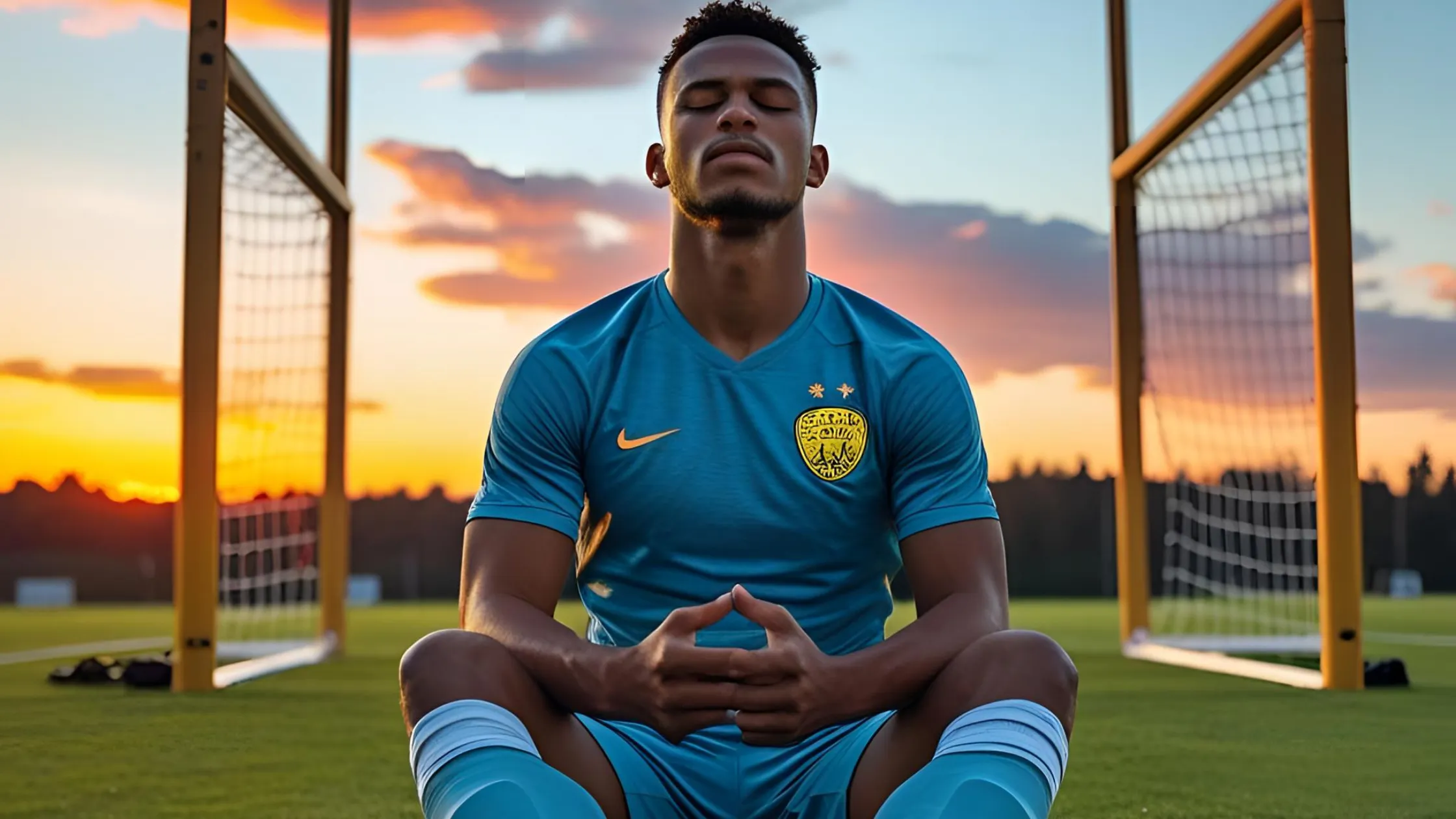
Unlike approaches that require equipment or long periods of practice, controlled breathing is a simple technique that can be applied in just a few minutes, anywhere from the locker room to the sidelines.
It acts directly on the autonomic nervous system, reducing heart rate and promoting a sense of control.
For athletes, this means not only dealing with anxiety, but also channeling nervous energy into improved performance.
Advertisements
Why, then, do so many athletes still ignore this practice, when it could be the difference between succumbing to pressure or shining in the decisive moment?
In this article, we'll explore how controlled breathing can be used to reduce pre-game anxiety, with practical techniques, original examples, an illuminating analogy, and a statistic that reinforces its effectiveness.
Additionally, we'll provide tables with useful information and a frequently asked questions section to answer key questions.
++ What Is Sport Jiu-Jitsu and How Does It Differ from Traditional Jiu-Jitsu?
Get ready to discover how to master anxiety and transform pressure into performance.
Why Does Anxiety Arise Before the Game?
Pre-game anxiety is the body's natural response to anticipation of a challenge.
When an athlete prepares to compete, the brain interprets the situation as a potential threat, activating the sympathetic nervous system.
In short, this triggers the release of adrenaline, which accelerates the heart, tenses the muscles, and agitates the mind.
While this response was useful for our ancestors in facing predators, in a sporting context, it can hinder focus and precise execution.
Controlled breathing acts as a tool to “turn off” this alert mode, activating the parasympathetic nervous system, responsible for relaxation.
Furthermore, anxiety is not only physiological but also psychological.
++ What are the Biometric Vests Used in Modern Football?
Thoughts like “What if I fail?” or “What will others think?” create a cycle of worry that amplifies stress.
Controlled breathing helps break this cycle by redirecting the athlete's attention to the present, moving them away from hypothetical failure scenarios.
By focusing on breathing, the athlete creates a mental anchor, a technique that, according to studies, significantly reduces levels of cortisol, the stress hormone.
A practical example of this is the case of João, a young basketball player who felt nauseous before every important match.
He began practicing controlled breathing for five minutes in the locker room, using a technique of inhaling deeply through the nose for four seconds, holding for four, and exhaling slowly for six.
After two weeks, João reported not only a reduction in anxiety, but also greater clarity in making quick decisions during the game.
This example illustrates how controlled breathing can be a game-changer for athletes facing pre-competitive pressure.
How Does Controlled Breathing Work?
The science behind controlled breathing is fascinating and straightforward.
In other words, when we breathe slowly and intentionally, we stimulate the vagus nerve, which regulates functions such as heart rate and digestion.
This stimulation activates the parasympathetic nervous system, which counteracts the “fight or flight” response triggered by anxiety.
++ What is the daily life of a reserve player in professional football like?
A relevant statistic, published in a 2018 study in the Journal of Clinical Psychology, showed that regular practice of controlled breathing reduced anxiety levels in 63% participants after just four weeks.
Additionally, controlled breathing improves oxygenation of the brain, which enhances mental clarity and the ability to concentrate.
For athletes, this is crucial, as split-second decisions can determine the outcome of a match.
Unlike other relaxation techniques, such as guided meditation, controlled breathing does not require a quiet environment or long periods of practice, making it ideal for the dynamic context of a competition.
Consider the analogy of a race car: anxiety is like stepping on the accelerator without direction, wasting fuel and wearing out the engine.
Controlled breathing acts like a steering wheel, allowing the athlete to direct this energy with precision, maintaining control even at high speeds.
In short, this approach doesn't eliminate adrenaline, which is essential for performance, but rather channels it into productive actions, such as quick reflexes and strategic decisions.
Practical Controlled Breathing Techniques
There are several controlled breathing techniques that can be adapted to the pre-game context.
One of the most effective is the diaphragmatic breathing, which involves taking a deep breath through your nose, expanding your abdomen (not your chest), holding it for a few seconds, and exhaling slowly through your mouth.
This technique maximizes oxygen intake and reduces the feeling of tightness in the chest, common in moments of anxiety.
To begin with, the athlete can practice for three minutes, with cycles of inspiration (4 seconds), pause (4 seconds) and expiration (6 seconds).
Another powerful technique is the 4-7-8 breathing, developed by Dr. Andrew Weil.
In this method, the athlete inhales for 4 seconds, holds the air for 7 seconds and exhales for 8 seconds.
This approach is particularly helpful for quickly calming the mind, as the prolonged exhalation encourages deep relaxation.
An original example is that of Mariana, a 100-meter runner who used the 4-7-8 technique before each start.
She reported that, after incorporating the practice, she was able to reduce her reaction time when leaving, as she was calmer and more focused.
Below, we present a table with a summary of the main controlled breathing techniques and their applications in the sports context:.
Table:
| Technique | Description | Benefits | Recommended Duration |
|---|---|---|---|
| Diaphragmatic Breathing | Inhale through the nose (4s), expand the abdomen, hold (4s), exhale (6s). | Reduces heart rate, improves oxygenation, promotes muscle relaxation. | 3-5 minutes |
| 4-7-8 Breathing | Inhale (4s), hold (7s), exhale slowly (8s). | Quickly calms the mind, reduces cortisol, improves focus. | 2-4 minutes |
| Box Breathing | Inhale (4s), hold (4s), exhale (4s), hold (4s). | Balances the nervous system, promotes a sense of control and stability. | 4-6 minutes |
These techniques can be practiced individually or combined, depending on the time available and the athlete's preference.
The key is consistency: incorporating controlled breathing into your daily routine, even outside of a sporting context, increases its effectiveness before a game.
Integrating Controlled Breathing into Your Pre-Game Routine
Incorporating controlled breathing into game preparation takes planning, but the results are worth the effort.
First, it is essential to create a pre-competition ritual that includes breathing as a fixed component.
For example, an athlete might set aside five minutes in the locker room to practice diaphragmatic breathing while visualizing optimal performance.
In this way, this combination of breathing and visualization strengthens confidence and reduces uncertainty, two factors that fuel anxiety.
Furthermore, regular practice outside of a competitive context enhances the benefits.
Athletes who dedicate 10 minutes a day to controlled breathing, whether in the morning or before bed, develop greater resilience to stress.
This is because the brain begins to associate slow breathing with a calm state, creating a mental “shortcut” that can be activated quickly before the game.
So when pressure arises, the body already knows how to respond.
Finally, it is important to adapt the technique to the environment.
In a crowded stadium or noisy locker room, an athlete can use headphones with soft instrumental music to help them focus during practice.
Ask yourself: if such a simple technique can transform your performance, why not try it today?
Long-Term Benefits of Controlled Breathing
Controlled breathing isn't just a short-term solution to pre-game anxiety; it offers benefits that extend beyond the sport.
In this sense, regular practice improves the quality of sleep, a critical factor for the physical and mental recovery of athletes.
Sleeping well means more rested muscles, faster reflexes, and a greater ability to handle pressure.
Additionally, controlled breathing can reduce the incidence of stress-related injuries as chronic muscle tension is minimized.
Another significant benefit is increased emotional intelligence.
Athletes who master controlled breathing learn to recognize and manage their emotions, which is essential in high-pressure situations like a championship final.
This skill also translates into better interactions with teammates and coaches, fostering a more collaborative environment.
Finally, controlled breathing can be an ally in everyday life.
In short, athletes who use it frequently report greater patience in stressful situations outside of sport, such as negotiations or moments of conflict.
So what starts as a tool for the game turns into a life skill.
Frequently Asked Questions
Below, we answer the most common questions about controlled breathing, with clear and practical information:
| Question | Response |
|---|---|
| Does controlled breathing work for everyone? | Yes, but effectiveness depends on regular practice and adaptation to individual needs. Some people may need more time to feel the effects. |
| Can I use the technique during the game? | Yes, short techniques like box breathing can be used during breaks or intervals to maintain focus and reduce anxiety. |
| How long does it take to see results? | Initial results can be felt within minutes, but daily practice for 2-4 weeks maximizes the benefits. |
| Is it necessary to have a professional to learn? | No, the techniques are simple and can be learned through tutorials or apps. However, a sports psychologist can help personalize the practice. |
| Does controlled breathing replace other strategies? | No, it complements other techniques, such as visualization or mental training, enhancing their effects. |
Conclusion: Turn Anxiety into Your Ally with Controlled Breathing
Controlled breathing is more than a technique; it's a bridge between body and mind that allows athletes to transform anxiety into productive energy.
So, whether in the locker room, on the sidelines, or even during the game, this practice offers an accessible and effective way to achieve the balance needed to shine under pressure.
With techniques like diaphragmatic breathing or the 4-7-8, any athlete can develop greater emotional and physical control, taking their performance to new levels.
By incorporating controlled breathing into your routine, you not only reduce anxiety but also build a solid foundation for long-term success, both inside and outside of your sport.
So, start today, try the techniques presented, and discover how a few minutes of intentional breathing can change your approach to the game and to life.