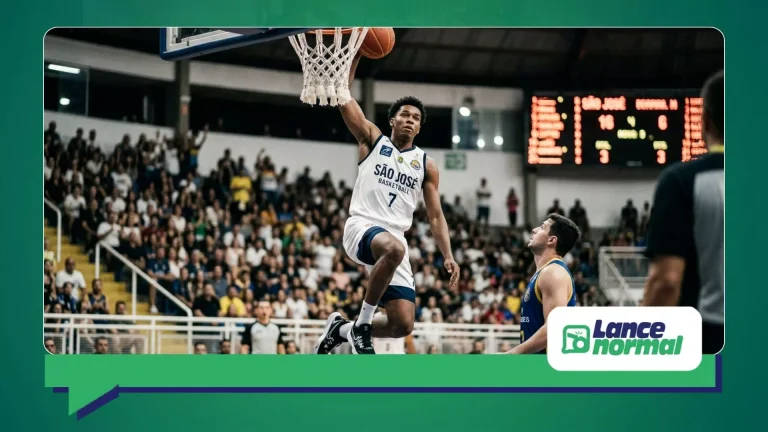


The plays most used by NBA coaches are the beating heart of modern basketball, shaping the pace and outcome of games.
Advertisements
In the most competitive league in the world, where every possession can decide a championship, coaches are like maestros, orchestrating precise moves to exploit opponents' weaknesses and maximize the talent of their stars.
This article delves into the five tactical strategies dominating the courts in 2025, revealing why they are so effective and how they transform the game.
Get ready to understand the dynamic chess of the NBA with fresh insights, original examples, and a dash of intelligent analysis.
Why are tactical plays crucial in the NBA?
Imagine a painter with a blank canvas: without strategic brushstrokes, there is no masterpiece.
Advertisements
In the NBA, plays are those brushstrokes, drawing the path to victory.
Coaches like Erik Spoelstra of the Miami Heat or Steve Kerr of the Golden State Warriors don't just draft their best players, they create systems that amplify their abilities.
In a sport where time is at a premium—with just 24 seconds per possession—efficiency is king.
Advertisements
A well-executed play can lead to a free throw, while a mistake can be costly.
According to Synergy Sports, teams that execute structured plays with high efficiency are 15% more likely to win in balanced games.
But what are the most common plays used by NBA coaches? Let's break them down.
+ The Best Dunkers in Basketball History
1. Pick and Roll: The classic basketball dance
No analysis of the most used plays by NBA coaches would be complete without the pick and roll.
This tactic, simple in theory, is devastating in practice.
A player (usually a pivot) places a block (pick) to the point guard, who uses the space created to advance or pass to the pivot, who rolls (roll) to the basket.
Its beauty lies in its versatility: it can generate three-point shots, layups, or passes to an open teammate.
Original example: Imagine the Denver Nuggets in action.
Nikola Jokić, the Serbian maestro, blocks for Jamal Murray.
Murray's defender hesitates, and Jokic rolls to the basket, receiving a pinpoint pass for an easy layup.
Alternatively, if the defense collapses on Jokic, Murray shoots from long range.
This duo performed the pick and roll masterfully in the 2024-25 season, leading the league in points per possession on that play.
Why is it so widely used?
Because it forces the defense to make quick decisions.
So, with increasingly versatile players like Jokic or Anthony Davis, the pick and roll reinvents itself, adapting to different formations.
The table below shows its popularity:
| Move | % NBA Possessions (2024-25) | Efficiency (Points per Possession) |
|---|---|---|
| Pick and Roll | 28% | 1.12 |

2. Movement without the ball: The art of Off-Ball Screening
Different from pick and roll, the off-the-ball movement focuses on releasing players who are not in possession.
This is one of the most used plays by NBA coaches, especially by teams like the Golden State Warriors, who have turned chaos into symphony.
The idea is to use off-ball screens to create space for shooters like Stephen Curry or wings like Jayson Tatum.
A hypothetical case: On the Boston Celtics, Jaylen Brown runs in a zigzag pattern while Kristaps Porziņģis sets a blind block on Tatum's defender.
The wing escapes, receives a pass and hits a three-point shot.
This play requires synchronization and reading of the game, but when done well, it is unstoppable.
The strength of this tactic lies in exploiting inattentive defenses.
With the NBA valuing long-range shooting — 39% of points in 2024-25 came from three-point range — unleashing a shooter is lethal.
Teams that dominate off-the-ball movement, like the Warriors, average 8 more free throw attempts per game.
++ The History of the NBA: How the League Became a Global Phenomenon
3. Horns Set: Tactical flexibility in action
THE Horns Set is a formation where two players (usually centers or wings) position themselves at the top of the three-point line, forming “horns”.
The point guard starts the play, and can choose one pick and roll, move to one of the “horns” or infiltration.
This is one of the most used plays by NBA coaches because of its adaptability.
Why is it so effective?
Because it creates multiple options.
A coach like Nick Nurse of the Philadelphia 76ers uses the Horns Set to explore the abilities of Joel Embiid and Tyrese Maxey.
Embiid can shoot, pass, or roll to the basket, while Maxey attacks the rim.
The defense is left in check, not knowing which threat to neutralize.
The following table highlights the versatility of the Horns Set:
| Horns Set Option | Frequency of Use (2024-25) | Efficiency (Points per Possession) |
|---|---|---|
| Pick and Roll | 45% | 1.10 |
| 3-Point Shooting | 30% | 1.15 |
| Infiltration | 25% | 1.08 |
4. Spain Pick and Roll: The Spanish evolution
A sophisticated variation of pick and roll, the Spain Pick and Roll adds a third player who makes a secondary block (back screen) to the roller.
This is one of the most used plays by NBA coaches in 2025, especially by European-influenced teams like Luka Dončić's Dallas Mavericks.
What makes it special?
The extra layer of complexity.
Secondary blocking confuses the defense, creating mismatches.
For example, in Mavericks, Dončić uses the Spain Pick and Roll with Dereck Lively II as the roller and Kyrie Irving as the player of the back screen.
The defense hesitates, and Dončić finds a precise pass or a free shot.
This move reflects the globalization of the NBA, with tactical influences from Europe.
Therefore, teams that use it have a 12% higher conversion rate on contested shots, according to data from the current season.

5. Fast Break: The race for efficiency
Rounding out our list of the most used plays by NBA coaches, the fast break is the embodiment of speed.
After a rebound or steal, the team moves quickly to score before the defense can organize.
Teams like the Oklahoma City Thunder, led by Shai Gilgeous-Alexander, thrive on this.
Why is it so popular?
Because it explores disorganized transitions.
In 2024-25, 221 3TP of the NBA's points came from fast breaks, a historic record.
The speed of players like Giannis Antetokounmpo makes this play unstoppable.
Furthermore, it engages the fans, transforming the arena into a cauldron.
But there is a risk: teams that abuse the fast break can commit turnovers.
Coaches like the Thunder's Mark Daigneault balance this aggression with tactical discipline.
For more information on NBA strategies, you can visit NBA.com.
How do these moves shape the future of the NBA?
The plays most used by NBA coaches aren't just tactics; they reflect the sport's evolution.
The rise of three-point shooting, player versatility, and global influence have turned basketball into a high-speed game of chess.
But what makes a brilliant technician?
It's the ability to adapt those plays to your roster, like Spoelstra does with Bam Adebayo or Kerr does with Draymond Green.
So, a question to ponder: If you were an NBA coach, how would you use these plays to beat a team like the defending champion Celtics?
The answer lies in creativity.
Therefore, the plays most used by NBA coaches are tools, but the real difference is reading the game in real time.
Conclusion: The Dynamic Chess of the NBA
The most used plays by NBA coaches — pick and roll, movement without the ball, Horns Set, Spain Pick and Roll and fast break — are more than strategies; they are the essence of modern basketball.
They combine precision, creativity and adaptation, transforming each match into a tactical spectacle.
For Brazilian fans, understanding these plays is like deciphering a code, bringing us closer to the genius of the world's best coaches.
So the next time you watch a game, pay attention: every move is a work of art in 24 seconds.